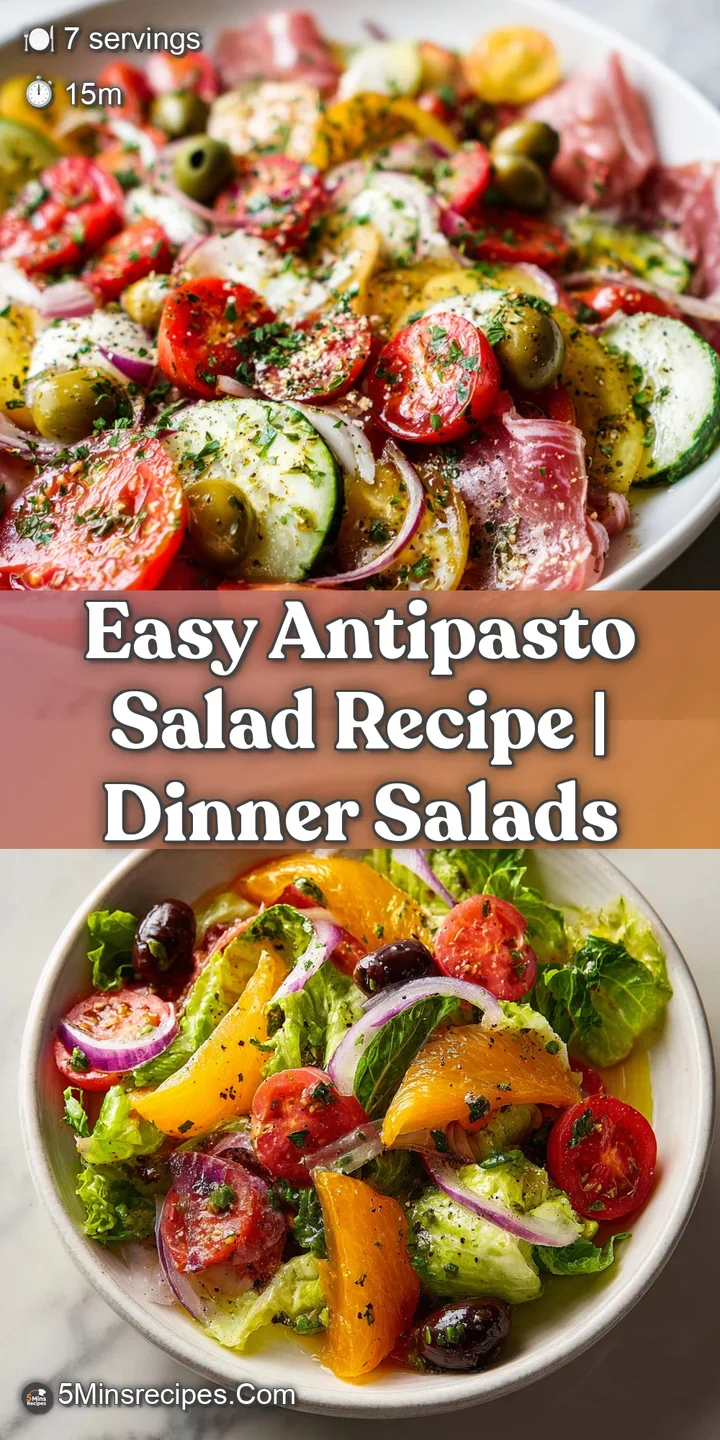
Antipasto Salad Recipe: No Cook Feast
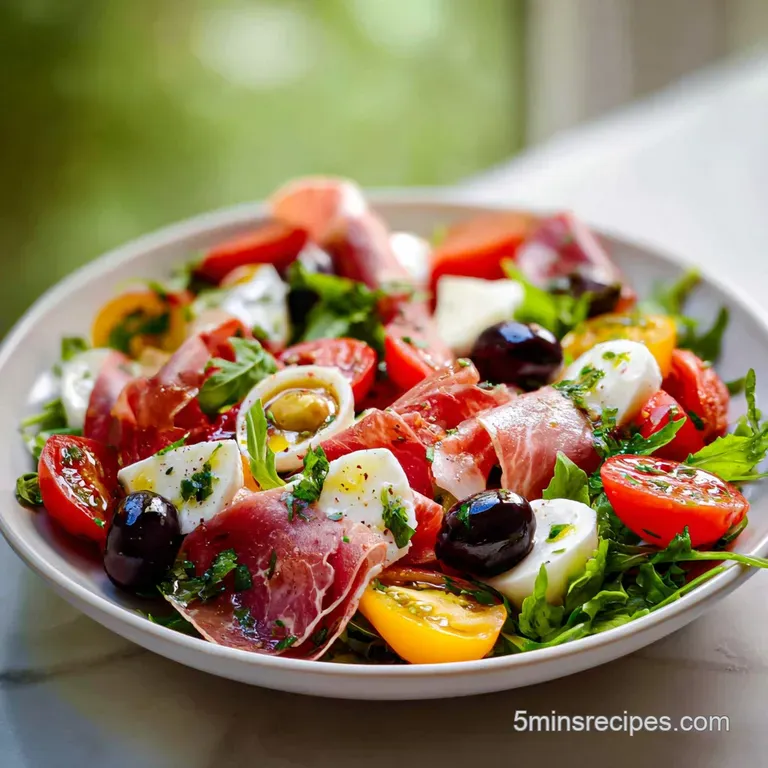
- Time: Active 15 minutes, Passive 0 mins, Total 15 minutes
- Flavor/Texture Hook: Briny, crunchy, and savory
- Perfect for: Potlucks, keto meal prep, or a fast chef style lunch
- Why You’ll Love This Antipasto Salad
- Essential Quick Prep Timing Specifications
- Why This Texture Works Scientifically
- Ingredient Science and Flavor Analysis
- All Ingredients and Smart Substitutes
- Essential Gear for Fast Prep
- The Fifteen Minute Assembly Process
- Troubleshooting and Common Mistakes Checklist
- Easy Dietary and Lifestyle Adaptations
- Scaling for Large Party Crowds
- Debunking Common Salad Making Myths
- Proper Storage and Waste Reduction
- Great Dishes to Serve Alongside
- Very High in Sodium
- Recipe FAQs
- 📝 Recipe Card
Why You’ll Love This Antipasto Salad
The first time I stepped into a real Italian deli in North Jersey, the smell hit me before the door even fully opened. It was a thick, intoxicating mix of aged provolone, sharp vinegar, and the savory, fatty aroma of cured meats hanging from the ceiling.
That sensory explosion is exactly what I wanted to capture here, but in a way that doesn't take three hours of shopping and prepping. This isn't just a bowl of wet leaves; it is a textured, salt forward experience where every bite offers a different "shatter" of crunch or a "velvety" piece of fresh mozzarella.
I used to make the mistake of over complicating my salads, thinking more ingredients meant more flavor. It doesn't. You need the right balance of brine and fat. This version uses the bite of radicchio to cut through the richness of the Genoa salami and pepperoni, while the Castelvetrano olives add a buttery finish that feels incredibly high end.
It is my go to when I need to impress a crowd but only have 15 minutes to pull my life together.
Trust me on this one: the secret isn't just in the ingredients, but in how you treat them. We are talking about paper thin red onions that won't blow out your palate and artichoke hearts that actually hold their shape.
Whether you are hosting a summer barbecue or just need a reliable Keto Antipasto Salad for your weekly rotation, this dish delivers every single time. Let’s get to work.
Essential Quick Prep Timing Specifications
When you are working in a professional kitchen, speed is everything, and that comes down to your prep flow. For this Antipasto Salad, we are focusing on a "parallel prep" method. While you drain the wet ingredients like the mozzarella and artichokes, you can be slicing the proteins.
This prevents the lettuce from sitting out and wilting while you fiddle with a jar of peppers.
| Servings | Meat & Cheese | Veggie Volume | Prep Time |
|---|---|---|---|
| 2 People | 4 oz total | 3 cups | 8 minutes |
| 4 People | 8 oz total | 6 cups | 12 minutes |
| 7 People | 16 oz total | 12 cups | 15 minutes |
Since this is a no cook recipe, the "doneness" is all about the visual and textural harmony. You want the tomatoes to be bright and taut, not bruised, and the meats should be sliced into "ribbons" rather than chunks so they weave through the greens.
This ensures you get a bit of everything on your fork without the ingredients sinking to the bottom of the bowl.
If you are debating between using entirely fresh ingredients or leaning on high-quality shortcuts, here is how the trade offs look for a busy home cook.
| Component | Fresh Method | Shortcut Method | Impact |
|---|---|---|---|
| Dressing | Whisking EVOO/Vinegar | Bottled Italian | Shortcut is saltier; less bright |
| Artichokes | Trimming/Steaming fresh | Marinated Jarred | Jarred adds vital acidity/brine |
| Peppers | Roasting over gas flame | Jarred Roasted Red | Jarred is softer; huge time saver |
Why This Texture Works Scientifically
Emulsification Stability: The Dijon mustard acts as a surfactant, binding the hydrophobic olive oil and hydrophilic red wine vinegar into a creamy dressing that clings to the slick salami.
Osmotic Regulation: By dressing the salad just before serving, we prevent the salt from drawing water out of the romaine's cell walls, which would otherwise result in a soggy, limp mess.
Chef's Tip: Freeze your salami and pepperoni for 10 minutes before slicing. This firms up the fats, allowing you to cut perfectly clean ribbons that won't tear or clump together in the bowl.
Ingredient Science and Flavor Analysis
Understanding your Antipasto Salad Ingredients is the difference between a mediocre side dish and a main course star. We aren't just tossing things in a bowl; we are balancing pH levels and fat content.
The sharpness of the provolone is a necessary foil to the sweet, burst in-your mouth cherry tomatoes.
| Ingredient | Science Role | Pro Secret |
|---|---|---|
| Red Wine Vinegar | Acid Catalyst | Brightens heavy fats in the cured meats instantly. |
| Dijon Mustard | Emulsifier | Keeps the dressing from separating on slick ingredients. |
| Castelvetrano Olives | Lipid Balance | Adds a buttery, mild fat that balances the salty salami. |
| Radicchio | Bitter Contrast | Stimulates appetite and cuts through the oily vinaigrette. |
When you pick your mozzarella, go for the "pearls" if you can find them. They provide more surface area for the dressing to coat compared to a large torn ball. Also, don't sleep on the black pepper. Freshly cracked pepper provides a "shatter" of heat that pre ground pepper simply cannot match.
If you want a Healthy Antipasto Salad, focus on increasing the volume of the radicchio and romaine while keeping the meat portions precise.
All Ingredients and Smart Substitutes
This recipe relies on the Antipasto Salad Dressing Recipe to tie everything together. Each component has a specific job, from the crunch of the onion to the silkiness of the roasted peppers.
- 1 large head Romaine lettuce, chopped: The structural base. Why this? Provides the essential "snap" and neutral canvas for bold flavors.
- Substitute: Butter lettuce (softer texture, less crunch).
- 1 small head Radicchio, shredded: The bitter edge. Why this? Essential for cutting through the fat of the pepperoni and cheese.
- Substitute: Belgian endive or extra romaine.
- 1 pint Cherry tomatoes, halved: The sweet burst. Why this? Adds acidity and moisture to every bite.
- Substitute: Grape tomatoes or diced Roma tomatoes.
- 4 oz Genoa Salami, sliced into ribbons: The savory meat. Why this? High fat content provides a rich, fermented flavor profile.
- Substitute: Prosciutto (saltier and more delicate).
- 4 oz Pepperoni, thinly sliced: The spice. Why this? Adds a subtle heat and paprika based depth.
- Substitute: Soppressata for a more authentic, spicy kick.
- 4 oz Sharp Provolone cheese, cubed: The salty bite. Why this? The "sharp" variety provides a funk that mild cheese lacks.
- Substitute: Aged Gouda or extra Mozzarella.
- 4 oz Fresh Mozzarella pearls, drained: The creamy relief. Why this? Soft texture provides a break from the crunch.
- Substitute: Bocconcini or torn Burrata.
- 12 oz marinated artichoke hearts, chopped: The briny acid. Why this? The marinade adds a second layer of herb flavor.
- Substitute: Marinated mushrooms.
- 0.5 cup Castelvetrano olives, smashed: The buttery fat. Why this? Much milder and meatier than standard canned olives.
- Substitute: Cerignola olives or Kalamata (stronger flavor).
- 0.25 cup Pepperoncini, sliced: The tang. Why this? Provides a pickled heat that wakes up the palate.
- Substitute: Pickled jalapeños (spicier).
- 0.5 small Red onion, paper thinly sliced: The sharp crunch. Why this? Adds sulfurous depth without overpowering if sliced thin.
- Substitute: Shallots for a milder, sweeter onion flavor.
- 0.25 cup Roasted red peppers, sliced: The smoky sweetness. Why this? Jarred versions are tender and add a beautiful color contrast.
- Substitute: Fresh bell peppers (adds more crunch, less smoke).
- 0.5 cup Extra virgin olive oil: The carrier. Why this? Needs to be high-quality for a fruity finish.
- Substitute: Avocado oil for a more neutral base.
- 0.25 cup Red wine vinegar: The brightener. Why this? Classic Italian acidity that pairs with oregano.
- Substitute: Lemon juice or white wine vinegar.
- 1 tsp Dijon mustard: The binder. Why this? Holds the vinaigrette together so it doesn't separate.
- Substitute: Spicy brown mustard or honey.
- 1 tsp Dried oregano: The herb. Why this? Essential for that "pizza shop" aromatic profile.
- Substitute: Dried Italian seasoning blend.
- 0.5 tsp Garlic powder: The savory base. Why this? Distributes more evenly than fresh garlic in cold dressings.
- Substitute: 1 clove grated fresh garlic.
Essential Gear for Fast Prep
You don't need much for an Italian Antipasto Salad, but the right tools will shave minutes off your time. A high-quality chef's knife is non negotiable for getting those paper thin onion slices.
I also highly recommend using a large stainless steel bowl for mixing; it gives you enough "runway" to toss the ingredients without them flying across the counter.
If you are looking for more quick meal ideas, you might find that the speed of this assembly is similar to what I use in my Tuna Salad in recipe, where we focus on maximizing flavor with zero cook time. For this salad, a salad spinner is actually quite helpful. Wet lettuce is the enemy of a good vinaigrette if the leaves are damp, the oil will slide right off and pool at the bottom of the bowl.
Finally,, grab a small glass jar with a tight fitting lid. Shaking your dressing is ten times more effective than whisking it. It creates a much tighter emulsion, which is exactly what we need for this Chopped Antipasto Salad to stay vibrant and coated rather than oily and separated.
The Fifteen Minute Assembly Process
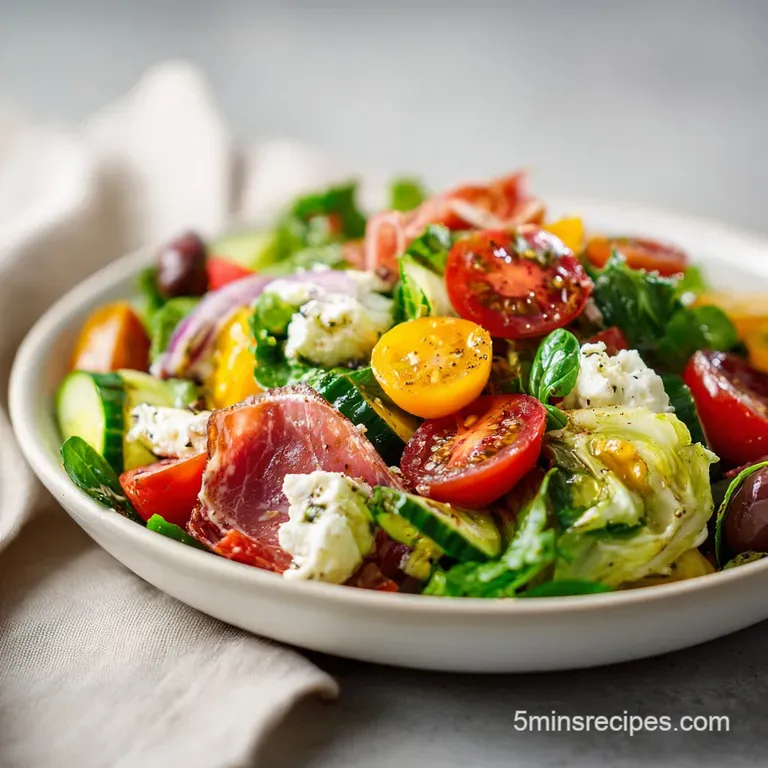
- Emulsify the vinaigrette. Combine the extra virgin olive oil, red wine vinegar, Dijon mustard, oregano, garlic powder, sea salt, and black pepper in a jar. Note: Shake vigorously for 30 seconds until the liquid looks opaque and creamy.
- Prep the greens. Chop the romaine into bite sized squares and shred the radicchio finely. Note: This ensures the bitter radicchio is distributed evenly rather than in big chunks.
- Halve the tomatoes. Slice the cherry tomatoes until the bright red interiors are exposed.
- Ribbon the meats. Stack the salami and pepperoni, roll them tight like a cigar, and slice crosswise. Note: This creates elegant ribbons that catch the dressing.
- Smash the olives. Use the side of your knife to gently press the Castelvetrano olives until they burst open slightly. Note: This releases their natural oils into the salad.
- Drain the wet components. Remove the mozzarella, artichokes, and roasted peppers from their liquids. Note: Excess moisture will dilute your carefully crafted dressing.
- Slice the onion. Use a mandoline or a very sharp knife to cut the red onion until they are translucent and paper thin.
- Layer the bowl. Place the romaine and radicchio at the bottom, then top with all the prepared proteins, cheeses, and briny bits.
- Dress and toss. Pour the vinaigrette over the salad until every leaf glitters under the kitchen lights.
- Final Seasoning. Give it one more crack of black pepper and a pinch of salt right before serving.
Troubleshooting and Common Mistakes Checklist
Even an Easy Antipasto Salad can hit a few speed bumps if you aren't careful with the moisture levels. The most common issue is a "watery" finish, which usually happens because of the tomatoes or the lettuce.
Why Your Salad Is Watery
If your salad ends up with a puddle at the bottom, it is likely because the tomatoes were too juicy or the lettuce wasn't dried properly. When salt hits a cut tomato, it immediately begins to draw out the water through osmosis.
| Problem | Root Cause | Solution |
|---|---|---|
| Soggy Lettuce | Surface moisture on leaves | Use a salad spinner or pat dry with paper towels. |
| Bland Dressing | Vinegar/Oil separation | Add more mustard or shake the jar for a full minute. |
| Overly Salty | Too much meat/brine | Increase the romaine volume or add more tomato. |
Common Mistakes Checklist
- ✓ Always pat your mozzarella pearls dry; the packing liquid will ruin the dressing's cling.
- ✓ Don't dress the salad more than 10 minutes before eating; the acid will wilt the romaine.
- ✓ Slice onions so thin you can see through them; thick chunks will overpower the delicate cheese.
- ✓ Use room temperature olives; cold fats from the fridge don't release as much flavor.
- ✓ Smash the olives instead of slicing them to create more nooks and crannies for the dressing.
Easy Dietary and Lifestyle Adaptations
This recipe is naturally a Keto Antipasto Salad powerhouse, as it is loaded with healthy fats and high-quality proteins. To keep the carb count as low as possible, ensure your marinated artichokes don't have added sugars in the brine.
Most high end brands are safe, but it's always worth a quick label check.
For a Vegan Version
You can easily pivot this to a plant based feast by swapping the meats for smoked chickpeas or marinated tofu cubes. Use a high-quality vegan mozzarella or simply double up on the artichokes and olives to maintain that savory, fatty mouthfeel that the cheese usually provides.
For a Low Sodium Focus
Cured meats are notoriously high in salt. If you are watching your intake, rinse the olives and pepperoncini under cold water before adding them. You can also swap half the salami for grilled chicken breast, which provides the protein without the heavy salt cure.
Scaling for Large Party Crowds
Scaling this up is incredibly simple because there is no cooking involved. If you are doubling the recipe for a party of 14, follow these rules to keep the quality high.
- Spices: Only increase the salt and oregano to 1.5x rather than 2x. The cured meats already provide a massive salt base, and you don't want to overdo it when the volume increases.
- Mixing: Work in two separate bowls if you don't have a commercial sized mixing tub. Overcrowding a bowl makes it impossible to distribute the dressing evenly without bruising the lettuce.
- The Lettuce Rule: If doubling the recipe, use two different types of greens (like adding some arugula) to keep the texture interesting for a larger crowd.
Debunking Common Salad Making Myths
One major myth is that "fresh is always better." For an Italian Antipasto Salad, the marinated ingredients (artichokes, peppers, olives) are actually superior to fresh ones because they have been "quick pickled," providing the necessary acidity that a salad like this demands.
Fresh artichokes would be too fibrous and wouldn't have the tang required to balance the salami.
Another myth is that you need to "marinate" the salad. While some pasta salads benefit from a soak, a green based Antipasto Salad will turn into a mushy heap if left to sit in the dressing.
The only thing you should prep in advance is the dressing and the chopped meats; keep them separate until the very last second.
Proper Storage and Waste Reduction
Storage: This salad is best eaten immediately. However, if you have leftovers, they will stay edible in the fridge for about 24 hours. Just know that the romaine will lose its "shatter" and become more "velvety" (and eventually soggy).
Store in an airtight container with a paper towel on top to absorb excess moisture.
Zero Waste: Don't throw away the oil from the marinated artichoke jar! That oil is liquid gold, packed with garlic and herb flavor. Use it to sauté vegetables later in the week or as a base for a different vinaigrette.
Also, any leftover meat and cheese scraps can be finely diced and tossed into an omelet the next morning.
Great Dishes to Serve Alongside
Since this is such a bold, savory dish, it pairs perfectly with a neutral starch. A warm, crusty loaf of ciabatta is the traditional choice, perfect for mopping up the leftover dressing at the bottom of the bowl.
If you are keeping things low carb, it stands alone as a complete meal, but I often serve it alongside a simple grilled protein.
If you are planning a full Mediterranean spread, consider adding some Antipasto Salad Ideas like a side of roasted cauliflower or even a light soup. The high acidity of this salad makes it a great "palate cleanser" for heavier Italian dishes like lasagna or eggplant parm.
Whatever you choose, keep it simple the salad is the star of the show here.
Now, grab your best olive oil and get to chopping. You are only 15 minutes away from the best deli style meal you've ever made in your own kitchen!
Very High in Sodium
1214 mg mg of sodium per serving (53% % of daily value)
The American Heart Association recommends limiting sodium intake to no more than 2,300mg per day for overall cardiovascular health.
Sodium Reduction Tips for this Salad
-
Reduce Processed Meats-25%
Halve the amount of Genoa salami and pepperoni used. These processed meats are significant sources of sodium. Consider using 1/2 the amount or swapping to a lower sodium alternative, like grilled chicken breast or chickpeas.
-
Choose Low-Sodium Cheese-15%
Opt for low-sodium mozzarella and provolone cheese or reduce the amount of cheese by half. Cheeses, especially aged and processed varieties, can contribute a considerable amount of sodium to the salad. Consider using half the amount of cheese.
-
Rinse and Reduce Olives-15%
Rinse the Castelvetrano olives before using to remove excess brine and reduce the amount by half. Olives are naturally high in sodium due to the brining process. Consider using 1/2 the amount of olives.
-
Limit Pepperoncini & Roasted Peppers-10%
Use fewer pepperoncini peppers and roasted red peppers, or find a lower sodium version. These ingredients often contain added salt for preservation. Use 1/2 the amount and explore different vegetables.
-
Control Artichoke Sodium-10%
Thoroughly rinse the marinated artichoke hearts under cold water before chopping to remove excess sodium from the marinade. Look for artichoke hearts packed in water, not oil and vinegar. Replace 1/2 the amount with fresh zucchini.
-
Omit Added Salt-25%
Eliminate the added sea salt from the recipe. Between the cheese, olives, and cured meats, there's already a significant amount of sodium in the salad. Taste before adding any salt.
-
Spice it Up with Herbs
Instead of relying on salt, enhance the flavor with fresh herbs like basil, parsley, or chives. Experiment with different combinations to create a vibrant taste without adding sodium.
Recipe FAQs
What's on an antipasto salad?
Typically, it includes cured meats, cheeses, olives, pepperoncini, and marinated vegetables. These ingredients are layered over mixed greens, usually romaine and radicchio, and tossed in a sharp red wine vinaigrette.
What is the difference between antipasto and antipasti salad?
Antipasti is the plural form, referring to the course itself. In culinary terms, antipasto is traditionally a plated, non-salad starter platter featuring meats, cheeses, and pickled items, while an antipasto salad is a composed salad version of those same components.
What is the antipasto salad controversy?
The main controversy revolves around the inclusion of lettuce. Traditional Italian antipasto is served on a platter without greens; adding lettuce transforms it into a distinct Americanized salad adaptation, leading some purists to reject the term "antipasto salad."
What does Italian antipasto consist of?
Authentic Italian antipasto is an assortment of cured meats, cheeses, and pickled vegetables. This commonly includes prosciutto, salami, sharp provolone, marinated artichoke hearts, roasted peppers, and olives, served before the pasta course.
How to keep antipasto salad crisp if I must make it ahead of time?
Separate the wet and dry ingredients completely. Keep the dressing, meats, cheeses, and vegetables in one airtight container, and store the lettuce in a separate, dry container until the moment you intend to serve.
Is it true that I must use Dijon mustard in the dressing for the best result?
No, this is a common misconception, but it is highly recommended. Dijon acts as an emulsifier, binding the oil and vinegar tightly so the dressing clings to the slick meats and cheeses rather than separating or pooling.
How to achieve the perfect salami texture in this salad?
Chill the salami in the freezer for ten minutes before slicing. This firms up the fat content, allowing you to slice the meat into clean, delicate ribbons instead of thick, clumping chunks.
Antipasto Salad 15 Minute Feast
Ingredients:
Instructions:
Nutrition Facts:
| Calories | 440 kcal |
|---|---|
| Protein | 13.7 g |
| Fat | 39.6 g |
| Carbs | 8.7 g |
| Fiber | 2.5 g |
| Sugar | 3.4 g |
| Sodium | 1214 mg |
