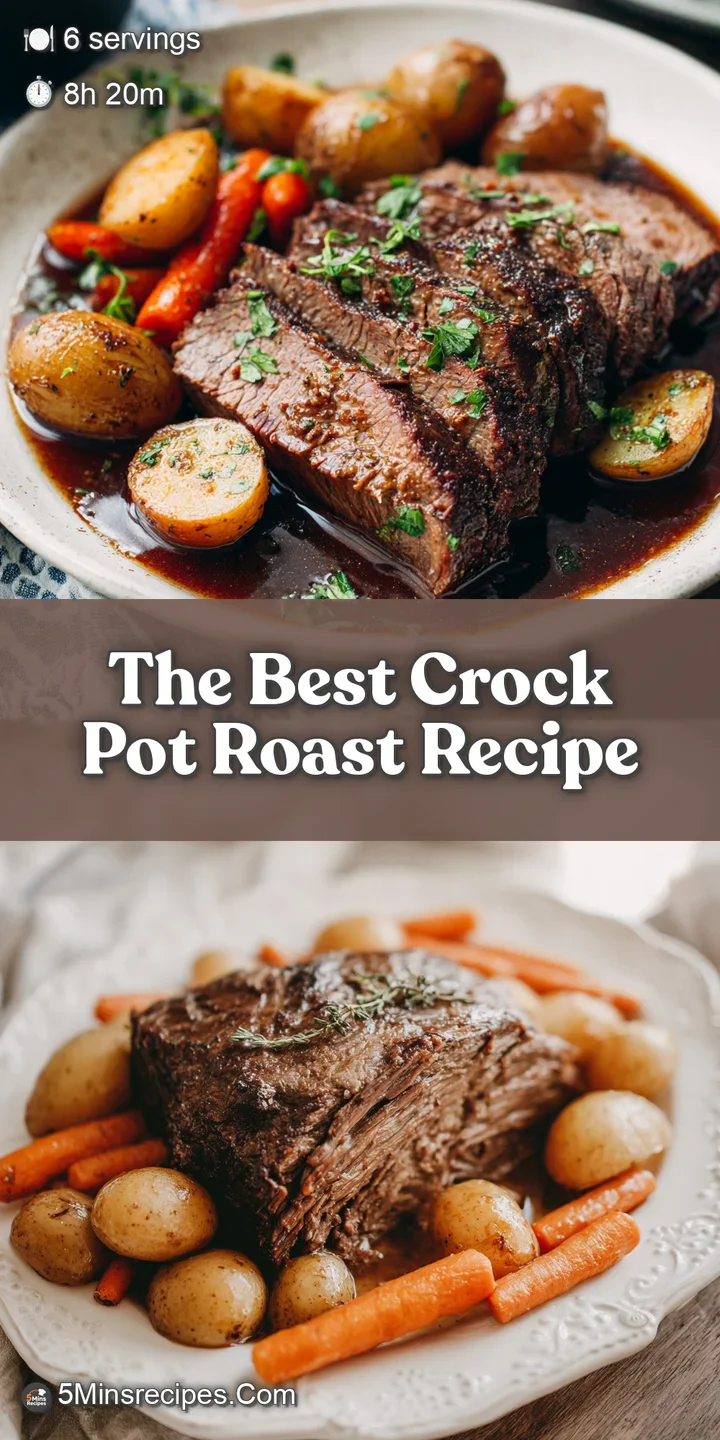
The Best Crock Pot Roast Recipe
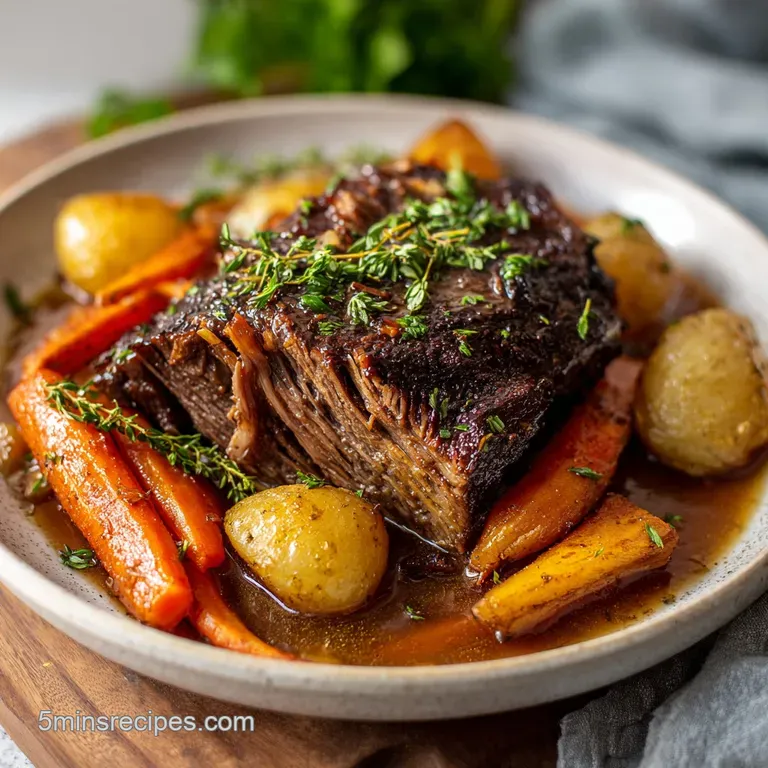
- Time: Active 20 minutes, Passive 8 hours, Total 8 hours 20 mins
- Flavor/Texture Hook: Silky, melt in-your mouth beef with a savory, concentrated gravy
- Perfect for: Sunday family dinners or effortless weekly meal prep
- Master the Flavor of the Best Crock Pot Roast Recipe
- The Physics of the Fall Apart Fork
- Component Analysis of the Roast
- Elements of a Classic Braise
- Essential Tools for the Chef
- Step-by-Step Slow Cooking Flow
- Solving Common Pot Roast Issues
- Adjusting the Recipe Volume
- Realities of Braising Techniques
- Keeping Your Roast Fresh
- Ideas for the Perfect Table
- Very High in Sodium
- Recipe FAQs
- 📝 Recipe Card
Master the Flavor of the Best Crock Pot Roast Recipe
The heavy sizzle of 3.5 lbs of beef chuck hitting a hot cast iron pan is a sound that defines my Sundays. I used to think I could just toss everything in the slow cooker and walk away, but my roasts always came out gray and bland.
That changed the day I realized that the "set it and forget it" mantra is a bit of a lie if you want chef level results.
We are looking for that deep, mahogany crust and a gravy so thick it clings to the back of a spoon. I’ve spent years tweaking this process, moving from watery broths to bone rich reductions.
It’s about more than just cooking meat; it’s about managing the transformation of tough fibers into something that practically dissolves when your fork touches it.
This approach solves the age old problem of dry, stringy roast. By the time the eight hour mark hits, your kitchen will smell of rosemary and toasted garlic. We aren't just making dinner here; we are building a foundation of flavor that works every single time, regardless of your skill level.
The Physics of the Fall Apart Fork
Collagen Conversion: At temperatures between 160°F and 180°F, tough collagen fibers slowly melt into gelatin. This process requires several hours to ensure the meat remains succulent rather than becoming dry and rubbery.
The Maillard Boost: Searing the beef at high heat creates new flavor compounds through the reaction of amino acids and sugars. This provides the base for a savory, brown gravy that cannot be achieved through slow cooking alone.
| Cut Thickness | Internal Temp | Rest Time | Visual Cue |
|---|---|---|---|
| 2-3 inches | 205°F | 15 minutes | Meat shreds easily with two forks |
| 3-4 inches | 205°F | 20 minutes | Center is tender and dark |
| 4+ inches | 210°F | 25 minutes | Connective tissue is completely translucent |
Choosing the right cut of meat is the first step in ensuring success. While some prefer leaner cuts, the fat marbling in a chuck roast is non negotiable for this specific cooking method. If you are looking for other ways to use your slow cooker for beef, you might enjoy my Crock Pot Beef recipe which uses a different slicing technique for a quicker result.
Component Analysis of the Roast
| Ingredient | Science Role | Pro Secret |
|---|---|---|
| Beef Chuck Roast | High connective tissue | Always choose a "Choice" grade with heavy white marbling for maximum moisture. |
| Tomato Paste | Umami & Color | Searing the paste with the meat creates a deeper, darker gravy base. |
| Bone Broth | Gelatin Source | Use bone broth over standard stock to add a velvety mouthfeel to the final sauce. |
| Worcestershire | Acid & Fermentation | The vinegar and anchovy base cuts through the heavy fat of the beef. |
Every ingredient in this list serves a specific purpose in the chemical breakdown of the roast. We don't just add liquid for the sake of it; we add it to create a pressurized like environment that helps heat penetrate the center of the meat.
Elements of a Classic Braise
- 3.5 lb beef chuck roast: Why this? The high fat and collagen content ensure the meat stays moist during long cooks.
- Substitute: Brisket (adds a coarser grain but similar fat profile).
- 1.5 lbs Yukon Gold potatoes: Why this? Their waxy texture prevents them from disintegrating into mush after 8 hours.
- Substitute: Red potatoes (keep the skin on for texture).
- 2 cups beef bone broth: Why this? Provides the liquid base and essential minerals for a rich sauce.
- Substitute: 1 cup red wine mixed with 1 cup beef stock.
- 4 large carrots: Why this? Adds a necessary sweetness to balance the salty bone broth.
- Substitute: Parsnips (for a more earthy, peppery flavor).
- 3 tbsp cornstarch: Why this? Acts as a thickening agent for a glossy gravy finish.
- Substitute: Arrowroot powder (for a grain free alternative).
- 2 tbsp avocado oil: Why this? High smoke point allows for a hard sear without burning.
- Substitute: Grapeseed oil or beef tallow.
Other pantry staples include 2 tsp kosher salt, 1 tsp cracked black pepper, 1 tsp garlic powder, 1 large yellow onion (quartered), 4 cloves garlic (smashed), 3 stalks celery, 3 sprigs fresh thyme, 2 sprigs fresh rosemary, 2 dried bay leaves, 2 tbsp Worcestershire sauce, and 1 tbsp tomato paste.
Essential Tools for the Chef
To get the best results, you'll need a large cast iron skillet for the initial sear. I prefer a 12 inch Lodge skillet because it holds heat better than stainless steel, ensuring you get a dark crust without overcooking the interior of the beef.
You will also need a 6 quart or 7 quart slow cooker. A larger model prevents the vegetables from being too crowded, which allows for better heat circulation. A sharp chef's knife and a sturdy set of tongs are your best friends for handling the heavy 3.5 lb roast.
step-by-step Slow Cooking Flow
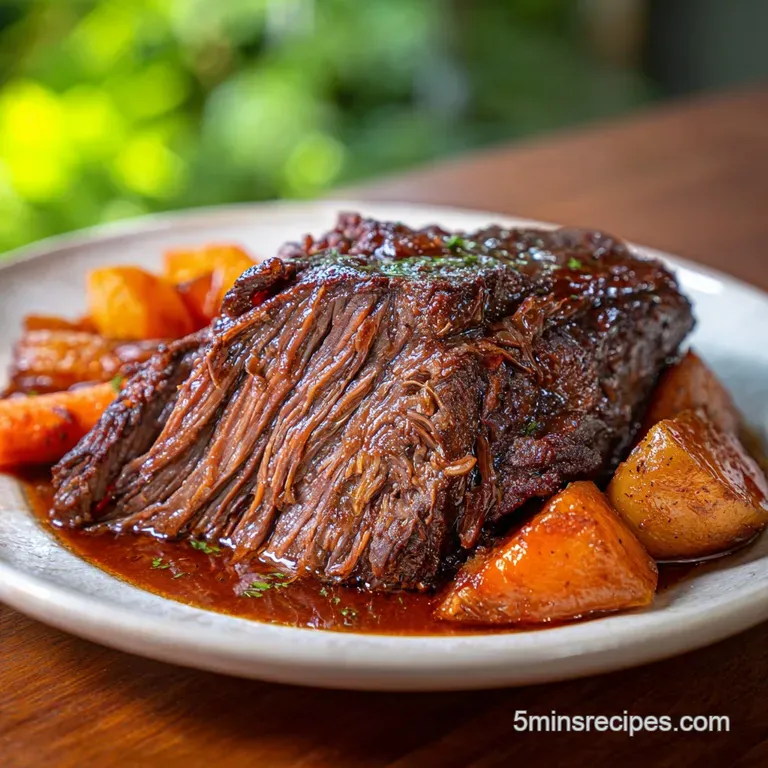
Preparing the Canvas
Pat the 3.5 lb beef chuck roast completely dry with paper towels. Note: Moisture on the surface will create steam rather than a crust. Season all sides generously with 2 tsp kosher salt, 1 tsp cracked black pepper, and 1 tsp garlic powder.
Searing for Maximum Flavor
Heat 2 tbsp avocado oil in a skillet over medium high heat until it begins to shimmer. Place the beef in the pan and sear for 5 minutes per side until a dark brown crust forms. During the last 2 minutes, rub the 1 tbsp tomato paste onto the top of the roast.
Loading the Slow cooker
Place the quartered yellow onion, 4 smashed garlic cloves, 3 stalks celery, and 2 dried bay leaves in the bottom of the pot. Note: These act as a natural roasting rack, keeping the meat from sitting directly on the heating element.
Adding the Aromatics
Lay the seared roast on top of the onions. Surround the meat with 1.5 lbs Yukon Gold potatoes and 4 large chunks of carrots. Tuck 3 sprigs of thyme and 2 sprigs of rosemary into the gaps.
The Braising Liquid
Whisk 2 cups beef bone broth with 2 tbsp Worcestershire sauce in a small bowl. Pour the liquid around the sides of the roast, taking care not to wash off the seasoning from the top of the beef.
The Long Simmer
Cover the slow cooker and set it to LOW. Cook for 8 hours until the meat is tender and the vegetables are soft. If you are in a rush, similar slow cook techniques can be seen in my Crock Pot Creamy recipe, though beef always benefits from the longer, lower heat.
Perfecting the Simple Crock Pot Roast Gravy Recipe
Remove the meat and vegetables to a platter and tent with foil. Strain the remaining liquid into a saucepan. In a small jar, whisk 3 tbsp cornstarch with 3 tbsp cold water.
Finishing the Sauce
Bring the liquid to a simmer over medium heat. Slowly whisk in the cornstarch slurry and cook for 3 minutes until the gravy is thick and glossy. Pour the finished sauce back over the meat before serving.
Solving Common Pot Roast Issues
Why Your Roast is Tough
If the beef is still difficult to shred after 8 hours, it likely hasn't reached the internal temperature required for collagen breakdown. This often happens if the slow cooker lid was opened frequently, allowing heat to escape.
| Problem | Root Cause | Solution |
|---|---|---|
| Stringy Meat | Cooked too fast on HIGH | Use the LOW setting for at least 8 hours for better texture. |
| Bland Sauce | Insufficient Searing | Spend more time developing the crust in the skillet before slow cooking. |
| Mushy Carrots | Cut too small | Keep vegetable chunks at least 2 inches wide to withstand long heat. |
Avoiding Tough, Stringy Meat
When beef is cooked on the "High" setting, the muscle fibers can contract too quickly, squeezing out all the moisture before the connective tissue has a chance to melt. This leaves you with meat that is technically "done" but feels dry in the mouth. Always opt for the "Low" setting for a true 3.5 lb chuck roast.
Common Mistakes Checklist
- ✓ Skipping the sear: You lose about 40% of the potential flavor without the Maillard reaction.
- ✓ Adding too much water: The meat and vegetables release their own juices; don't drown them.
- ✓ Using lean meat: Round roast or sirloin tip will become dry and chalky in a slow cooker.
- ✓ Peeking under the lid: Every time you open the lid, you add 15-20 minutes to the cook time.
- ✓ Forgetting to rest: Let the meat sit for 15 minutes before shredding to keep the juices inside.
Adjusting the Recipe Volume
Scaling Down for Two
If you are cooking for a smaller household, use a 1.5 lb roast and halve the vegetables. You should still use a 3 quart or 4 quart slow cooker. Keep the liquid levels at 1.5 cups rather than 1 cup to ensure there is enough moisture to prevent scorching. Reduce the total cook time to 6 hours on LOW.
Scaling Up for a Crowd
To double the recipe, use two separate slow cookers or a very large 8 quart model. Do not double the salt or spices; instead, use 1.5x the original amount and adjust at the end. When stacking meat, ensure the liquid reaches halfway up the side of the top roast to ensure even heat distribution.
| Method | Time | Texture | Best For |
|---|---|---|---|
| Slow Cooker | 8 hours | Ultra tender, falls apart | Hands off meal prep |
| Dutch Oven | 3 hours 30 mins | Slightly firmer, concentrated | Weekend afternoon cooking |
| Pressure Cooker | 1 hour 15 mins | Soft but less flavor depth | Emergency weeknight dinner |
Realities of Braising Techniques
Many people believe that searing "seals in the juices." Science shows this is false; moisture is lost regardless of the sear. However, the sear is essential because it creates complex flavor molecules that infuse the entire liquid. Without it, your roast will taste boiled rather than braised.
Another common thought is that you must cover the meat entirely with liquid. In reality, a pot roast is a "braise," not a stew. The meat should be submerged about halfway. The steam trapped in the pot does the rest of the work, preventing the top of the beef from drying out while concentrating the flavors of the sauce.
Keeping Your Roast Fresh
Storage Guidelines
Store leftovers in an airtight container in the refrigerator for up to 4 days. It is actually better the next day as the proteins have time to fully absorb the seasoned gravy. For the best experience, store the meat submerged in the gravy to prevent it from oxidizing and turning gray.
Freezing and Zero Waste
You can freeze the cooked beef and gravy (without the potatoes) for up to 3 months. Potatoes tend to become grainy when frozen and thawed, so it's best to eat those fresh. Use any leftover shredded beef for tacos, shepherd’s pie, or even a rich ragu over pasta.
Ideas for the Perfect Table
This roast is a complete meal on its own, but I love serving it with a side of crusty sourdough bread to soak up every drop of the gravy. If you want to skip the potatoes inside the pot, try serving the beef over a bed of creamy polenta or thick egg noodles.
For a bright contrast to the heavy fats, a simple arugula salad with a lemon vinaigrette works wonders. The acidity cuts right through the richness of the chuck roast. If you have leftovers, they make the most incredible open faced sandwiches the following day, topped with a bit of horseradish cream.
Very High in Sodium
1180 mg mg of sodium per serving (51% of daily value)
The American Heart Association recommends limiting sodium intake to about 2,300mg per day for overall health.
Tips to Reduce Sodium in Your Pot Roast
-
Low-Sodium Broth-30%
Swap regular beef bone broth with a low-sodium or no-salt added version. This simple substitution can significantly cut down on sodium content.
-
Reduce Added Salt-25%
Reduce the amount of kosher salt used in the recipe. Start by using only 1 teaspoon instead of 2 teaspoons, and adjust to your taste. You can always add more later.
-
Low-Sodium Worcestershire-20%
Use a low-sodium Worcestershire sauce, or reduce the amount used by half. Alternatively, consider omitting it altogether and using a splash of balsamic vinegar for depth of flavor.
-
Herb Power
Enhance the flavor with fresh herbs like thyme, rosemary, and bay leaves. These add complexity without adding sodium.
Recipe FAQs
What is the secret to the best pot roast?
Searing the meat deeply and using bone broth. Searing creates complex, rich flavor compounds via the Maillard reaction, which water cannot replicate. Bone broth adds natural gelatin, resulting in a velvety gravy texture.
How to get the most tender pot roast in a crock pot?
Cook on LOW for a minimum of 8 hours. Tough collagen fibers require low, sustained heat (around 160°F to 180°F) over many hours to melt fully into soft gelatin.
What's the best liquid to use for pot roast?
Beef bone broth is superior to standard stock. It provides the necessary gelatin content that ensures a rich, unctuous mouthfeel in the final sauce.
Is it necessary to brown a roast before putting it in the crockpot?
No, but it is highly recommended for flavor development. Skipping the sear means you miss the Maillard reaction, resulting in a significantly blander roast and watery sauce.
Can I use leaner cuts of beef instead of chuck roast?
No, lean cuts will become dry and stringy. Chuck roast has essential fat marbling and high connective tissue necessary for moisture retention during the long, slow cook time.
How do I ensure my gravy thickens properly at the end?
Use a cornstarch slurry whisked with cold water. Bring the strained liquid to a simmer first, then slowly pour in the slurry while whisking constantly until the sauce coats the back of a spoon.
What vegetables break down too much if I cook them the whole time?
Mushrooms and tender greens will disintegrate. Stick to dense, waxy vegetables like carrots and Yukon Golds; if you want softer sides, try making my Crockpot Mashed Potatoes recipe separately.
Best Crock Pot Roast Recipe
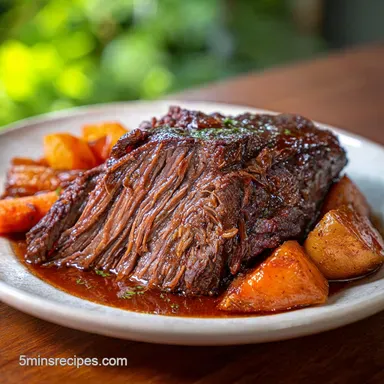
Ingredients:
Instructions:
Nutrition Facts:
| Calories | 853 kcal |
|---|---|
| Protein | 53 g |
| Fat | 55 g |
| Carbs | 28 g |
| Fiber | 4 g |
| Sugar | 5 g |
| Sodium | 1180 mg |
