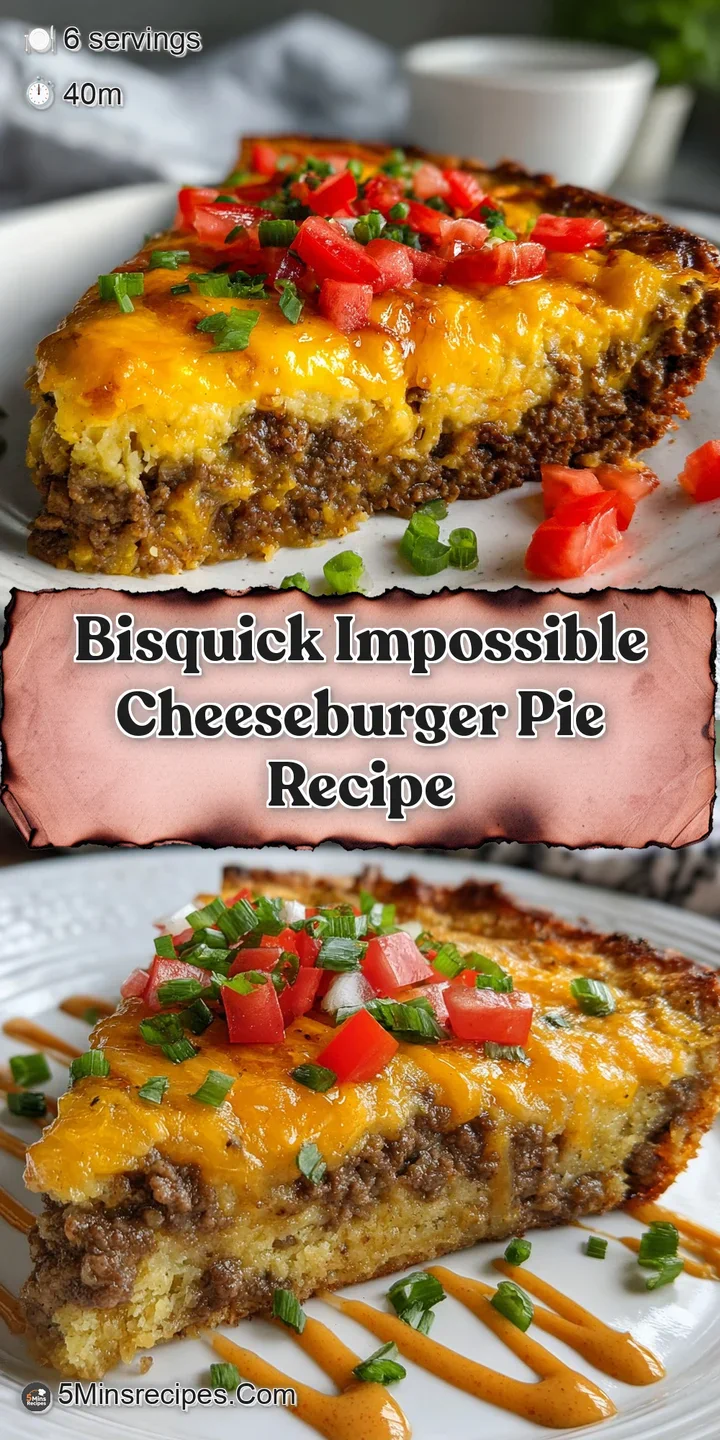
Bisquick Impossible Cheeseburger Pie
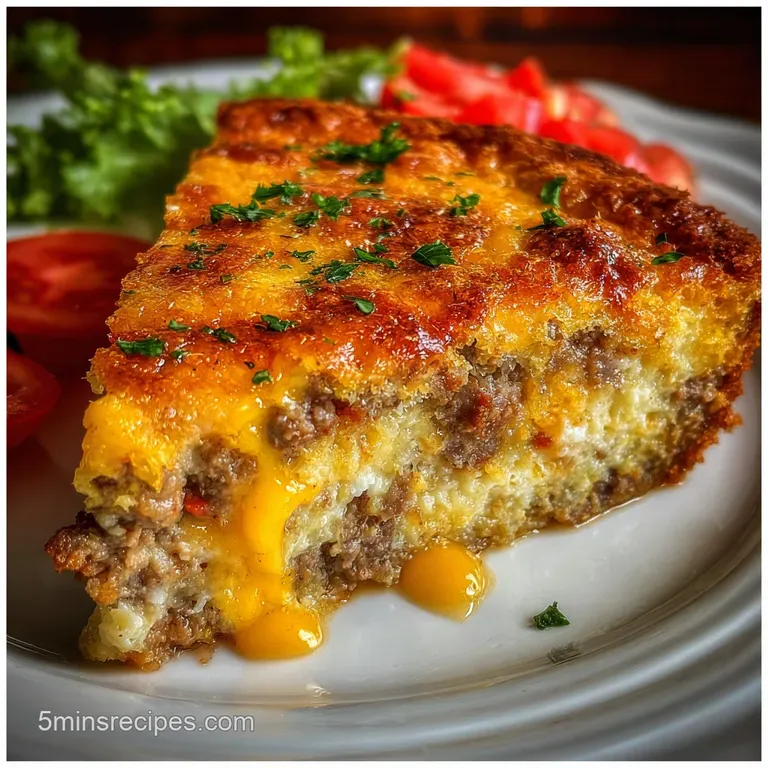
- Time: Active 10 minutes, Passive 30 minutes, Total 40 minutes
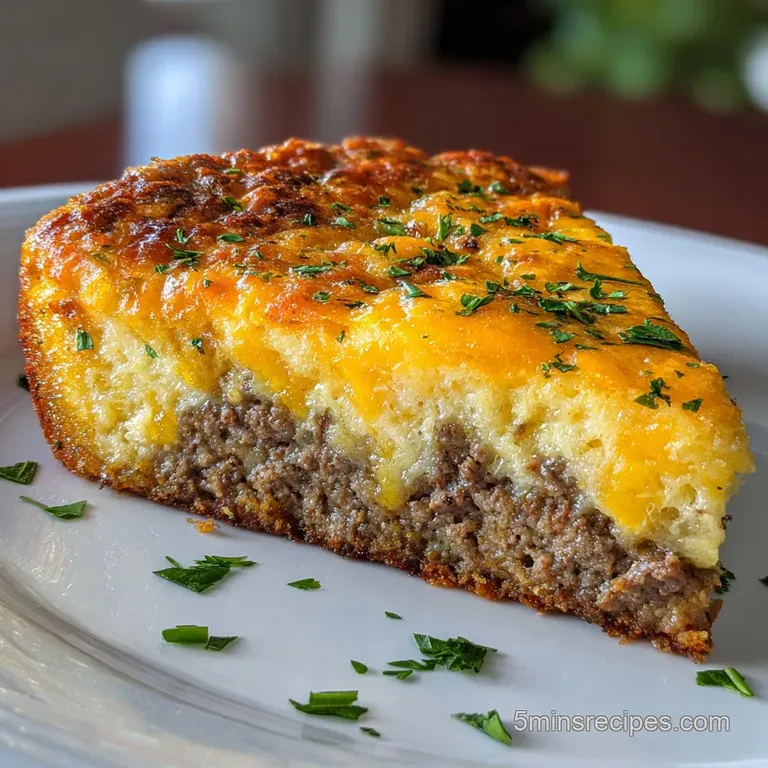
- Flavor/Texture Hook: Savory beef and sharp cheddar encased in a silky, golden custard style crust
- Perfect for: High speed weeknight dinners and beginner cooks seeking a reliable win
- The Ultimate Bisquick Impossible Cheeseburger Pie
- Secrets Behind The Magical Texture
- Essential Recipe Technical Specifications
- Sourcing Your High Performance Components
- Kitchen Tools For Maximum Speed
- Executing The Perfect Golden Bake
- Fixing Common Texture Pitfalls
- Adapting To Your Dietary Needs
- Preserving Flavor During Storage
- Pairing Sides For Balanced Flavor
- Recipe FAQs
- 📝 Recipe Card
The Ultimate Bisquick Impossible Cheeseburger Pie
The sizzle of ground beef hitting a hot skillet is a sound that instantly signals dinner is on its way. I remember the first time I tried making this. I was skeptical that a thin, runny batter poured over meat could actually turn into anything resembling a pie.
I half expected a soggy mess, but as the aroma of browning onions filled my kitchen, I started to gain a bit of confidence.
When I pulled that first glass dish out of the oven, the edges were golden and slightly pulling away from the sides, just like a professional pastry. It wasn't just a gimmick, it was a legitimate dinner solution that saved me from the dreaded "what's for dinner" panic.
We've all been there, staring at a pound of beef and a clock that’s ticking toward 6:00 PM.
This dish has become my go to when I need to get in and out of the kitchen in record time. It's essentially a cheeseburger in a comforting, sliceable form. Over the years, I've learned that the secret isn't just in the mix, but in how you treat the beef before it even hits the oven.
Trust me on this, skipping the onion sauté is a mistake you only make once.
Secrets Behind The Magical Texture
Density Differentiation: The Bisquick particles are denser than the egg milk mixture, causing them to settle at the bottom and sides while the lighter eggs rise and set as a velvety custard. This natural separation creates the "impossible" crust without any rolling or chilling.
Chef's Tip: Freeze your block of sharp cheddar for 10 minutes before grating it. This prevents the cheese from clumping and ensures a more even melt throughout the savory beef layer.
The Science of the Sink
As the oven heat penetrates the dish, the starch in the mix undergoes gelatinization. The flour molecules swell and trap the moisture from the milk, while the egg proteins coagulate to provide the structural "lift." This creates a sturdy base that holds the weight of the lean beef without collapsing.
Fat Drainage and Crispness
Managing the moisture is the most critical part of the process. If you leave the rendered fat from the beef in the pan, it will emulsify with the batter and result in a greasy, soft texture rather than a firm slice. Always use a slotted spoon to transfer your meat.
| Servings | Ingredient Adjustments | Pan Size | Cook Time |
|---|---|---|---|
| 3 people | 0.5 lb beef, 0.25 cup Bisquick | 6 inch round | 25 minutes |
| 6 people | 1 lb beef, 0.5 cup Bisquick | 9 inch pie plate | 30 minutes |
| 12 people | 2 lb beef, 1 cup Bisquick | 9x13 rectangle | 45 minutes |
This serving size calculator helps you scale the meal based on your guest list. When doubling the recipe for a larger crowd, using a 9x13 pan ensures the thickness remains consistent so the center sets properly. Similar to the logic used in our Chicken Pot Pie recipe, maintaining the right depth is key to that golden finish.
Essential Recipe Technical Specifications
| Component | Science Role | Pro Secret |
|---|---|---|
| 90/10 Ground Beef | Protein Structure | Sauté until deeply browned to maximize the Maillard reaction flavor. |
| Original Bisquick | Starch Binder | Do not overmix the batter or the crust will become tough and rubbery. |
| Whole Milk | Hydration Agent | Use room temperature milk to help the eggs emulsify more quickly. |
| Large Eggs | Coagulation / Lift | Whisk until no streaks remain to ensure a consistent, silky set. |
Getting the specifications right is the difference between a dinner that's just okay and one that people ask for seconds of. For instance, using 90/10 lean ground beef ensures you have enough flavor without drowning the crust in oil.
If you only have higher fat meat, you must be extra diligent about draining the liquid after browning.
The choice of sharp cheddar is also deliberate. A mild cheddar often disappears into the batter, but the sharp variety holds its own against the savory Worcestershire sauce and the sweetness of the sautéed onions. It's about creating layers of flavor that hit different parts of the palate with every bite.
Sourcing Your High Performance Components
For this recipe, we are keeping things streamlined. You don't need a pantry full of exotic spices to make this work. We are relying on high-quality basics that do the heavy lifting for us.
- 1 lb lean ground beef (90/10): Why this? Provides rich protein without excessive grease that could ruin the bottom crust.
- Substitute: Ground turkey or chicken works well for a lighter profile.
- 1 cup yellow onion, finely chopped: Why this? Adds essential aromatics and a natural sweetness when sautéed.
- Substitute: White onion or 2 teaspoons of onion powder if you're in a rush.
- 0.5 tsp fine sea salt: Why this? Sharpens the flavors of the beef and the cheddar.
- Substitute: Kosher salt (use double the amount by volume).
- 0.25 tsp freshly cracked black pepper: Why this? Provides a subtle heat that cuts through the richness of the cheese.
- Substitute: White pepper for a more earthy, muted spice.
- 1 tsp Worcestershire sauce: Why this? The "secret" ingredient that adds deep umami and savory complexity.
- Substitute: Soy sauce mixed with a pinch of sugar.
- 0.5 cup Original Bisquick mix: Why this? The pre measured leavening and fat ensure a consistent rise and texture.
- Substitute: Homemade baking mix (flour, baking powder, salt, and shortening).
- 1 cup whole milk: Why this? The fat content in whole milk creates a more tender, velvety crumb.
- Substitute: 2% milk or unsweetened almond milk (the latter will be less rich).
- 2 large eggs: Why this? Acts as the primary binder and creates the custard like top layer.
- Substitute: 0.5 cup liquid egg substitute.
- 1 cup sharp cheddar cheese, shredded: Why this? Melts beautifully and provides a punchy contrast to the beef.
- Substitute: Gruyere or Swiss for a more sophisticated, nutty flavor.
Kitchen Tools For Maximum Speed
Efficiency in the kitchen is about having the right gear ready before you start. Since we're aiming for a 40 minute total time, don't waste minutes hunting for a whisk.
First, you need a heavy bottomed skillet for the beef. A cast iron pan is excellent here because it holds heat so well, ensuring the beef sears rather than steams. You'll also need a 9 inch glass pie plate.
I prefer glass over ceramic because you can actually see the browning on the bottom crust, which is a great visual cue for doneness.
A balloon whisk is better than a fork for the batter. You want to incorporate air into the eggs and milk to help that "impossible" rise. Finally,, a standard box grater is your friend.
Avoid the pre shredded cheese in bags; they are coated in potato starch to prevent clumping, which interferes with the silky melt we want in our bisquick impossible cheeseburger pie.
Executing The Perfect Golden Bake
- Preheat your oven. Set it to 400°F and ensure the rack is in the center position for even heat distribution.
- Sauté the aromatics. Place the chopped onion in your skillet over medium high heat. Note: Sautéing the onion before adding the beef prevents a crunchy, raw onion texture in the finished pie.
- Brown the beef. Add the ground beef to the onions. Cook until it is no longer pink and starts to develop a brown crust.
- Season the base. Stir in the sea salt, black pepper, and Worcestershire sauce. Cook for 1 minute until the liquid has mostly evaporated.
- Drain the fat. Use a slotted spoon to transfer the meat mixture into a greased 9 inch pie plate, discarding the excess grease in the skillet.
- Layer the cheese. Sprinkle the shredded sharp cheddar evenly over the warm beef. Note: Placing the cheese directly on the warm meat helps it stay in place when the batter is poured.
- Whisk the batter. In a medium bowl, combine the Bisquick mix, whole milk, and eggs. Whisk until mostly smooth.
- The Pour. Slowly pour the batter over the meat and cheese. It will look like a lot of liquid, but it will set during baking.
- Bake the pie. Place in the oven and bake for 30 minutes until the top is golden and a knife inserted in the center comes out clean.
- Rest the dish. Let the pie sit on a wire rack for 5 minutes before slicing. Note: This allows the internal structure to firm up so you get clean, beautiful wedges.
| Feature | Fresh Method | Shortcut Method |
|---|---|---|
| Preparation | Homemade pastry dough (30 mins) | Bisquick batter (2 mins) |
| Texture | Flaky and layered | Silky and custard like |
| Effort Level | High (rolling, chilling) | Minimal (whisk and pour) |
The shortcut method isn't just about saving time; it creates a unique texture that you simply can't get with a traditional pie crust. It reminds me of the ease found in a Bisquick Waffle Recipe, where the mix does the heavy lifting for the structure.
Fixing Common Texture Pitfalls
The Center Stays Runny
If your pie is still liquid in the middle after 30 minutes, it's usually a temperature issue. This often happens if the milk or eggs were ice cold, which drops the starting temperature of the dish. It can also happen if the oven wasn't fully preheated.
| Problem | Root Cause | Solution |
|---|---|---|
| Sinking center | Underbaked or cold ingredients | Bake 5 extra mins; use room temp liquids next time. |
| Greasy bottom | Improper meat drainage | Use a slotted spoon to transfer beef; pat dry if needed. |
| Tough crust | Overmixing the batter | Whisk just until the large lumps disappear; ignore small ones. |
The Crust Is Leathery
This usually happens when the batter is overworked. When you whisk flour, you develop gluten. Too much gluten development leads to a tough, bready texture instead of a light, airy set. Whisk just enough to combine.
Common Mistakes Checklist
- ✓ Drain the beef in a colander before adding to the pie plate to ensure a "shatter" crisp edge rather than a soggy one.
- ✓ Shred the cheese yourself; the anti clumping agents in bagged cheese prevent a smooth melt.
- ✓ Preheat the oven for at least 15 minutes to ensure the heat is stable.
- ✓ Use the exact 9 inch plate size; a larger plate will result in a thin, overcooked pie.
- ✓ Let the meat cool for 2 minutes before pouring the batter to prevent the eggs from scrambling on contact.
Adapting To Your Dietary Needs
If you need to scale this down for a solo dinner, you can easily halve the recipe and use a small oven safe crock. Just reduce the baking time by about 8 minutes. For a crowd, the 9x13 version is a lifesaver. It’s a bit like making a large batch of Sausage Balls With recipe — it’s always the first thing to disappear at a potluck.
If you want a leaner version:
- Use ground turkey and add a half teaspoon of smoked paprika to mimic the richness of beef.
- Substitute the whole milk with unsweetened soy milk.
If you want a spice kick:
- Add chopped jalapeños to the beef while browning.
- Swap the sharp cheddar for Pepper Jack cheese.
If you want more vegetables:
- Fold in a half cup of sautéed bell peppers or mushrooms into the beef layer. Just make sure they are well drained.
Preserving Flavor During Storage
This pie actually holds up surprisingly well as leftovers. In fact, some people argue that the flavors meld and improve after a night in the fridge.
Fridge Storage: Store any leftovers in an airtight container for up to 4 days. To reheat, I highly recommend using a toaster oven or a standard oven at 350°F for about 10 minutes. This helps the crust regain its firm texture.
The microwave works in a pinch (about 90 seconds), but the crust will be much softer.
Freezing Guidelines: You can freeze the baked pie for up to 3 months. Wrap individual slices tightly in plastic wrap and then aluminum foil. To eat, thaw overnight in the fridge and reheat in the oven.
I don't recommend freezing the unbaked batter, as the leavening agents in the Bisquick will lose their punch.
Zero Waste Tip: If you have leftover sautéed onions or beef from another meal, use them! This recipe is incredibly forgiving. You can even toss in the stems from fresh parsley or green onions to add a pop of color and flavor to the beef layer.
Pairing Sides For Balanced Flavor
Since this is a rich, savory dish, you want sides that provide a bit of acidity or freshness to cut through the cheese and beef.
A crisp green salad with a sharp vinaigrette is the classic choice. I also love serving this with quick pickled red onions or even just a few dill pickle spears on the side. It reinforces that "cheeseburger" flavor profile. If you want something heartier, roasted green beans with a squeeze of lemon work beautifully.
- The Burger Garnish: Top the finished pie with shredded lettuce, diced tomatoes, and a drizzle of yellow mustard right before serving.
- Acidic Balance: A side of coleslaw with a vinegar based dressing provides the perfect crunch.
- The Dip: A small ramekin of "special sauce" (mayo, ketchup, and relish) on the side makes it feel like a fun, deconstructed diner meal.
Myth: The batter must be perfectly smooth
Actually, a few small lumps in the batter are perfectly fine. If you whisk until it's completely smooth, you risk overworking the gluten, which makes the crust tough.
Myth: You need to grease the pan heavily
While a light coating of cooking spray or butter helps, the fat from the cheese and any remaining beef moisture usually prevents the pie from sticking to a glass dish. Don't overdo the grease or the bottom will be oily.
Myth: Any baking mix works the same
Different brands have different ratios of shortening and leavening. This recipe is specifically calibrated for the Original Bisquick mix to ensure the "impossible" separation happens correctly. Substitutes may result in a more homogeneous, cake like texture.
Recipe FAQs
Can I use a different type of ground meat in Bisquick Impossible Cheeseburger Pie?
Yes, you can. Ground turkey or chicken are good leaner options, but add a half teaspoon of smoked paprika to mimic the richness of beef.
What should I do if the center of my pie remains runny after baking?
Bake for an additional 5 minutes and ensure your oven is fully preheated next time. Cold ingredients like milk or eggs can also lead to underbaking.
How do I prevent the crust from becoming tough?
Whisk the batter just until combined; a few small lumps are fine. Overmixing develops too much gluten, resulting in a leathery texture.
Is it true that I must drain the fat from the ground beef thoroughly?
Yes, this is crucial for texture. Excess grease will emulsify with the batter, leading to a greasy, soft bottom crust instead of a firm, crisp one.
Can I make a spicier version of this pie?
Absolutely. Add chopped jalapeños to the beef while it's browning, or swap the sharp cheddar for Pepper Jack cheese.
How long can I store leftovers of Bisquick Impossible Cheeseburger Pie?
Up to 4 days in an airtight container in the refrigerator. Reheating in a toaster oven or conventional oven helps restore the crust's texture.
Does using a homemade Bisquick mix work for this recipe?
It can, but results may vary. This recipe is calibrated for original Bisquick; homemade versions have different shortening and leavening ratios that might lead to a more homogeneous, cake like texture.
Bisquick Cheeseburger Pie
Ingredients:
Instructions:
Nutrition Facts:
| Calories | 323 kcal |
|---|---|
| Protein | 22.6g |
| Fat | 17.4g |
| Carbs | 11.9g |
| Fiber | 0.7g |
| Sugar | 3.2g |
| Sodium | 525mg |
