Boston Cream Donut: Velvety Custard Filling
- Time: Active 45 mins, Passive 2 hours 15 mins, Total 3 hours
- Flavor/Texture Hook: Airy dough with velvety cream
- Perfect for: Weekend brunch or special birthdays
- The Science Behind the Rise
- Essential Recipe Performance Specs
- Selecting Quality Donut Ingredients
- Necessary Kitchen Equipment
- The Step-by-Step Execution Plan
- Solving Common Frying Problems
- Creative Donut Flavor Variations
- Storage and Freshness Strategies
- Ideal Pairings for Dessert
- Debunking Popular Donut Myths
- Boston Cream Donut FAQs
- 📝 Recipe Card
The hiss of dough hitting hot oil is the best wake up call I know. There is something about that first sizzle that makes the kitchen feel alive on a slow Saturday.
I remember the first time I tried making a Boston Cream Donut; I was so impatient that I tried filling them while the custard was still steaming hot. It was a disaster - the cream melted the dough from the inside out and I ended up with a plate of sad, soggy lumps.
But we've learned since then. Now, I know that the magic happens in the waiting. When you finally pull that golden, airy ring out of the oil and see the glossy chocolate set on top, it feels like a total victory.
This isn't just a snack; it's a project that fills the house with the aroma of toasted sugar and yeast. If you've been intimidated by yeast before, don't be. We are going to walk through this together so your busy morning ends with the most incredible treat.
The Science Behind the Rise
Starch Gelatinization: Cornstarch molecules swell and trap liquid at 175°F (80°C), creating a stable, non runny custard center that won't leak.
Enriched Hydration: The fat from 105g of butter and a whole egg weakens gluten strands, resulting in a tender, cake like crumb instead of chewy bread.
| Feature | Fast Method | Classic Method (This Recipe) |
|---|---|---|
| Proofing Time | 45 minutes | 2 hours 15 mins |
| Texture | Dense and bready | Airy, pillowy, and light |
| Flavor Depth | Mild yeast notes | Rich, buttery, and complex |
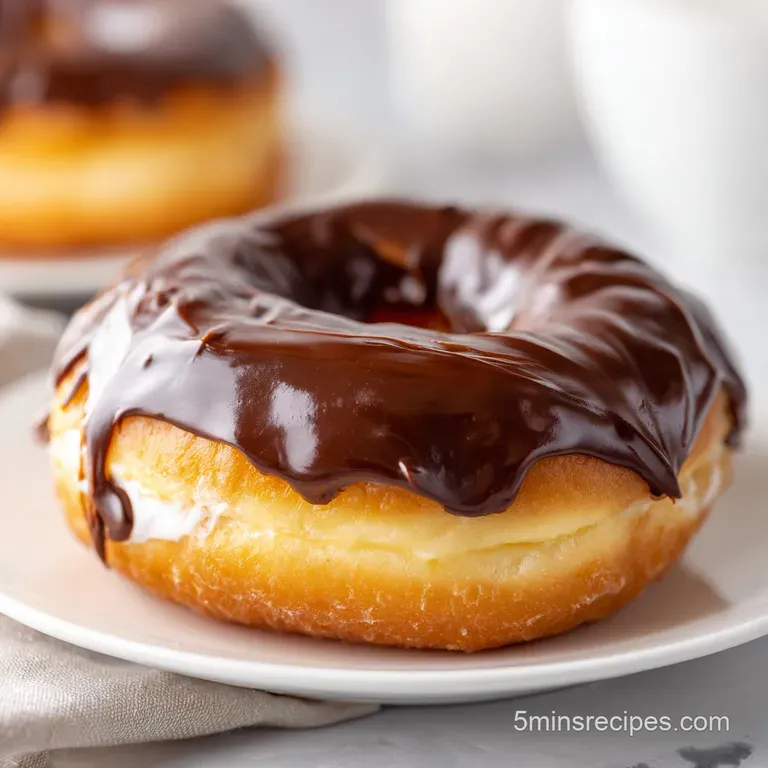
Taking the time for a slow proof allows the yeast to create tiny air pockets that expand when they hit the oil. This "oven spring" (or fryer spring, in this case) is what gives the Boston Cream Donut that iconic white ring around the middle.
It’s the sign of a perfectly proofed dough that’s light enough to float.
Essential Recipe Performance Specs
| Component | Target Metric | Visual/Sensory Cue |
|---|---|---|
| Liquid Temp | 110°F (43°C) | Warm to the touch, not hot |
| Oil Temp | 350°F (180°C) | Steady sizzle upon contact |
| Dough Weight | 75g per piece | Slightly larger than a golf ball |
Chef Tip: Freeze your butter for 10 minutes before adding it to the dough. Cold butter incorporated slowly creates a much finer, more velvety crumb structure that holds the filling better.
Selecting Quality Donut Ingredients
- 500g all purpose flour: Use a high-quality brand with at least 10% protein. Why this? Provides enough structure to hold the heavy cream filling.
- Substitute: Bread flour (results in a slightly chewier, more substantial donut).
- 7g active dry yeast: Ensure it's fresh by checking for foam in the warm milk. Why this? Essential for the airy, lifted texture we need.
- Substitute: 5g instant yeast (skip the blooming step).
- 105g unsalted butter: Softened to room temperature for even mixing. Why this? Adds the richness characteristic of a Boston Cream Donut.
- Substitute: Salted butter (reduce the added sea salt by half).
- 10ml vanilla bean paste: Look for the little black flecks. Why this? Offers a much deeper, more authentic flavor than liquid extract.
- Substitute: 10ml pure vanilla extract.
- 175g semi sweet chocolate chips: Use a brand you'd enjoy eating plain. Why this? High cocoa butter content ensures a glossy, smooth glaze.
- Substitute: Dark chocolate bar (chopped finely).
| Original Ingredient | Substitute | Why It Works |
|---|---|---|
| Whole Milk (240ml) | Full fat Oat Milk | High fat and sugar content mimic dairy for a decent rise. |
| Corn Syrup (15ml) | Honey | Provides the same glossy finish, though it adds a floral flavor. |
Necessary Kitchen Equipment
You don't need a professional bakery setup for a great Boston Cream Donut, but a few tools make a huge difference. A stand mixer is your best friend here because the dough is quite sticky and needs a good 8-10 minutes of kneading to develop that silkiness.
I also highly recommend a heavy bottomed pot, like a Dutch oven, for frying. It holds heat much better than a thin skillet, which prevents the oil temperature from crashing when you drop the dough in. If you have a kitchen scale, use it.
Measuring 500g of flour by weight rather than cups is the only way to ensure your dough isn't too dry.
The step-by-step Execution Plan
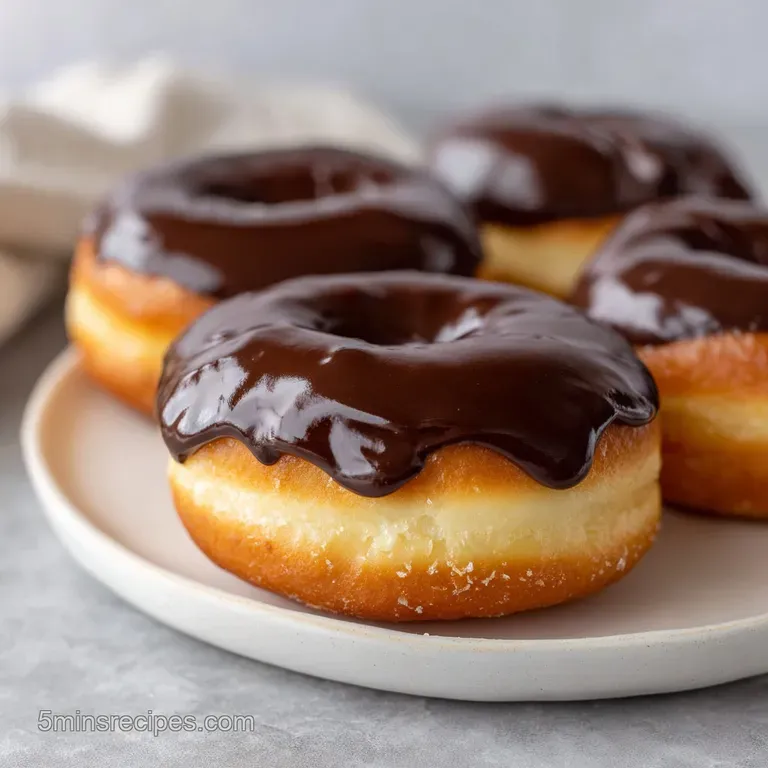
Preparing the Silky Pastry Cream
- Whisk 4 large egg yolks with 75g granulated sugar and 35g cornstarch until pale.
- Heat 480ml whole milk until steaming, then slowly stream it into the yolks while whisking constantly. Note: This tempers the eggs so they don't scramble.
- Thicken the mixture in a saucepan over medium heat until it becomes a thick, velvety custard.
- Stir in 10ml vanilla bean paste and 30g of the unsalted butter, then press plastic wrap directly onto the surface and chill for 2 hours.
Developing the Airy Dough
- Bloom 7g yeast in 240ml warm milk with a pinch of sugar for 5 minutes until frothy and fragrant.
- Mix the yeast mixture with 500g flour, the remaining 75g sugar, 1 egg, and 5g salt using a dough hook.
- Incorporate the remaining 75g softened butter one tablespoon at a time until the dough is silky and clears the sides of the bowl.
- Proof the dough in a greased bowl for 1 hour 30 mins until doubled in size and pillowy.
Shaping and Frying
- Degas the dough and roll it out to 1/2 inch thickness, then cut into 12 circles and proof again for 45 minutes.
- Fry each Boston Cream Donut in 350°F oil for 2 minutes per side until deep golden and puffed.
- Fill the cooled donuts with the chilled pastry cream using a piping bag.
- Glaze the tops by dipping them into a ganache made from 175g chocolate chips, 120ml heavy cream, and 15ml corn syrup.
If you love the process of working with dough but need something faster on a busy morning, you might want to try my Fast Cinnamon Roll Recipe which uses a similar enriched base but skips the frying.
Solving Common Frying Problems
Why Your Dough Fails
If your dough feels like a brick after frying, it likely didn't proof long enough or your milk was too hot and killed the yeast. Yeast is a living thing; it needs warmth, not a sauna. If the dough doesn't double in size during the first rise, don't even bother frying it yet. Give it more time in a warm spot.
Fixing Lumpy Pastry Cream
Lumps happen when the eggs cook too fast or the cornstarch isn't whisked properly. If you see lumps forming, take it off the heat immediately and whisk like your life depends on it. The filling technique for this Boston Cream Donut is very similar to what I use in my Chocolate Cream Pie Recipe, where a smooth texture is everything.
| Problem | Root Cause | Solution |
|---|---|---|
| Raw Middle | Oil too hot | Lower heat to 350°F; the outside browns before the inside cooks. |
| Greasy Texture | Oil too cold | Ensure oil returns to 350°F between batches; cold oil soaks in. |
| Runny Filling | Under cooked custard | Cook until the first bubble pops to fully activate cornstarch. |
Common Mistakes Checklist:
- ✓ Use a thermometer to keep oil at exactly 350°F (prevents greasiness).
- ✓ Don't skip the second proof after cutting circles (ensures airiness).
- ✓ Sieve the custard through a fine mesh strainer while hot (removes all lumps).
- ✓ Pat the dough pieces dry with a paper towel if they look sweaty before frying.
- ✓ Let the donuts cool completely before filling (prevents cream from melting).
Creative Donut Flavor Variations
Swapping for a Bavarian Cream Donut Filling
While a Boston Cream Donut traditionally uses a pastry cream (custard), a Bavarian filling involves folding whipped cream into that custard. This results in a much lighter, foam like texture. It's a great option if you find the traditional custard too heavy.
Simply whip 120ml of heavy cream to stiff peaks and fold it into your chilled pastry cream before filling.
Adding a Flavor Twist
You can easily change the profile of this Boston Cream Donut by infusing the milk. Try steeping two bags of Earl Grey tea in the milk while heating it for the custard. The floral notes pair beautifully with the chocolate glaze.
Or, for a busy morning pick me-up, add a teaspoon of espresso powder to the chocolate ganache to deepen the cocoa flavor.
Creating a Quick Version
If you're short on time, you can use high-quality store-bought puff pastry or biscuit dough. While it won't have that signature yeast raised texture, it's a "busy mom" hack that works in a pinch. Just be sure to still make the homemade custard, as the canned stuff just doesn't compare to real vanilla bean paste.
Storage and Freshness Strategies
A Boston Cream Donut is truly at its peak about 30 minutes after glazing. However, life happens. You can store these in an airtight container in the fridge for up to 2 days. Because of the dairy in the custard and the ganache, they shouldn't sit out on the counter for more than a few hours.
To refresh a day old donut, let it sit at room temperature for 20 minutes before eating. Don't microwave them, or the chocolate will turn into a puddle and the cream will lose its structure. For a zero waste tip: if you have leftover ganache, it makes an incredible base for hot chocolate.
Just whisk it into warm milk. Leftover egg whites from the custard can be frozen or used for a healthy omelet the next morning.
Ideal Pairings for Dessert
Since this recipe is quite rich, I always serve it with a very strong, black coffee or a cold glass of milk. The bitterness of the coffee cuts right through the sweetness of the chocolate and the creamy center.
If you're serving these at a brunch, a side of fresh raspberries or tart strawberries provides a nice acidic balance.
For a savory contrast after enjoying these sweets, you might like the salty, hearty flavors of my John Wayne Casserole Recipe. It’s a great way to balance out a day of indulgence.
If you want X, do Y:If you want a thicker glaze, add 50g more chocolate chips to the ganache. If you want a "Long John" shape, cut the dough into rectangles instead of circles. If you want a matte finish, skip the corn syrup in the glaze.
Debunking Popular Donut Myths
One big misconception is that you need a specialized deep fryer. You don't. A heavy cast iron pot is actually better because the metal retains heat more efficiently than most home electric fryers. Another myth is that the "white ring" around the donut is a mistake.
It's actually the hallmark of a perfectly proofed donut! It shows the dough was light enough to float halfway out of the oil. Finally, searingly hot oil doesn't "seal" the dough; it just burns the outside. Consistent, moderate heat is the secret to that shatter-crisp crust.

Boston Cream Donut FAQs
What is a Boston creme donut?
It is a yeast raised, fried donut. It features a classic ring or filled shape, traditionally filled with yellow pastry cream (custard) and topped with a rich chocolate glaze.
What is the unhealthiest donut?
The Boston Cream Donut is nutritionally dense, but usually not the worst overall. Being yeast raised and deep fried, it absorbs significant fat, and the cream filling adds sugar, making it high in calories and saturated fat.
What is the difference between Bavarian and Boston cream donuts?
The filling consistency is the primary difference. Boston cream uses a pure, thick pastry cream (custard), whereas Bavarian cream incorporates whipped cream folded into the cooled custard, making it lighter and airier.
What is Boston cream filling made of?
It is primarily made from milk, egg yolks, sugar, and cornstarch. The cornstarch is crucial for gelatinization, which ensures the custard sets up firmly enough to hold its shape inside the donut.
How do I prevent the chocolate glaze from looking dull?
Add a source of fat or invert sugar to your chocolate mixture. Adding a small amount of corn syrup or butter to your ganache reflects light better, resulting in that signature glossy finish.
Why did my donuts taste greasy after frying?
The oil temperature dropped too low when the dough was added. Maintain a steady 350°F (177°C); if the oil is too cool, the dough absorbs excess fat before the crust sets, leading to a heavy, greasy texture.
Is it true I must use a heavy pot for frying?
No, this is a common misconception. While a heavy pot like cast iron retains heat well, any pot that maintains the required temperature stability will work; consistent heat is more important than the material itself.
Boston Cream Donut Recipe
Ingredients:
Instructions:
Nutrition Facts:
| Calories | 522 calories |
|---|---|
| Protein | 8.6g |
| Fat | 27.2g |
| Carbs | 58.9g |
| Fiber | 1.8g |
| Sugar | 24.3g |
| Sodium | 215mg |
