German Pancakes: Oven Puffed Masterpiece
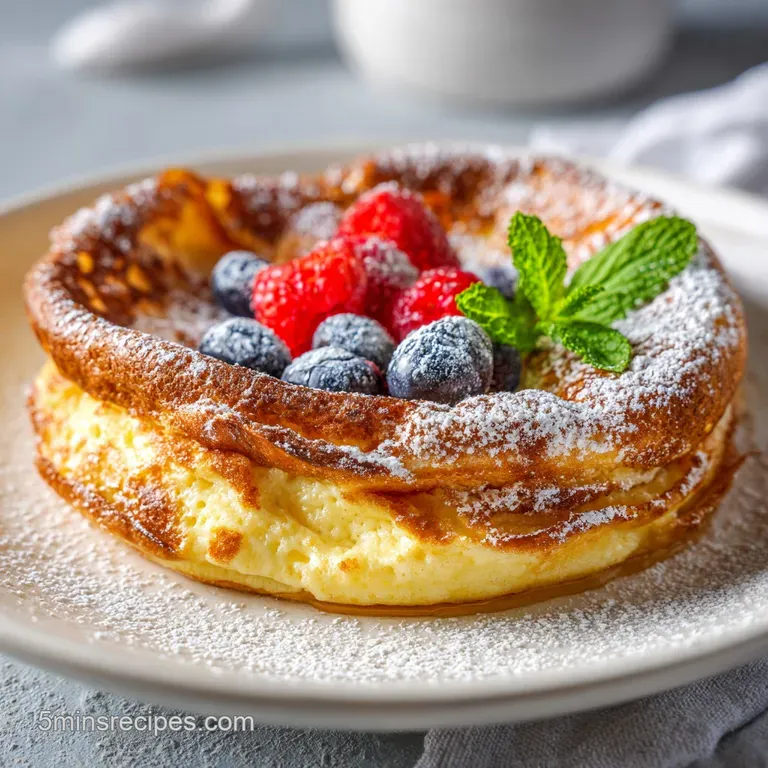
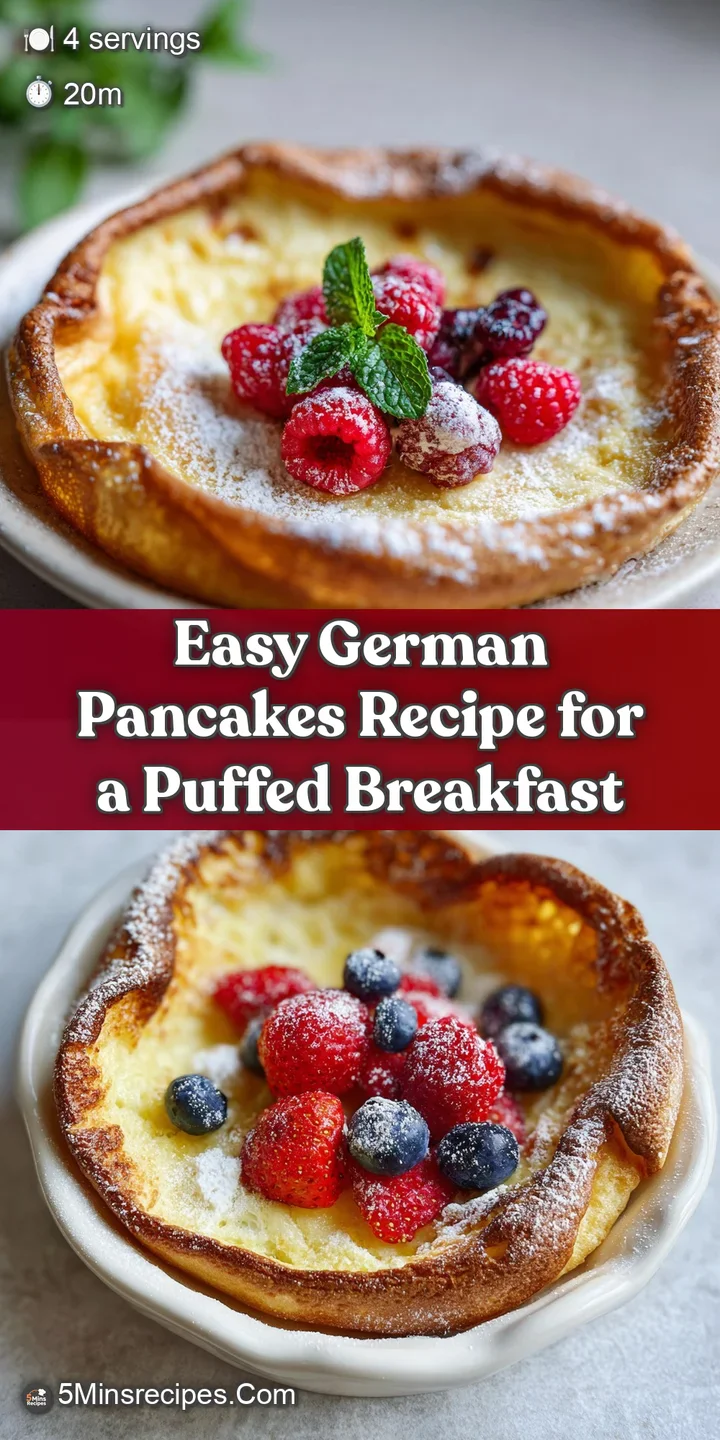
- Time: Active 5 minutes, Passive 15 minutes, Total 20 minutes
- Flavor/Texture Hook: A buttery, shattering outer crust with a velvety, custard like center
- Perfect for: Lazy weekend mornings or impressive brunch hosting for beginners
- Making Massive and Airy German Pancakes Fast
- Golden Puffs and Silky Custard
- Why This Massive Rise Happens
- Essential Specs for Success
- Pantry Staples for Better Batter
- Essential Tools for Skillet Sizzle
- Quick Steps from Prep to Plate
- Fix Your Flat Pancakes Now
- Creative Flavors and Easy Swaps
- Storage and Reheating Done Right
- Pro Plating for Morning Drama
- Recipe FAQs
- 📝 Recipe Card
Making Massive and Airy German Pancakes Fast
You know those mornings where you want something fancy but your brain is still foggy and the kids are already asking for snacks? I used to reach for a box mix every single time until I discovered how easy German Pancakes actually are.
I remember the first time I made one; I stood in front of the oven window like a kid at a magic show, watching the batter climb up the sides of the skillet until it looked like a literal mountain of gold. It felt like I’d pulled off a restaurant quality trick with nothing but some eggs and flour.
The smell is what really gets you first. It's that warm, intoxicating aroma of browning butter and vanilla that fills up the whole kitchen before the timer even goes off. Unlike traditional pancakes where you’re stuck flipping circles over a hot stove for thirty minutes, this is a "pour and walk away" situation.
It’s the ultimate hack for busy moms who want to feel like they’ve won at breakfast without actually doing much dishes. Trust me, once you see that puff, you’ll never go back to the flat stuff.
Golden Puffs and Silky Custard
A German pancake is essentially a hybrid between a crepe, a popover, and a giant Yorkie pudding. It doesn't use baking powder or soda, which always blew my mind. Instead, it relies on high heat and a high egg to flour ratio to create a structure that holds air.
The edges become incredibly crispy and almost paper thin, creating a satisfying shatter when you cut into them, while the base remains soft and slightly dense like a rich custard.
If you’ve ever tried my Sweet Breakfast Idea recipe for those blueberry days, you know I love a good fruit topping. But these German Pancakes are a different beast. They have a deep, buttery flavor that doesn't need much help. The pinch of nutmeg and the splash of vanilla extract add a warmth that makes the whole house feel cozy. It’s the kind of dish that makes everyone gather around the table immediately because it looks so dramatic the moment it leaves the oven.
Why This Massive Rise Happens
The Steam Engine Effect: The high liquid content from the eggs and milk turns into steam instantly in the hot skillet, while the gluten and egg proteins stretch to trap that air. This creates the massive "puff" that defines the dish before the structure sets in the dry heat of the oven.
| Factor | Fresh From Scratch | Box Shortcut |
|---|---|---|
| Texture | High rise, airy, and custardy | Denser, more cake like |
| Prep Time | 5 minutes | 2 minutes |
| Flavor Impact | Rich butter and vanilla notes | Muted, often tastes like flour |
It is important to remember that the temperature of your ingredients matters here more than in a standard pancake. If your eggs and milk are ice cold, they’ll fight against the heat of the pan, and you won’t get that legendary lift.
I always let mine sit on the counter for a few minutes while the oven preheats to ensure the batter hits the pan ready to react.
Essential Specs for Success
Achieving that perfect golden brown finish requires a few non negotiable numbers. If you stray too far from these, you might end up with a flat omelet instead of a towering pancake. I’ve made the mistake of pulling it out too early, only to watch it collapse into a soggy mess within seconds.
- Internal Temperature: Look for a light golden hue across the top, but the edges should be a deep, toasted mahogany.
- Oven Setting: 400°F (200°C) is the sweet spot; any lower and the steam won't form fast enough to lift the batter.
- Preheat Time: Your skillet needs at least 5 minutes in the oven with the butter to reach the sizzle point.
Chef's Note: If you're out of flour and in a massive rush, you can actually use a Homemade Bisquick Mix recipe as a base, but reduce the salt since the mix already contains it.
Pantry Staples for Better Batter
The beauty of this recipe is that you probably have everything in your cupboard right now. We aren't using anything fancy, but the quality of your 1/2 cup Whole Milk and 3 large Eggs really dictates the final richness.
I always use whole milk because the fat helps create that velvety interior that skim milk just can't replicate.
| Component | Science Role | Pro Secret |
|---|---|---|
| 3 large Eggs | Provides protein structure | Whisk until frothy to incorporate air early |
| 1/2 cup All Purpose Flour | Creates the gluten web | Sift it in to avoid heavy clumps that sink |
| 3 tbsp Unsalted Butter | Facilitates the Maillard reaction | Let it brown slightly in the pan for nuttiness |
- 3 large Eggs
- Essential for lift. Why this? Eggs provide the protein "balloon" that traps steam for the rise.
- Substitute
- There is no perfect sub for the rise, but 1/4 cup carbonated water + 1 tbsp flax meal can work for a denser version.
- 1/2 cup Whole Milk
- Adds fat and moisture.
- Substitute
- 2% milk works, but the center will be less creamy.
- 1/2 cup All Purpose Flour
- The structural foundation.
- Substitute
- 1:1 gluten-free flour blend (ensure it has xanthan gum).
- 1/4 tsp Sea Salt
- Enhances all other flavors.
- Substitute
- Table salt (use a slightly smaller pinch).
- 1 tsp Pure Vanilla Extract
- Provides that classic bakery aroma.
- Substitute
- Almond extract (use only 1/4 tsp).
- 1 pinch Ground Nutmeg
- The "secret" spice.
- Substitute
- Ground cinnamon.
- 3 tbsp Unsalted Butter
- Prevents sticking and adds flavor.
- Substitute
- Salted butter (just omit the extra sea salt).
Essential Tools for Skillet Sizzle
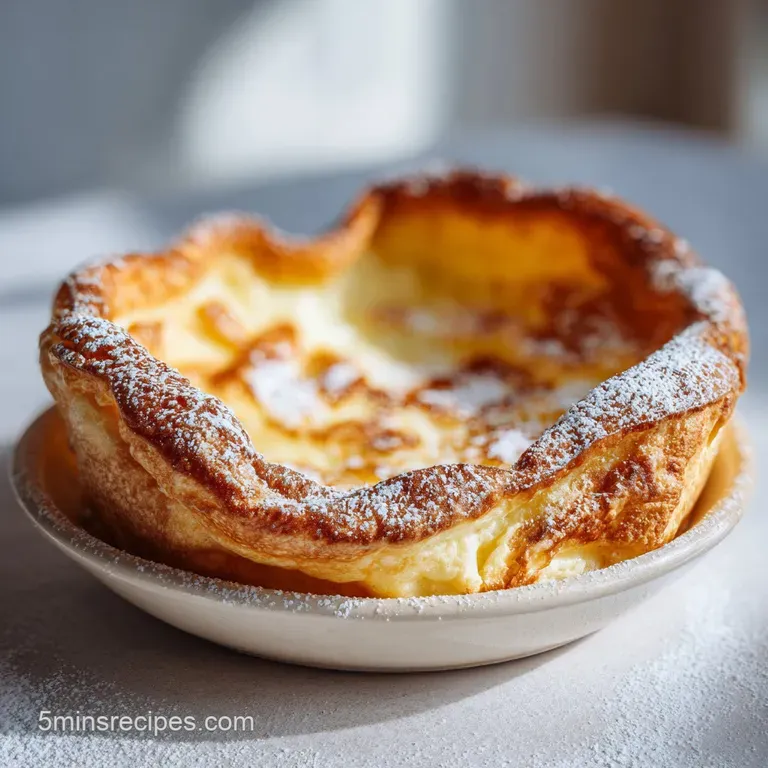
You don't need a pantry full of gadgets, but the vessel you choose matters. A 10 inch cast iron skillet is the gold standard because it retains heat like a pro. When that batter hits the hot iron, it starts cooking immediately, which is exactly what triggers the rise.
If you don't have cast iron, a heavy stainless steel pan or even a glass 9x13 baking dish will work, though the edges might not get quite as crispy.
I personally love using a high speed blender for the batter. It's much faster than whisking by hand and it ensures the flour is completely hydrated with no lumps. If you’re whisking manually, just make sure you're aggressive with it. You want that batter to be as smooth as silk before it hits the pan.
Quick Steps from Prep to Plate
The flow of this recipe is all about timing. You want the oven hot and the pan sizzling before the batter is even ready. Follow this timeline to ensure you aren't waiting on the oven while your batter sits and loses its air.
- Heat the iron. Place 3 tbsp Unsalted Butter in a 10 inch skillet and slide it into the oven while it preheats to 400°F (200°C). Note: This ensures the pan is screaming hot for the batter.
- Whisk the base. In a large bowl or blender, combine 3 large Eggs, 1/2 cup Whole Milk, 1 tsp Pure Vanilla Extract, and 1/4 tsp Sea Salt.
- Incorporate the flour. Gradually add 1/2 cup All Purpose Flour and 1 pinch Ground Nutmeg. Whisk 1 minute until no lumps remain.
- Check the sizzle. Remove the hot skillet once the butter is melted and bubbling (don't let it burn!).
- The dramatic pour. Pour the batter directly into the center of the hot butter. Do not stir.
- Bake the puff. Slide the pan back into the oven immediately.
- Watch the rise. Bake 15 minutes until edges are tall, dark golden, and crispy.
- The finish. Remove from the oven and watch it slightly deflate this is normal!
- Garnish fast. Dust with powdered sugar while still hot so it clings to the surface.
- Slice and serve. Cut into wedges and serve immediately with fresh lemon or syrup.
Fix Your Flat Pancakes Now
If your pancake looks more like a sad tortilla than a mountain, don't panic. Usually, it's a temperature issue. The most common mistake I see is people adding the batter to a cold pan. If there’s no "sizzle" when the batter hits the butter, you’ve already lost the battle for height.
Why Your Pancake Stayed Flat
This usually happens because the oven wasn't actually at 400°F when you put the pan in. Many ovens beep before they are truly at temperature. Give it an extra five minutes. Also, over mixing the flour can develop too much gluten, making the batter "tough" and heavy rather than light and stretchy.
| Problem | Root Cause | Solution |
|---|---|---|
| Soggy Bottom | Too much butter or underbaked | Increase bake time by 2 mins; ensure butter is just coating the bottom |
| No Rise | Cold ingredients or cold pan | Use room temp eggs/milk; preheat skillet for 5 full mins |
| Burnt Edges | Oven rack too high | Move rack to the center position for even heat distribution |
Common Mistakes Checklist:
- ✓ Never open the oven door during the first 12 minutes (it lets the steam escape).
- ✓ Ensure the butter is bubbling but not brown/black before pouring batter.
- ✓ Don't use a pan that is too large; a 10 inch skillet is the limit for this quantity.
- ✓ Use room temperature eggs to ensure the proteins can stretch easily.
- ✓ Avoid low-fat milk; the lack of fat leads to a rubbery texture rather than a velvety one.
Creative Flavors and Easy Swaps
Once you have the base down, you can start playing with the profile. I’m a sucker for the classic lemon and powdered sugar, but my kids always beg for chocolate chips. If you want a savory twist, skip the vanilla and nutmeg and fold in some sharp cheddar and chives.
It’s a total game changer for a brunch spread.
Decision Shortcut
- If you want it extra crispy: Use a cast iron skillet and let the butter get slightly browned before pouring.
- If you want a sweeter crust: Sprinkle a tablespoon of granulated sugar over the batter right before it goes in the oven.
- If you want a fruit filled center: Toss half a cup of thinly sliced apples into the hot butter before pouring the batter over them.
| Original Ingredient | Substitute | Why It Works |
|---|---|---|
| Whole Milk | Coconut Milk (Full Fat) | Provides similar fat levels. Note: Adds a distinct tropical flavor. |
| AP Flour | Spelt Flour | Adds a nutty, earthy depth. Note: The rise will be slightly shorter. |
| Butter | Ghee | Higher smoke point. Note: Gives a more intense buttery aroma without burning. |
Storage and Reheating Done Right
German Pancakes are definitely best eaten the second they hit the table, but life happens. If you have leftovers, they’ll keep in the fridge for about 2 days. Don't bother with the microwave unless you like eating rubber.
To get that "shatter" back, pop the slices into a toaster oven or back into a hot skillet for 3 minutes.
To minimize waste, any extra batter can actually be kept in a jar in the fridge for 24 hours. Just give it a good shake before pouring it into a hot, buttered pan the next morning.
If you find yourself with scraps that are too small for a meal, chop them up and use them as a "bread" base for a quick breakfast bread pudding!
Pro Plating for Morning Drama
Presentation is half the fun with this dish. Since the pancake deflates quickly once it hits the cool air, I like to bring the whole skillet to the table. It creates a much bigger "wow" factor for the family.
For a classic look, a heavy dusting of powdered sugar is a must. I also love serving it with a few wedges of fresh lemon. Squeezing that bright acid over the rich, buttery custard cuts through the fat perfectly.
If you're feeling fancy, a handful of fresh raspberries or a drizzle of maple syrup turns this simple 5 ingredient meal into a feast. Just remember: work fast! The steam is escaping every second it sits there, so get those toppings on while it’s still standing tall.
Recipe FAQs
What is the difference between German pancakes and regular pancakes?
Yes, they are fundamentally different. German pancakes rely on high oven heat and egg structure to create a towering puff, whereas regular pancakes use chemical leaveners like baking powder on a stovetop.
What makes a German pancake?
A high ratio of eggs to flour baked quickly in a sizzling hot, buttered skillet. This process traps steam, causing the dramatic rise characteristic of this dish, resulting in crispy edges and a custardy center.
What do they call pancakes in Germany?
They are most commonly called Pfannkuchen. However, this term often refers to thin crepes; the large, puffy oven style is usually referred to as Dutch Baby or Bismarck Cake in German American regions.
What's the difference between latkes and German pancakes?
No, they are completely unrelated types of food. Latkes are savory, shredded potato pancakes fried on the stovetop, while German pancakes are sweet, batter based, and baked in the oven for a massive rise.
Must I use a cast iron skillet for German pancakes?
No, but it is highly recommended for best results. Cast iron retains the intense, even heat required to generate the necessary steam puff, although a heavy stainless steel pan can work in a pinch.
How to prevent a German pancake from collapsing immediately after baking?
Serve it as quickly as possible after removing it from the oven. The collapse is inevitable as the trapped steam escapes, but serving immediately with toppings like powdered sugar helps maintain the drama longer.
How to ensure the batter rises correctly?
Ensure your oven is fully preheated to 400°F and the butter in the skillet is sizzling hot. Room temperature eggs and milk also contribute significantly to the batter’s ability to stretch and trap air during the initial bake.
Easy German Pancakes Recipe
Ingredients:
Instructions:
Nutrition Facts:
| Calories | 207 kcal |
|---|---|
| Protein | 7.5 g |
| Fat | 13.2 g |
| Carbs | 14.1 g |
| Fiber | 0.5 g |
| Sugar | 1.6 g |
| Sodium | 210 mg |
