Soft Pretzel Bites: Chewy and Golden
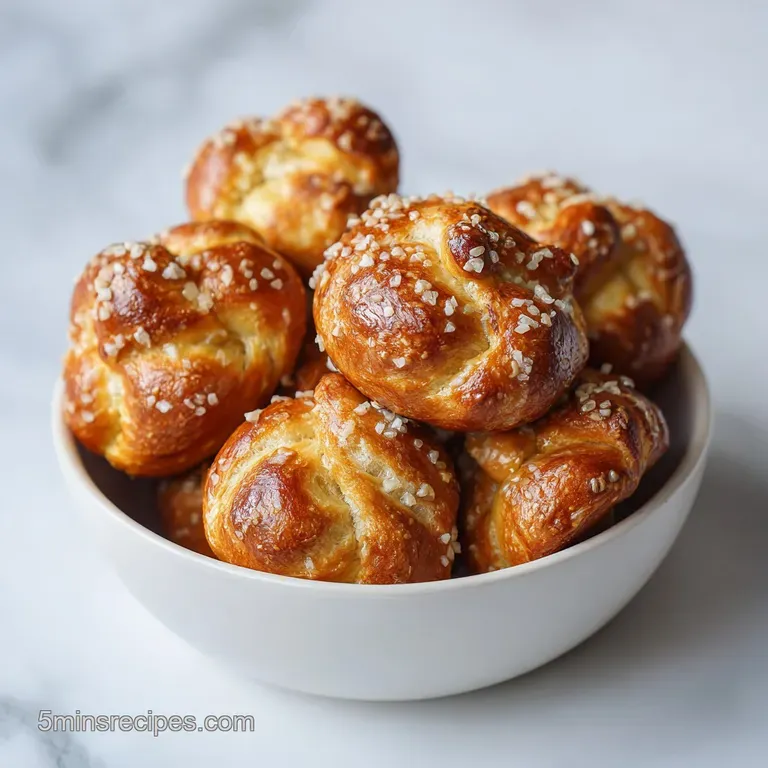
- Time: Active 30 minutes, Passive 12 mins, Total 42 mins
- Flavor/Texture Hook: Salty, buttery crust with a pillowy, dense crumb
- Perfect for: Game day snacks, bold fusion appetizers, or a crowd-pleasing party platter
- Rethinking Everything You Know About Making Soft Pretzel Bites
- Why This Quick Alkaline Bath Creates The Ultimate Chew
- Measuring The Exact Components For Consistent Snack Success
- Choosing The Best Elements For Bold Fusion Flavors
- The Essential Kitchen Tools For Snipping Perfect Bites
- Step By Step Guide To Golden Brown Perfection
- How To Avoid Rubbery Or Metallic Tasting Dough
- Swapping Ingredients For Sweet Or Spicy Flavor Profiles
- Debunking The Lye Requirement And Rising Times
- Keeping Your Snacks Fresh And Ready To Reheat
- Bold Dips And Fusion Pairings For Your Platter
- CRITICAL Sodium Alert!
- Recipe FAQs
- 📝 Recipe Card
Rethinking Everything You Know About Making Soft Pretzel Bites
Forget everything you have heard about pretzels being a massive weekend project that requires a chemistry degree and a hazmat suit. Most people think you need food grade lye to get that deep, mahogany brown color that makes your mouth water at the mall. I am here to tell you that is a total myth.
You can get that exact same "shatter" on the crust and that distinct, slightly metallic alkaline tang using just regular old baking soda from your pantry. I used to be intimidated by the idea of boiling dough before baking it, but once you smell that yeasty, sweet aroma hitting the hot water, you will realize it is the most satisfying part of the process.
We are making these Soft Pretzel Bites bold and fun today. If you have ever felt like homemade bread is too fussy because of the kneading and the hours of rising, this recipe is your new best friend.
We are leaning into a "relaxation rest" rather than a full double rise, which keeps the dough manageable and saves us a ton of time. I love serving these with a quick fusion dip, maybe something with a little kick like a gochujang honey mustard or a miso infused beer cheese.
It is all about taking that classic snack and giving it a little more personality.
The smell in your kitchen when these hit the oven is going to be unreal. It is a mix of toasted grain, melting butter, and that specific sharp scent of the pretzel salt. It's basically a hug in snack form.
I have made the mistake of over boiling these in the past, which leads to a weird, soapy aftertaste, but we have fixed that. We are going for a quick 30 second flash boil that sets the crust without ruining the flavor.
Let's get into why this method actually works and how you can nail it on your first try without breaking a sweat.
Why This Quick Alkaline Bath Creates The Ultimate Chew
Most home cooks skip the boiling step because it feels like an extra dish to wash, but that is the one step you absolutely cannot skip. When you drop the dough into the boiling water mixed with baking soda, it creates a reaction on the surface of the dough.
This process gelatinizes the starches on the outside, which is why the outside gets that specific chewy texture while the inside stays soft and airy. It also raises the pH level of the dough surface, which encourages a massive Maillard reaction.
That is just a fancy way of saying it turns dark brown and delicious really fast in the oven.
Alkaline Surface Reaction: The baking soda bath breaks down proteins on the dough surface, allowing for rapid browning and that signature pretzel flavor.
Gluten Relaxation: A short 15 minute rest after kneading allows the gluten strands to settle, so the dough ropes don't snap back when you roll them.
Steam Injection: The high heat of 425°F (218°C) combined with the moisture from the boil creates an immediate puff, ensuring the bites aren't dense rocks.
| Method | Time | Texture | Best For |
|---|---|---|---|
| Yeast Dough (Classic) | 42 mins | Chewy and dense | Authentic flavor seekers |
| Biscuit Dough (Fast) | 20 min | Flaky and light | Absolute emergencies |
| Frozen Dough (Store) | 15 min | Often dry/stale | Convenience only |
Choosing the right method depends on how much time you have, but the yeast version always wins on flavor. If you are looking for a savory pairing for a full meal, these bites go incredibly well with my Garlic Butter Steak Bites. The salty crust of the pretzel is the perfect vessel for soaking up that garlic butter sauce.
Measuring The Exact Components For Consistent Snack Success
Bread flour is the real hero here. You might be tempted to just use all purpose flour since it is already in the cupboard, but the higher protein content in bread flour is what gives us that "tug" when you bite into the pretzel.
If you use all purpose, they will still taste good, but they will feel more like a dinner roll than a real pretzel. Also, don't play around with the water temperature. If it's too hot, you will kill the yeast, and if it's too cold, it will take forever to foam up.
Aim for that 110°F (43°C) sweet spot - it should feel like lukewarm bath water on your wrist.
| Ingredient | Science Role | Pro Secret |
|---|---|---|
| Bread Flour (4.5 cups) | Provides high gluten structure | Weigh it for accuracy to avoid dry dough |
| Baking Soda (0.5 cup) | Increases surface pH | Use a fresh box for the most vibrant brown color |
| Active Dry Yeast (2.25 tsp) | Creates air pockets | Bloom in sugar water to ensure it's alive |
| Warm Water (1.5 cups) | Hydrates the flour | Keep at 110°F (43°C) for optimal yeast activity |
Using a stand mixer like a KitchenAid makes the kneading process a breeze, but you can totally do this by hand if you want a bit of a workout. Just keep kneading until the dough is smooth and stops sticking to your fingers. It should feel like a soft stress ball.
If it is still shaggy and tearing, keep going for another minute or two.
Choosing The Best Elements For Bold Fusion Flavors
To make the best Soft Pretzel Bites recipe, we need to talk about the quality of your toppings. Standard table salt is a big no no here. It will just melt into the dough and make the whole thing taste like a salt lick.
You need coarse pretzel salt or at least a flaky sea salt (like Maldon) to get those big, crunchy crystals that stay on top of the bite. The egg wash is also non negotiable. It acts as the "glue" for the salt and gives the pretzels a beautiful, shiny finish that looks professional.
- Warm water (1.5 cups): Use filtered water if your tap smells like chlorine. Why this? Yeast is sensitive to chemicals.
- Granulated sugar (1 tbsp): Feeds the yeast. Why this? Speeds up the blooming process.
- Active dry yeast (2.25 tsp): The leavening agent. Why this? Provides that classic bready lift.
- Bread flour (4.5 cups): For the chew. Why this? Higher protein than all purpose.
- Unsalted butter (2 oz): Melted and cooled. Why this? Adds richness and softens the crumb.
- Fine sea salt (2 tsp): For the dough. Why this? Enhances the natural grain flavors.
- Baking soda (0.5 cup): For the boiling bath. Why this? Creates the alkaline environment.
- Large egg (1 unit): Beaten for the wash. Why this? Provides shine and salt adhesion.
- Pretzel salt (1 tbsp): Coarse topping. Why this? Adds the signature crunch.
| Original Ingredient | Substitute | Why It Works |
|---|---|---|
| Unsalted Butter | Coconut Oil | Similar fat content. Note: Adds a very subtle tropical aroma |
| Granulated Sugar | Honey | Natural sugar. Note: Helps browning but makes dough slightly stickier |
| Bread Flour | All Purpose Flour | Lower protein. Note: Result will be softer and less "bouncy" |
The Essential Kitchen Tools For Snipping Perfect Bites
You don't need a lot of specialized gear, but a bench scraper is a game changer for this recipe. It allows you to snip the dough into clean, uniform bites without squishing them. If you don't have one, a sharp chef's knife or even a clean pair of kitchen shears works wonders.
You also want a large, wide pot for the boiling bath. If the pot is too narrow, the bites will crowd each other and stick together, which is a mess you don't want to deal with when the water is bubbling.
Make sure you have a slotted spatula or a "spider" strainer. You need to be able to lift the bites out of the boiling water quickly and let the excess water drain off before they hit the baking sheet.
If you put them on the pan while they are still dripping wet, the bottoms will get soggy and stick to the parchment paper, even if you greased it. Speaking of parchment, use the good stuff. Silicon mats (like Silpat) are also great, but sometimes the alkaline water can leave a residue on them over time.
step-by-step Guide To Golden Brown Perfection
1. The Quick Start Dough
In your stand mixer bowl, whisk together the warm water and sugar. Sprinkle the yeast over the top and just walk away for 5 minutes. You are looking for a thick, foamy head on the water. If it doesn't foam, your yeast is dead or your water was too hot.
Note: The sugar is purely food for the yeast, not for sweetness.
2. The Kneading Phase
Add your melted butter, sea salt, and bread flour. Using the dough hook, mix on low until it's a shaggy mess. Then, crank it up to medium and let it go for 3 to 5 minutes. You want the dough to completely clear the sides of the bowl and feel smooth to the touch.
3. The Relaxation Rest
Turn the dough out onto a lightly floured surface. Don't worry about a long rise here. Just cover it with a clean kitchen towel and let it relax for 15 minutes. This lets the gluten "chill out" so it doesn't fight you when you start rolling.
4. The Rope and Snip
Divide your dough into 8 equal pieces. Roll each piece into a 20 inch long rope. Using your bench scraper or a knife, snip the ropes into 1 inch bites. Try to keep them consistent so they cook at the same rate.
5. The Boiling Bath
Bring 9 cups of water and your baking soda to a rolling boil. Be careful, the soda will bubble up! Drop the bites in in batches. Boil them for exactly 30 seconds. Note: Use a timer; over boiling makes them taste like soap.
6. The Drainage Station
Use your slotted spatula to remove the bites. Let them drip for a second, then place them onto a parchment lined baking sheet. They should look slightly puffed and a bit wrinkled.
7. The Final Polish
Brush each bite generously with the beaten egg wash. This is what gives them that "bakery" sheen. Sprinkle with the coarse pretzel salt while the egg wash is still wet.
8. The Golden Bake
Slide them into a preheated oven at 425°F (218°C). Bake for 10 to 12 minutes. You will know they are done when they are a deep, dark mahogany brown and smell incredibly yeasty.
How To Avoid Rubbery Or Metallic Tasting Dough
The biggest issue people run into with Soft Pretzel Bites is the "metallic" taste. This usually happens because they either used too much baking soda or left the bites in the water for too long. Stick to the 30 second rule. It is better to have a slightly lighter pretzel than one that tastes like a nickel.
Another issue is the dough being too sticky to handle. If it's a humid day, you might need an extra tablespoon or two of flour during the kneading process.
Why Your Bites Are Too Tough
If your pretzels feel like rubber, you likely over kneaded the dough or used too much flour. When the dough is too dry, it can't expand properly in the oven, leading to a dense, unpleasant texture.
Always measure your flour by spooning it into the cup and leveling it off, rather than scooping directly with the measuring cup, which packs the flour down.
| Problem | Root Cause | Solution |
|---|---|---|
| Metallic Aftertaste | Boiled too long | Limit boiling to 30 seconds max |
| Bites Sticking to Pan | Excess water | Drain thoroughly on a slotted spoon before tray |
| Pale Color | Water wasn't alkaline | Ensure you use the full 0.5 cup of baking soda |
Common Mistakes Checklist
- ✓ Don't skip the 15 minute rest; it makes rolling the ropes ten times easier.
- ✓ Make sure the baking soda water is at a full rolling boil before adding dough.
- ✓ Use bread flour for that essential "chew" factor.
- ✓ Brush the egg wash thoroughly to ensure the salt actually sticks.
- ✓ Preheat your oven for at least 20 minutes to ensure a consistent 425°F (218°C).
Swapping Ingredients For Sweet Or Spicy Flavor Profiles
If you want to go the sweet route, skip the pretzel salt after the egg wash. Instead, bake them plain, then toss the hot bites in a bowl of melted butter followed by a mix of cinnamon and sugar. It is like a churro and a pretzel had a baby.
For a savory fusion twist, try adding 1 teaspoon of garlic powder and a pinch of dried parsley to the dough itself.
If you are looking for a dessert to follow up this snack, my Chocolate Chip Muffins are a great option to keep that bakery vibe going. They are soft, sweet, and provide a perfect contrast to the salty pretzels.
Scaling For Large Groups
When making a double batch for a party, don't just double everything blindly. Stick to the 1.5x rule for salt and spices initially, then adjust. You will definitely need to boil in more batches.
If you try to boil 40 bites at once, the water temperature will drop too much, and the bites will just sit there getting soggy instead of flash cooking.
| Servings | Dough Pieces | Boiling Batches | Total Bake Time |
|---|---|---|---|
| 6 People (Standard) | 8 ropes / 80 bites | 4-5 batches | 12 mins |
| 12 People (Double) | 16 ropes / 160 bites | 8-10 batches | 24 mins (2 trays) |
| 3 People (Half) | 4 ropes / 40 bites | 2 batches | 12 mins |
Debunking The Lye Requirement And Rising Times
One of the biggest myths is that you must use lye to get a "real" pretzel. While lye is more traditional in German bakeries, baking soda is a perfectly safe and effective alternative for home cooks. You get 95% of the same result without the risk of chemical burns.
Another myth is that the dough needs to double in size. In this recipe, we actually want a tighter crumb, so that 15 minute relaxation rest is plenty. We aren't making fluffy sandwich bread; we are making dense, chewy pretzels.
Searing or boiling doesn't "lock in" moisture in the way people think; it actually creates a physical barrier that changes how the crust reacts to heat. The crust becomes a separate entity from the soft interior, which is exactly what we want.
Keeping Your Snacks Fresh And Ready To Reheat
Storage: These are best eaten within a few hours of baking while the crust is still slightly crisp. If you have leftovers, store them in a paper bag rather than a plastic one. Plastic traps moisture and will make the salt melt into the dough, leaving you with "sweaty" pretzels.
They will stay good on the counter for about 2 days.
Freezing: You can freeze baked bites for up to 3 months. To reheat, don't use the microwave unless you want them to turn into rubber. Toss them in a 350°F (180°C) oven or an air fryer for 3 to 5 minutes until they are hot and the edges crisp up again.
Zero Waste Tip: If your pretzel bites go stale, don't toss them! You can chop them up and bake them at a low temperature to make pretzel croutons for a salad, or pulse them in a food processor to make a salty, crunchy breading for fried chicken.
The alkaline flavor adds an incredible depth to breading that regular breadcrumbs just can't match.
Bold Dips And Fusion Pairings For Your Platter
To really lean into that flavor first, bold snack vibe, you need a killer dip. A simple honey mustard is fine, but why not try a Miso Beer Cheese? Just melt some sharp cheddar with a splash of lager and whisk in a tablespoon of white miso paste. The umami from the miso plays perfectly with the salty pretzel crust.
Another favorite of mine is a Gochujang Honey glaze. Mix equal parts gochujang and honey with a little splash of rice vinegar. Dip the hot pretzels in there for a sweet, spicy, and tangy kick that will blow your friends' minds. These bites are basically a blank canvas for whatever bold flavors you are craving.
Whether you keep it classic with spicy brown mustard or go wild with fusion dips, this recipe is going to be your new go to for any gathering. Just remember: boil fast, bake hot, and don't be stingy with the salt!

CRITICAL Sodium Alert!
1345 mg 1345 mg (58% 58%)
The American Heart Association recommends a limit of about 2,300mg per day for adults, with an ideal limit of 1,500mg for most adults, especially those with high blood pressure. This recipe significantly exceeds that.
Personalized Sodium Reduction Tips
-
Halve the Fine Sea Salt-25%
Reduce the 2 tsp of fine sea salt to 1 tsp. This is the most significant source of added sodium in the dough itself.
-
Eliminate Pretzel Salt-20%
Omit the 1 tbsp of coarse pretzel salt entirely. Pretzel salt is primarily sodium chloride and adds a substantial amount of sodium, especially to the topping.
-
Use Unsalted Butter
Ensure you are using unsalted butter. If your butter is salted, you'll need to adjust other salt amounts accordingly.
-
Boost Flavor with Herbs and Spices
While this recipe doesn't have many high sodium flavorings, consider adding fresh or dried herbs like rosemary, garlic powder (not salt), or onion powder (not salt) to the dough for added flavor without sodium.
-
Measure Salt Precisely
When adding salt, always use measuring spoons for accuracy rather than estimating. This helps control the amount added.
Recipe FAQs
Does Costco have soft pretzel bites?
No, the store-bought options rarely match the taste of homemade. Preparing them at home allows you to control the chewiness and salt level for a much fresher result.
Are pretzels okay for diabetics?
No, these should be consumed with caution. As they are primarily made from bread flour, they contain significant carbohydrates that can impact blood sugar levels.
Are soft pretzel bites healthy?
No, they are typically considered a treat. With 428 calories per serving and a high sodium content from the baking soda bath and pretzel salt, they are best enjoyed in moderation.
Why soak pretzel bites in baking soda water?
The alkaline bath is essential for the Maillard reaction. This reaction creates the signature deep golden brown crust and distinct pretzel flavor that occurs during the 10-12 minutes of baking at 425°F.
How to ensure the dough is easy to roll into ropes?
Perform the 15-minute relaxation rest after kneading. Allowing the gluten to relax prevents the dough from snapping back, which is a technique that also improves the texture of our fast cinnamon roll recipe.
Is it true that bread flour makes them too tough?
No, this is a common misconception. Bread flour contains a higher protein content than all-purpose flour, which is the specific secret to achieving that classic, chewy pretzel texture.
How to keep the salt from falling off the bites?
Brush the egg wash generously onto the dough immediately after the boil. Ensure the surface is thoroughly coated so the coarse pretzel salt adheres firmly before you move them to the oven.
Homemade Soft Pretzel Bites
Ingredients:
Instructions:
Nutrition Facts:
| Calories | 428 kcal |
|---|---|
| Protein | 12.9 g |
| Fat | 9.4 g |
| Carbs | 72.8 g |
| Fiber | 2.6 g |
| Sugar | 2.1 g |
| Sodium | 1345 mg |
