Boursin Orzo Bake: Creamy and One-Pan
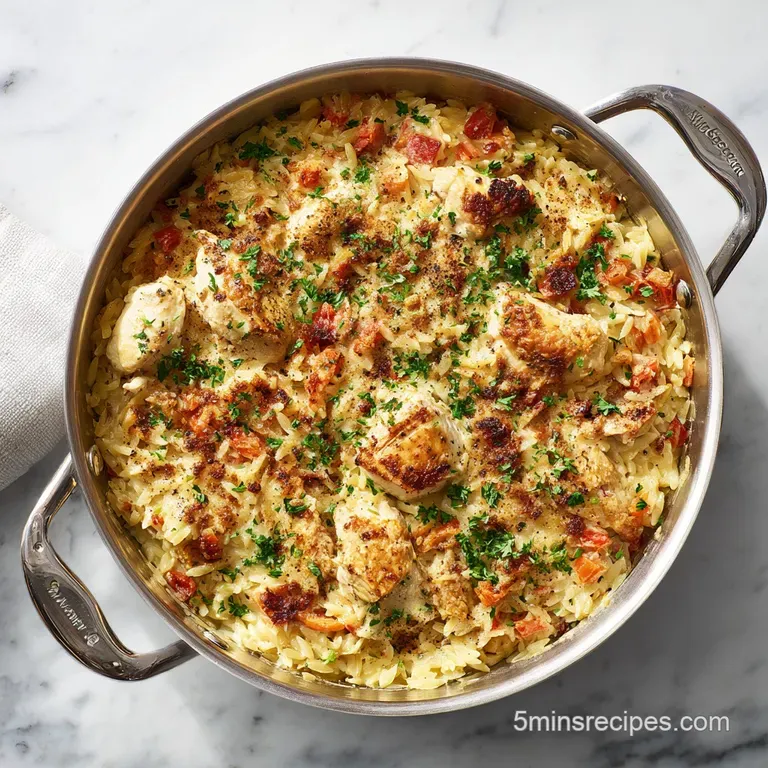
- Time: Active 10 minutes, Passive 30 minutes, Total 40 minutes
- Flavor/Texture Hook: Velvety, garlic infused creaminess with bursting tomato acidity
- Perfect for: Stressful weeknights or effortless dinner parties
- Mastering the Easy Boursin Orzo Bake
- Essential Culinary Techniques for Success
- Important Recipe Precision Details
- Sourcing Your Prime Ingredients
- Minimal Tools for Maximum Speed
- Step-By-Step Execution and Mastery
- Solving Common Texture Issues
- Customizing Your Flavor Profile
- Storage and Leftover Care
- Complementary Sides and Drinks
- Recipe FAQs
- 📝 Recipe Card
Mastering the Easy Boursin Orzo Bake
Picture this: It’s 6:00 PM on a rainy Tuesday, the kids are asking about dinner for the tenth time, and your energy levels are hitting zero. You pull a single ceramic dish from the cupboard and hear that satisfying clink of dry orzo hitting the bottom.
There’s no boiling water, no straining pasta, and certainly no standing over a hot stove stirring a roux. This is the magic of the Boursin Orzo Bake a dish that feels like a warm hug from a professional chef but takes less effort than making a sandwich.
I first stumbled onto this method during a frantic holiday season when my kitchen looked like a flour explosion had occurred. I needed something that felt "fancy" for unexpected guests but used exactly one pan.
When I pulled back the foil and saw those cherry tomatoes had blistered into sweet little gems, and that center puck of garlic cheese had slumped into a pool of pure silk, I knew I’d never go back to traditional pasta bakes. It’s all about that "set it and forget it" confidence.
We aren't just tossing things in a dish and hoping for the best, though. There is a specific rhythm to how the chicken stays juicy while the pasta absorbs every drop of seasoned broth.
You’re going to love how the spinach wilts in seconds just from the residual heat, keeping its vibrant green color instead of turning into mush. Let’s get into why this works so well and how you can nail it on your first try.
Essential Culinary Techniques for Success
The Starch Bridge: As the orzo simmers in the chicken broth, it releases natural starches that act as a thickening agent, binding the liquid to the melting cheese. This creates a glossy, velvety sauce that mimics a slow cooked risotto without the constant stirring.
Thermal Insulation: By covering the dish tightly with foil, you create a pressurized steam chamber. This environment ensures the chicken breast pieces cook through while remaining incredibly tender, as the steam prevents the protein fibers from drying out at high heat.
Fat Emulsification: The Boursin cheese serves as a stable fat source that doesn't "break" or become oily when heated. Because it's a soft, triple cream style cheese, it integrates instantly into the starchy broth once you give it a vigorous stir at the end.
| Thickness of Chicken | Internal Temp | Rest Time | Visual Cue |
|---|---|---|---|
| 1 inch (2.5 cm) cubes | 165°F (74°C) | 2 minutes | Opaque center, clear juices |
| 0.5 inch (1.2 cm) cubes | 165°F (74°C) | 1 minute | No pink, firm to touch |
| Shredded (Pre cooked) | 165°F (74°C) | None | Heated through, bubbly |
The timing of the stir is actually the most important part of the whole process. If you stir too early, you lose the steam needed to finish the pasta. If you wait too long, the sauce sets too firmly.
That two minute rest after pulling the dish from the oven allows the temperature to stabilize so the spinach wilts perfectly when you finally fold it in.
| Component | Role | Pro Secret |
|---|---|---|
| Orzo Pasta | Texture Provider | Use high protein semolina orzo for the best "bite" and sauce adhesion. |
| Chicken Broth | Flavor Base | Always use low sodium to control the final saltiness of the concentrated sauce. |
| Boursin Cheese | Emulsifier | Don't spread it out; keeping it in a puck ensures it melts evenly into a core. |
Important Recipe Precision Details
When we talk about professional speed, precision is our best friend. You don't want to be guessing if the pasta is done while your chicken is getting tough. We use exactly 300g of uncooked orzo because that ratio to 720ml of broth is the "golden mean" for this specific bake.
If you use too much broth, you'll end up with a soup; too little, and you'll have crunchy bits that get stuck in your teeth.
If you find yourself missing an ingredient, don't panic. This dish is remarkably forgiving as long as you maintain the liquid to pasta ratio. If you're out of chicken, you can easily pivot to a vegetarian version. In fact, if you enjoy this kind of velvety texture, you might also love my velvety Pastina recipe which uses a similar small pasta to broth technique for a comforting meal.
| Original Ingredient | Substitute | Why It Works |
|---|---|---|
| Boursin (150g) | Cream Cheese + Herbs | Similar fat content. Note: Needs extra garlic and salt to match Boursin's punch. |
| Chicken Broth (720ml) | Vegetable Broth | Same hydration levels with a lighter, more herbal flavor profile. |
| Cherry Tomatoes (300g) | Sun dried Tomatoes | Concentrated flavor. Note: Use only 1/2 cup as they are much more intense. |
Sourcing Your Prime Ingredients
- 1.5 cups (300g) uncooked orzo pasta: Why this? Small shape absorbs liquid fast and releases starch for a creamy finish.
- Sub: Acini de pepe or Ditalini (same cook time).
- 3 cups (720ml) low sodium chicken broth: Why this? Provides the foundational savory depth and hydration.
- Sub: Water with 2 bouillon cubes.
- 5.2 oz (150g) Boursin Garlic & Fine Herbs cheese: Why this? The "all in-one" sauce maker with pre balanced seasoning.
- Sub: 150g Garlic herb goat cheese.
- 2 cups (300g) cherry tomatoes, whole: Why this? They burst during baking to create acidic "pops" that cut the richness.
- Sub: Diced roma tomatoes.
- 1 lb (450g) boneless, skinless chicken breast, cut into 1 inch pieces: Why this? Lean protein that cooks at the exact same rate as the orzo.
- Sub: 450g Firm tofu cubes.
- 2 cups (60g) fresh baby spinach: Why this? Adds iron and color without needing a separate cooking step.
- Sub: Finely chopped kale.
- 1 tbsp (15ml) extra virgin olive oil: Why this? Helps the tomatoes blister and adds a fruity finish.
- Sub: Avocado oil.
- 0.5 tsp (3g) sea salt: Why this? Sharpens the other flavors; adjust based on your broth's saltiness.
- 0.5 tsp (1g) freshly cracked black pepper: Why this? Essential for cutting through the creamy cheese fats.
- 0.25 cup (15g) freshly grated Parmesan cheese: Why this? Adds a salty, nutty umami kick at the very end.
- Sub: Pecorino Romano.
Minimal Tools for Maximum Speed
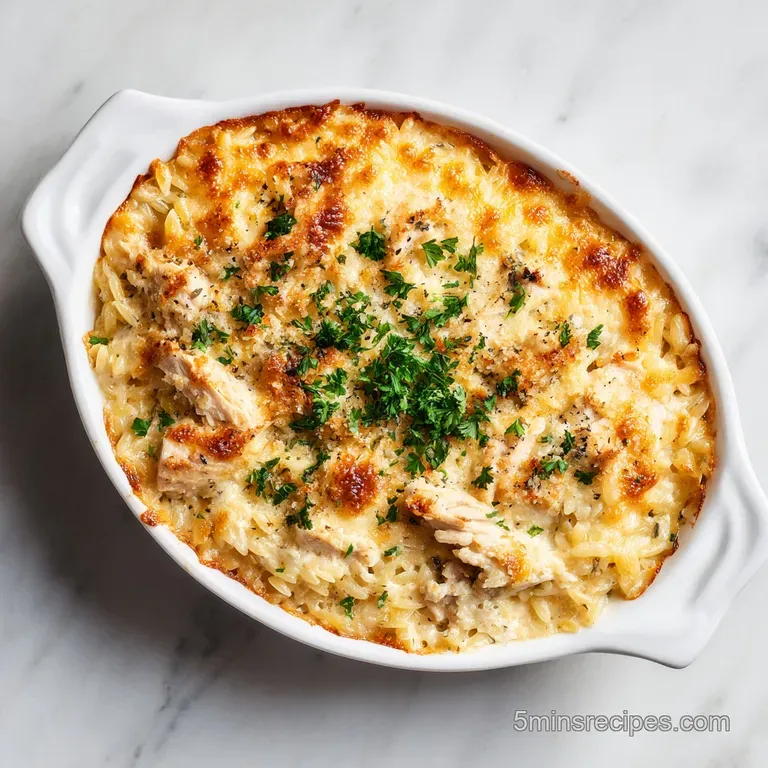
You really only need one primary piece of equipment: a 9x13 inch (23x33 cm) ceramic or glass baking dish. I prefer ceramic because it holds heat more evenly, which helps the orzo at the edges cook at the same speed as the center.
A glass dish like Pyrex also works perfectly, but you might notice the edges get a tiny bit more "toasty" which some people actually prefer!
The only other "tools" are a sharp chef's knife for the chicken and a sturdy wooden spoon. Avoid using a whisk; it will just get clogged with orzo. A wooden spoon allows you to scrape the bottom of the dish during the final stir, incorporating all those flavorful browned bits (the "fond") that might have stuck to the corners. If you're making this for a crowd, you could even serve it as a side for something like homemade Mozzarella Sticks to keep the "one pan" or "minimal tool" vibe going through the whole appetizer course.
step-by-step Execution and Mastery
- Preheat the oven. Set your oven to 400°F (200°C). Note: A hot oven is crucial for the tomatoes to burst before the pasta gets soggy.
- Layer the pasta. Spread the 300g of dry orzo across the bottom of your 9x13 dish. Until the bottom is fully covered.
- Add the liquid. Pour the 720ml of chicken broth directly over the pasta. Note: Don't worry if it looks like too much liquid; the orzo is thirsty.
- Nestle the chicken. Scatter the 450g of chicken breast pieces evenly through the dish. Until submerged in the broth.
- Place the flavor. Put the entire 150g round of Boursin cheese right in the center. Until it sits like an island.
- Add the aromatics. Toss the 300g of cherry tomatoes around the cheese and drizzle with 15ml of olive oil. Season with salt and pepper.
- Seal it tight. Cover the dish firmly with aluminum foil. Until no steam can escape the edges.
- Bake the dish. Place in the oven for 25-30 minutes. Until the orzo is tender and the chicken is opaque.
- The final rest. Remove from the oven and let it sit, still covered, for 2 minutes. Note: This carry over cooking finishes the pasta perfectly.
- Emulsify the sauce. Remove foil, add the 60g of spinach, and stir vigorously. Until the cheese disappears into a creamy sauce. Garnish with Parmesan.
Chef's Note: If you want an extra layer of flavor, toss the cherry tomatoes in a tiny bit of balsamic vinegar before adding them to the dish. The sugar in the vinegar caramelizes against the high heat of the oven, adding a deep, jammy note to the final sauce.
Solving Common Texture Issues
For Crunchy Orzo
If your orzo is still hard after 30 minutes, it's usually because the foil seal wasn't tight enough, allowing the steam to escape. If this happens, don't panic. Add another 1/4 cup of hot water, reseal it, and pop it back in for 5 more minutes.
The steam is what actually cooks the pasta, not just the liquid depth.
For a Sauce That Is Too Thin
Sometimes, if the tomatoes are particularly juicy, the sauce might look more like a soup than a thick pasta dish. The solution is simple: keep stirring! As the sauce cools slightly and you continue to fold in the Parmesan, the starches will continue to thicken the liquid.
If it's still too thin, let it sit uncovered for 3-4 minutes before serving; it thickens significantly as it drops below 160°F.
| Problem | Root Cause | Solution |
|---|---|---|
| Dry Chicken | Cubes cut too small | Cut into consistent 1 inch pieces; ensure they are fully submerged. |
| Burnt Bottom | Oven rack too low | Bake on the middle rack and use a ceramic dish for better heat distribution. |
| Bland Flavor | Low quality broth | Use a bouillon base or add a splash of lemon juice at the end to brighten. |
Common Mistakes Checklist
- ✓ Never rinse the orzo before baking; we need every grain of starch for the sauce.
- ✓ Ensure the chicken broth is room temperature or warm, not ice cold from the fridge.
- ✓ Don't skip the rest period; the pasta needs those 2 minutes to absorb the final liquid.
- ✓ Seal the foil like you mean it crimp those edges hard against the dish.
- ✓ Stir "vigorously" you aren't just folding; you're creating an emulsion.
Customizing Your Flavor Profile
- For a Zesty Mediterranean Twist: Swap the chicken for chickpeas and add 1/2 cup of kalamata olives and some marinated artichokes before baking. Squeeze fresh lemon over the top before serving.
- For a Vegetarian Power Up: Double the spinach and add roasted red peppers and sliced mushrooms. Use a mushroom based broth for an earthier umami profile.
- For a Restaurant Quality Side: Omit the chicken and use the orzo bake as a bed for seared scallops or grilled shrimp. The creamy garlic sauce is a natural match for seafood.
If you are cooking for a larger group, scaling this dish is a breeze. For a Double Batch (8 servings), use two separate 9x13 dishes rather than one giant deep pan. This ensures the heat distribution remains consistent.
If you try to double it in one deep pot, the orzo in the middle will stay raw while the edges turn to mush. If you are Halving the Recipe, use an 8x8 inch (20x20 cm) pan and reduce the cook time by about 5-8 minutes.
Storage and Leftover Care
Leftover Boursin Orzo Bake is actually one of my favorite lunches. It keeps beautifully in the fridge for up to 3 days. However, the orzo will continue to drink up the sauce as it sits. When you go to reheat it, add a splash of milk or broth (about 1 tablespoon per serving) before microwaving.
This loosens the sauce back into its original velvety state.
I don't recommend freezing this dish once it's cooked, as the pasta can become quite grainy and the cheese sauce may "split" or become oily upon thawing. For the best zero waste approach, if you have a tiny bit of leftover sauce but no pasta, use it as a topping for a baked potato or stir it into some scrambled eggs the next morning!
Even the tomato skins can be finely chopped into a quick salsa if you have extras that didn't make it into the pan.
Complementary Sides and Drinks
This bake is quite rich and garlic forward, so you want to pair it with something that has a bit of "crunch" or acidity. A simple arugula salad with a lemon shallot vinaigrette is my go to. The peppery bite of the arugula cuts right through the creamy Boursin.
If you want something more substantial, a side of roasted asparagus with a dusting of lemon zest works wonders.
For a drink pairing, look for a crisp white wine like a Sauvignon Blanc or a dry Pinot Grigio. The high acidity in these wines balances the fat in the cheese and the sweetness of the roasted tomatoes.
If you're keeping it non alcoholic, a sparkling water with a heavy squeeze of lime and a sprig of fresh basil mirrors the herbal notes in the cheese perfectly. This is "professional speed" dining at its finest maximum flavor, minimum stress, and a kitchen that stays clean enough to actually enjoy your evening.
Recipe FAQs
Is it possible to freeze the leftovers?
No, freezing is not recommended. The orzo tends to lose its texture, becoming grainy, while the Boursin cheese sauce often splits or turns oily upon thawing.
How to keep the leftovers creamy?
Add a splash of broth before reheating. Since the orzo continues absorbing liquid in the fridge, adding a tablespoon of broth per serving before microwaving restores the original velvety consistency.
How to achieve the perfect sauce consistency?
Stir the mixture vigorously after adding the spinach. If you enjoyed mastering this velvety starch enriched sauce technique, you will notice that the combined heat of the orzo and the Boursin creates an immediate, stable emulsion.
Is it necessary to preheat the oven to 400°F?
Yes, this temperature is essential. A high heat ensures the cherry tomatoes burst and release their juices into the broth before the pasta becomes overcooked or soggy.
Should I brown the chicken before baking?
No, this is a common misconception. You can add the raw, bite sized chicken pieces directly into the baking dish; they will cook perfectly in the broth during the 25-30 minute bake time.
How to prevent the orzo from sticking to the bottom?
Spread the orzo in an even layer across the 9x13 dish before pouring in the broth. Covering the pasta completely with the liquid ensures even hydration and prevents dry, stuck-on bits at the bottom of your pan.
Do I need to uncover the dish while baking?
No, keep the dish tightly covered with aluminum foil. This traps the steam, which is the secret to cooking the orzo and chicken through without drying out the sauce.
One Pan Boursin Orzo Bake
Ingredients:
Instructions:
Nutrition Facts:
| Calories | 622 kcal |
|---|---|
| Protein | 41 g |
| Fat | 23.5 g |
| Carbs | 58 g |
| Fiber | 3.5 g |
| Sugar | 4 g |
| Sodium | 685 mg |
