Quick and Easy Chicken Noodle Soup
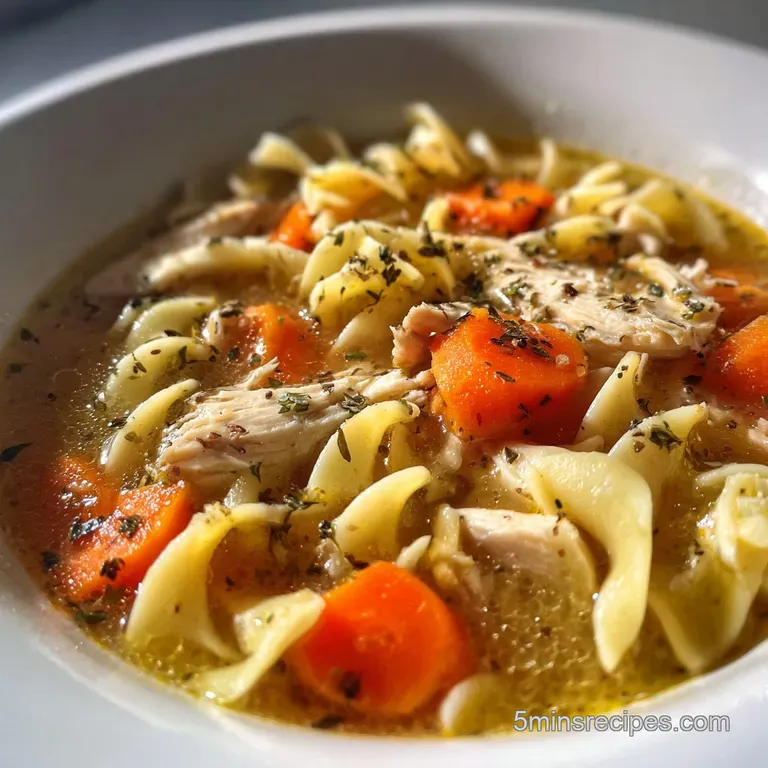
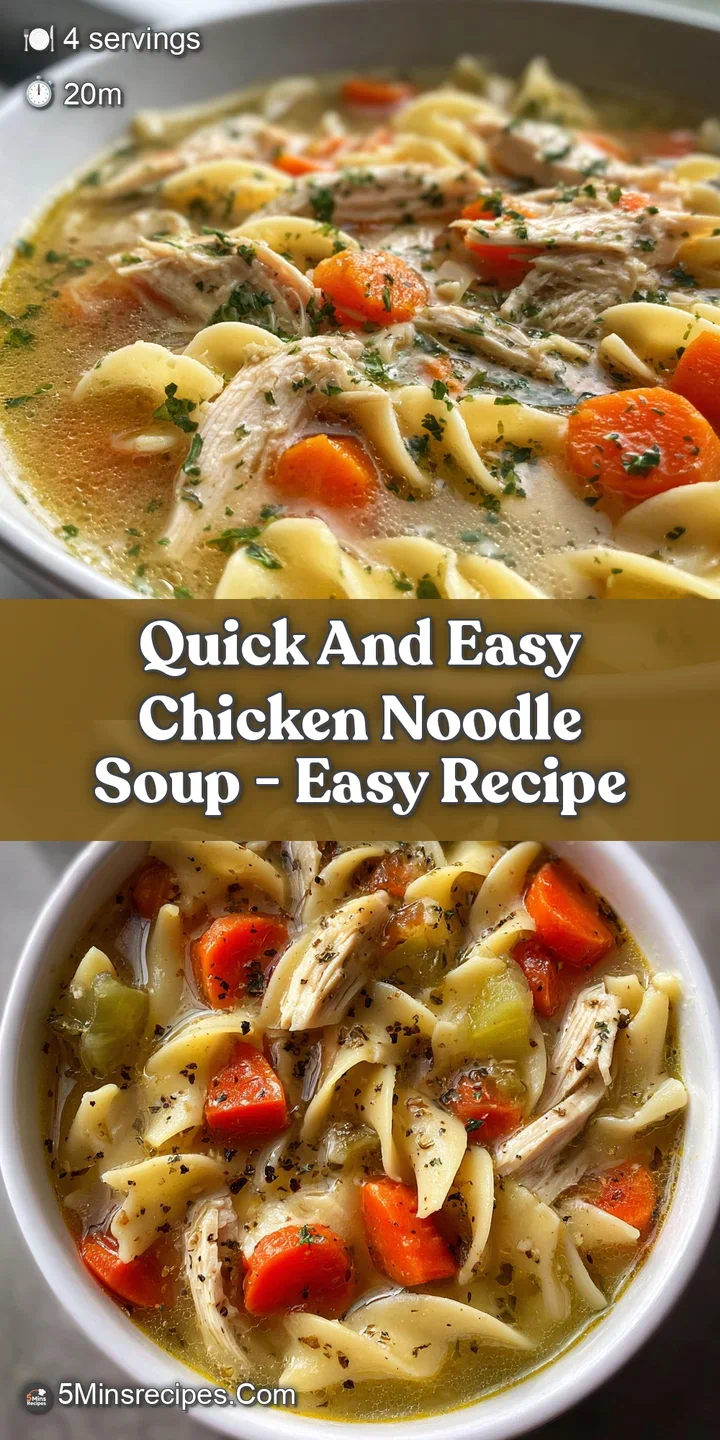
- Time: Active 5 minutes, Passive 15 minutes, Total 20 minutes
- Flavor/Texture Hook: Velvety bone broth with tender, shredded chicken and silken egg noodles
- Perfect for: High speed weeknight recovery or a record time comfort fix
- Quick and Easy Chicken Noodle Soup Recipe
- The Science of Why it Works
- Ingredient Component Analysis
- Shopping List Breakdown
- Minimal Tool Requirements
- Step-by-Step Instructions
- Fixing Common Soup Hurdles
- Adjusting the Batch Size
- Debunking Soup Misconceptions
- Storage and Zero Waste Strategy
- Serving the Perfect Bowl
- High in Sodium
- Recipe FAQs
- 📝 Recipe Card
Quick and Easy Chicken Noodle Soup Recipe
That first steam filled whiff of thyme and garlic hitting a hot pan is the ultimate reset button after a chaotic day. We’ve all been there starving, tired, and craving something that feels like a hug, but without the three hour simmer time.
This recipe is my absolute go to because it skips the tedious stock making while keeping every bit of that soulful depth we expect from a classic bowl.
Right then, the secret here isn't just about speed; it’s about choosing high impact ingredients that do the heavy lifting for you. By leveraging a high-quality bone broth and a pre roasted chicken, we’re essentially starting the race at the halfway mark.
You get all the collagen and savory notes of a long simmered soup in the time it takes to catch up on the evening news.
Let’s crack on with a method that prioritizes efficiency without sacrificing a single drop of flavor. We aren't just boiling water here; we’re building layers of aromatics that make this 20 minute wonder taste like you spent the whole afternoon hovering over the stove.
Trust me on this once you master the order of operations, you'll never look back at the canned stuff.
The Science of Why it Works
The Science of Why it Works: This recipe utilizes protein denaturation to keep the pre cooked chicken tender while heat extracted aromatics provide instant depth. Sautéing the mirepoix initiates the Maillard reaction, transforming simple sugars into complex savory compounds before the liquid even touches the pan.
Rapid Infusion Decision Guide
| Noodle Texture | Boil Time | Visual Cue | Best Result |
|---|---|---|---|
| Al Dente | 6 minutes | Opaque edges, firm center | Best for reheating later |
| Silken | 8 minutes | Slightly swollen, soft | Immediate serving |
| Over hydrated | 10+ minutes | Translucent, falling apart | Avoid absorbs too much broth |
We need to talk about the broth for a second because it’s the backbone of the entire operation. Using bone broth instead of standard stock provides a higher concentration of gelatin, which gives the soup a velvety mouthfeel that usually takes hours of bone simmering to achieve.
Ingredient Component Analysis
| Component | Science Role | Pro Secret |
|---|---|---|
| Bone Broth | Gelatin density | Choose "Low Sodium" to control seasoning |
| Lemon Juice | pH balancing | Add at the very end to keep the brightness from dulling |
| Mirepoix | Aromatic base | Mince the onion finely so it disappears into the base |
Precise Culinary Checkpoints
- 1. Carrot Thickness
- Slice your rounds to exactly 1/8 inch. Any thicker and they won't soften in the 15 minute window.
- 2. Sizzle Sound
- When adding garlic to the olive oil, it should hiss immediately but not pop; this indicates the oil is at the ideal 300°F.
- 3. The 165°F Rule
- Even though the chicken is pre cooked, ensure the broth reaches a rolling boil to safely pasteurize the meat during the reheat.
Shopping List Breakdown
For this build, we are focusing on fresh aromatics and high-quality pantry staples. You'll need 1 tbsp extra virgin olive oil to start the base. For the vegetable foundation, grab 1 cup carrots (sliced into thin rounds), 1 cup celery (diced), and 0.5 cup yellow onion (finely minced).
Next, secure 2 cloves garlic (smashed and minced) and 6 cups low sodium chicken bone broth. The heart of the soup is 2 cups shredded rotisserie chicken and 2 cups wide egg noodles.
Seasoning requires 0.5 tsp dried thyme, 1 tsp sea salt, and 0.5 tsp cracked black pepper. Finally, finish with 1 tbsp fresh lemon juice and 2 tbsp fresh parsley.
| Original Ingredient | Substitute | Why It Works |
|---|---|---|
| Rotisserie Chicken | Canned Chicken | Speed focused, though texture is softer and less fibrous |
| Wide Egg Noodles | Dried Fusilli | Similar surface area. Note: Takes 3-4 mins longer to cook |
| Chicken Bone Broth | Vegetable Stock | Provides the liquid base. Note: Lacks the collagen mouthfeel |
Using the right noodles is vital. If you’re looking for a change of pace, the technique here is very similar to the one I use in my One Pan Pasta recipe, where we rely on the starch to help give the liquid some body.
Minimal Tool Requirements
You don't need a kitchen full of gadgets for this. A heavy bottomed pot, like a 5 quart Dutch oven, is ideal because it retains heat effectively, preventing temperature drops when you add the cold broth.
A sharp chef's knife is non negotiable for those thin carrot rounds. Other than that, a simple wooden spoon for scraping the "fond" (those flavorful brown bits) off the bottom of the pot is all you need. This is a low clutter, high reward meal that won't leave you with a mountain of dishes.
step-by-step Instructions
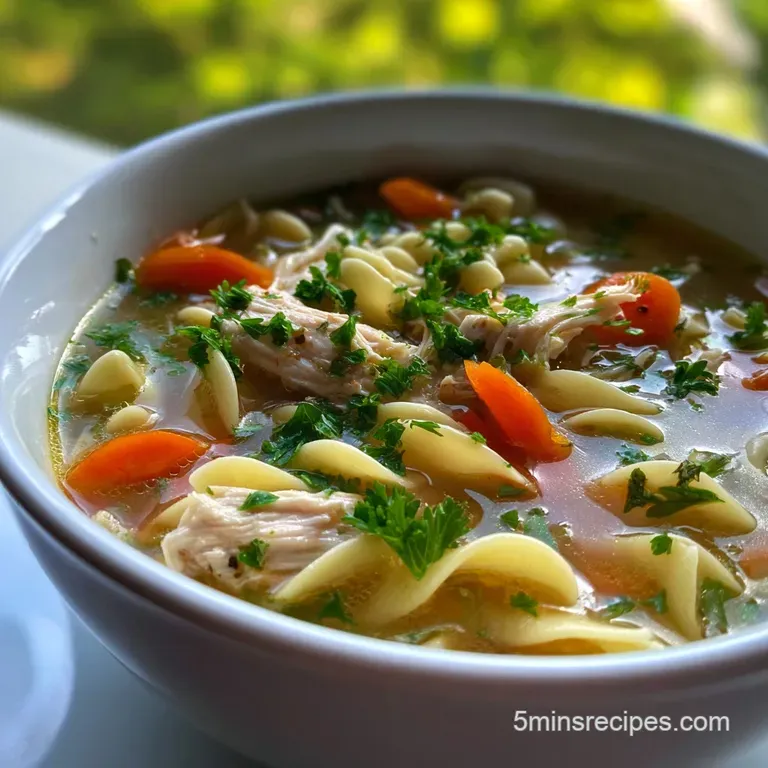
- Heat the oil. Add the olive oil to your pot over medium high heat until it shimmers and swirls easily.
- Sauté the mirepoix. Toss in the carrots, celery, and onion. Note: This creates the aromatic foundation of the entire dish.
- Soften the vegetables. Cook for 5 minutes until the onion is translucent and the celery loses its crunch.
- Bloom the aromatics. Add the garlic, thyme, salt, and pepper. Cook for 60 seconds until the garlic is fragrant but not browned.
- Deglaze with broth. Pour in the 6 cups of bone broth. Scrape the bottom of the pot to release any caramelized vegetable bits.
- Boil the base. Bring the liquid to a rolling boil. Note: High heat is essential before adding the noodles.
- Cook the noodles. Drop in the 2 cups of egg noodles. Boil for 6-8 minutes until they are tender with a slight bite.
- Integrate the chicken. Stir in the shredded rotisserie chicken. Let it sit for 2 minutes until the meat is heated through.
- The bright finish. Turn off the heat and stir in the lemon juice and parsley. Watch the broth color turn vibrant.
- Taste and adjust. Give it a final stir. Add a pinch more salt if the flavors don't "pop" immediately.
Chef's Tip: Freeze your parsley for 10 minutes before chopping. It prevents the leaves from bruising and turning into a paste, ensuring "shatter crisp" green flecks in your bowl.
Fixing Common Soup Hurdles
Why is the broth murky?
This usually happens if the noodles are overcooked or if the heat was too high for too long. The starch from the egg noodles bleeds into the liquid, turning it cloudy. To keep it clear, ensure you don't over boil the noodles beyond the package instructions.
Why does it taste flat?
Even with bone broth, sometimes the flavors don't sing. This is almost always a lack of acidity. The 1 tbsp fresh lemon juice is designed to fix this, cutting through the fat of the chicken and "waking up" the salt. If it still feels dull, add another teaspoon of juice or a splash of white vinegar.
| Problem | Root Cause | Solution |
|---|---|---|
| Mushy Noodles | Left in hot broth | Cook noodles separately if not eating immediately |
| Greasy Surface | Excess chicken skin | Skim the top with a wide spoon or paper towel |
| Too Salty | Broth reduction | Add 1/2 cup hot water or a pinch of sugar to balance |
Common Mistakes Checklist
- ✓ Never add the garlic at the start; it burns and turns bitter before the carrots soften.
- ✓ Don't skip the lemon; the acid is what separates "cafeteria soup" from "bistro soup."
- ✓ Avoid using chicken breast alone if possible; the dark meat from the rotisserie adds essential fat.
- ✓ Preheat the pot for 2 full minutes before adding the oil to prevent sticking.
- ✓ Mince the onions finely nobody wants a giant chunk of boiled onion in their spoon.
Adjusting the Batch Size
If you're cooking for one, reduce the ingredients by half but keep the cook times the same. The noodles will still take the same amount of time to hydrate regardless of the volume. For larger groups, you can easily double this, but I recommend adding the salt and thyme in 1.5x increments first.
You can always add more, but you can't take it out once it's in the pot.
Soup Preparation Comparison
| Method | Total Time | Texture | Best For |
|---|---|---|---|
| Stovetop (This) | 20 minutes | Bright and fresh | Busy weeknights |
| Instant Pot | 15 minutes | Deeply infused | Frozen chicken starts |
| Slow Cooker | 4 hours | Soft and melded | Hands off weekend prep |
If you find yourself with extra chicken and want to try something different, this base is quite similar to what I use in my Chicken Stir Fry recipe, though we lean more into the liquid ratios here.
Debunking Soup Misconceptions
Myth 1: You must simmer the chicken for hours to get flavor. Truth: If you are using a high-quality bone broth, the flavor is already there. Long simmering with pre cooked meat actually makes the chicken stringy and dry.
Myth 2: Boiling the noodles in the soup is bad for the broth. Truth: For a "quick and easy" version, the starch released by the noodles actually adds a pleasant body to the soup. Unless you're planning on storing it for days, the "pot method" is superior for flavor absorption.
Storage and Zero Waste Strategy
Storage: This soup will keep in the fridge for up to 3 days. However, be warned: the noodles will continue to absorb liquid as they sit. If you plan on having leftovers, I suggest cooking the noodles separately and adding them to individual bowls.
Freezing: You can freeze the broth and chicken mixture for up to 3 months. Do not freeze the noodles. They turn to mush upon thawing. Instead, freeze the liquid base and just drop fresh noodles in when you reheat it on the stove.
Zero Waste: Don't toss the rotisserie carcass! If you have 30 minutes of "passive" time later, throw the bones in a pot with water and a splash of vinegar. Simmer it to make a "bonus" stock for your next Chili Recipe.
Serving the Perfect Bowl
To truly enjoy this, serve it in wide, shallow bowls. This allows the soup to cool slightly so you don't scald your palate, letting the subtle herbs shine. I love pairing this with a thick slice of sourdough bread slathered in salted butter. The crunch of the crust against the velvety broth is a textural dream.
Customizing Your Bowl
- For Heat: Add a pinch of red chili flakes or a dash of hot sauce.
- For Creaminess: Stir in a splash of heavy cream or a dollop of Greek yogurt at the end.
- For Greens: Throw in a handful of baby spinach 30 seconds before serving; it will wilt instantly in the residual heat.
This recipe proves that "fast" doesn't have to mean "compromised." By focusing on the science of aromatics and using smart shortcuts, you can have a chef quality meal on the table in less time than it takes to get a delivery driver to your door.
Enjoy the sizzle, the aroma, and most importantly, that first restorative sip.
High in Sodium
845 mg mg of sodium per serving (37% % of daily value)
The American Heart Association recommends limiting sodium intake to about 2,300mg per day for most adults.
Tips to Reduce Sodium in Your Chicken Noodle Soup
-
Broth Swap-30%
Use no-sodium chicken broth instead of low-sodium. This can significantly reduce the sodium content of your soup.
-
Salt Smart-25%
Omit the added sea salt (1 tsp) entirely. Taste the soup after cooking and add a pinch of salt only if needed. This small change can make a big difference.
-
Fresh is Best-15%
Consider using freshly cooked chicken instead of rotisserie chicken. Rotisserie chicken often contains added salt. If you do use rotisserie chicken, remove the skin as this where a lot of sodium is.
-
Acid Boost-5%
Increase the amount of fresh lemon juice to enhance the flavor. The acidity can help to compensate for the lack of salt.
-
Herb Power
Experiment with other fresh or dried herbs and spices like rosemary, oregano, or bay leaf to boost the flavor of the soup without adding sodium. This will also add additional nutrients.
Recipe FAQs
How long does it take to make this chicken noodle soup?
About 20 minutes total. This includes 5 minutes of active cooking and 15 minutes of passive simmering time.
Can I use frozen chicken instead of rotisserie chicken?
No, stick with pre-cooked. Frozen chicken takes too long to cook through and can make the soup watery; rotisserie chicken is already tender and flavorful, saving significant time.
What's the best way to prevent the noodles from getting mushy?
Cook noodles separately if not eating immediately. If you plan on having leftovers, cooking the noodles in a separate pot and adding them to individual bowls when serving prevents them from absorbing too much broth and becoming soggy.
Why is my soup broth murky?
Overcooked noodles are the usual culprit. The starch released from over boiled egg noodles can make the broth cloudy; cook them just until tender to maintain clarity.
How can I make the soup taste less flat?
Add acidity at the end. A tablespoon of fresh lemon juice cuts through the richness and brightens the flavors, making the soup taste more vibrant and balanced.
Can I make this soup ahead of time?
Yes, but with a caveat for noodles. The broth and chicken mixture can be made and stored for up to 3 days, but cook the noodles fresh just before serving to avoid sogginess.
Is it necessary to use bone broth?
No, but it's highly recommended for texture. While standard chicken stock works, bone broth provides a richer, velvety mouthfeel due to its higher gelatin content, which usually takes hours to achieve.
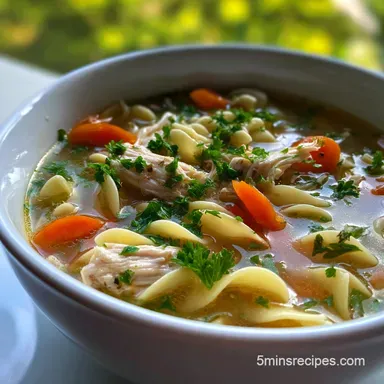
Quick Chicken Noodle Soup
Ingredients:
Instructions:
Nutrition Facts:
| Calories | 365 kcal |
|---|---|
| Protein | 38.5 g |
| Fat | 10.8 g |
| Carbs | 28.5 g |
| Fiber | 3.2 g |
| Sugar | 4.1 g |
| Sodium | 845 mg |
