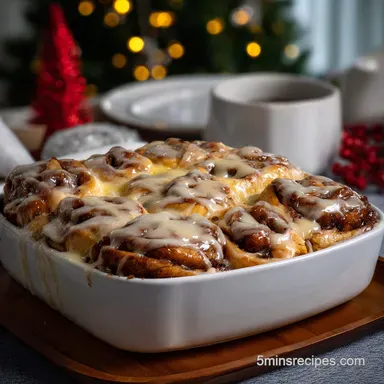
Soft Glazed Christmas Cinnamon Rolls

- Time: 35 min active + 130 min rising/baking
- Flavor & Texture: Buttery, sweet, and fluffy
- Perfect for: Holiday brunch with family
- Christmas Breakfast Idea with Glazed Cinnamon Rolls
- Why These Rolls Stay Soft
- What Each Ingredient Does
- The Basic Recipe Specs
- Ingredient Deep Dive
- Step by Step Instructions
- Fixing Common Dough Issues
- Serving Your Holiday Spread
- Keeping and Reheating Rolls
- Different Ways to Make Them
- Recipe FAQs
- 📝 Recipe Card
Christmas Breakfast Idea with Glazed Cinnamon Rolls
Nothing beats the aroma of cinnamon and melted butter filling the kitchen in the morning. Your goal is a roll that pulls apart easily by hand, rather than something dense like standard bread.
These Glazed Cinnamon Rolls make for a wonderful Christmas breakfast to kick off your holiday. The secret lies in achieving a dough that is tacky but not sticky, ensuring those light, fluffy layers.
You don't need a commercial bakery oven to achieve a perfect, soft rise. All it takes is a cozy spot in your home and the correct milk temperature to get professional results.
Why These Rolls Stay Soft
- Warm Milk: Keeping the milk at 110°F (43°C) wakes up the yeast without killing it, which ensures a steady rise.
- Proper Kneading: Working the dough until it's springy builds the structure needed to hold those heavy cinnamon swirls.
| Method | Time | Texture | Best For |
|---|---|---|---|
| Fast (Canned) | 20 mins | Denser, uniform | Quick weekday treat |
| Classic (This) | 165 mins | Pillowy, rich | Holiday brunch |
What Each Ingredient Does
| Component | Purpose | Substitute Notes |
|---|---|---|
| Whole Milk | Adds moisture and fat | Soy milk: similar fat, works well |
| Instant Yeast | Lifts the dough | Active dry: needs 5 min longer to bloom |
| All-purpose Flour | Provides structure | Bread flour: makes them slightly chewier |
| Cream Cheese | Thickens the glaze | Mascarpone: richer, slightly less tangy |
The Basic Recipe Specs
For this recipe, you'll need a few basics to keep things moving. A stand mixer like a KitchenAid is great, but you can totally do this by hand.
- 9x13-inch baking pan
- Digital thermometer (for milk and internal doneness)
- Rolling pin
- Unflavored dental floss (for clean cutting)
- Large mixing bowl and plastic wrap
Ingredient Deep Dive

For the Dough
- 1 cup (240 ml) whole milk, warmed to 110°F (43°C)
- 1/4 cup (50 g) granulated sugar
- 2 1/4 tsp (7 g) instant yeast
- 1/3 cup (75 g) unsalted butter, melted and slightly cooled Why this? Adds richness to the crumb
- 1 large egg (50 g), at room temperature
- 1 tsp (6 g) fine sea salt
- 3 3/4 cups (470 g) all-purpose flour
For the Filling
- 1/2 cup (115 g) unsalted butter, softened
- 3/4 cup (165 g) packed light brown sugar
- 2 tbsp (16 g) ground cinnamon
For the Cream Cheese Glaze
- 4 oz (115 g) cream cheese, softened
- 2 tbsp (28 g) unsalted butter, softened
- 1 cup (120 g) powdered sugar, sifted
- 1 tsp (5 ml) vanilla extract
- 1 to 2 tbsp (15 to 30 ml) whole milk, added gradually
Step by step Instructions
Phase 1: Mix and Knead
- Heat the milk to 110°F (43°C). In a mixer bowl, stir together the warm milk, yeast, and 1/4 cup sugar. Let the mixture sit for 5 minutes until it becomes foamy.
- Stir in the melted butter, egg, salt, and approximately 2 cups of the flour. Mix on low speed until just combined.
- Gradually incorporate the remaining flour, one cup at a time, until the dough is soft and slightly tacky. Knead using a machine on medium-low for 6 minutes, or by hand on a lightly floured surface for 8 to 10 minutes, until the dough is smooth and springy. Note: The dough should spring back slowly when pressed with a finger.
Phase 2: First Rise
- Shape the dough into a ball and place it in a lightly greased bowl, turning it once to coat. Cover and set it in a warm, draft-free area for about 1 hour, or until it is puffy and has doubled in size. It is ready when a two-finger indentation springs back slowly and leaves a small dimple.
Phase 3: Shape and Fill
- On a lightly floured surface, roll the dough into a rectangle measuring roughly 12x16 inches (30x40 cm).
- Spread the softened 1/2 cup butter evenly across the dough, leaving a 1/2 inch border along the far edge. Mix the cinnamon and brown sugar, then sprinkle the mixture evenly over the butter.
- Starting from the edge nearest to you, roll the dough into a tight cylinder. Pinch the seam shut and place the log seam-side down. Use dental floss to slice the log into 12 equal rolls: slide the floss underneath, cross it over the top, and pull to cut cleanly.
Phase 4: Second Rise and Bake
- Place the rolls cut side up in a greased 9x13-inch pan, leaving a small amount of space between them.
- Cover the pan loosely and let the rolls proof for 30 to 40 minutes, until they are puffy and touching.
- Preheat the oven to 350°F (180°C) with the rack set in the center position.
- Bake for 25 to 30 minutes, until the tops are golden brown and the centers reach 190°F (88°C). If the tops brown too quickly, tent them loosely with foil for the last 5 minutes.
- Let the rolls sit in the pan for about 10 minutes to cool. The centers should be set but still warm.
Phase 5: Glaze and Finish
- While the rolls are cooling, beat the 4 oz cream cheese and 2 tbsp butter until smooth. Add the vanilla and powdered sugar, then beat in the milk one tablespoon at a time until the glaze falls from the whisk in slow ribbons.
- Drizzle or spoon the glaze over the warm rolls. Serve while warm.
Fixing Common Dough Issues
When the Dough Is Too Sticky
If the dough sticks to your fingers and won't pull away from the bowl, add flour one tablespoon at a time. Stop as soon as it's tacky but no longer leaves a residue on your hand. Adding too much flour makes the rolls tough, so be careful.
Fixing a Flat Rise
If your rolls don't double in size, your kitchen is likely too cold. Move the bowl to an oven that is turned off but has the oven light on. The light provides just enough warmth to help the yeast work.
Preventing Filling Leakage
When rolling the log, make sure you leave that 1/2 inch border of plain dough at the top. This acts as a seal. If you spread butter to the very edge, the cinnamon sugar will leak out and burn on the pan.
Serving Your Holiday Spread
I prefer arranging these on a large wooden platter in the middle of the table to give the meal a more shared, communal feel.
Chef Tip: Pair these with sliced pears or fresh berries. The fruit's brightness balances the decadent cream cheese glaze.
If you are entertaining guests, these also go well with savory eggs. For a quick side dish, a scrambled eggs recipe offers a perfect savory contrast to the sweet rolls.
Keeping and Reheating Rolls
Keep any leftovers in a sealed container in the refrigerator for up to 5 days. If you want them to last longer, you can keep them in the fridge for 5 days, but they will firm up.
To bring them back to life, microwave a single roll for 15 to 20 seconds. This softens the butter in the dough again. If you're reheating a whole batch, put them in a 300°F (150°C) oven for 5 to 10 minutes, covered with foil to keep them from drying out.
Different Ways to Make Them
You can change the filling to fit the mood. For a nutty twist, add 1/2 cup of crushed pecans to the cinnamon sugar mixture before sprinkling. For a brighter flavor, stir in a teaspoon of orange zest to the cream cheese glaze.
If you're in a massive rush and can't do the full rise, you might want to try a fast cinnamon roll recipe that uses quick-rise methods.
Adjusting the Batch Size
| Ingredient | Half batch | Double batch |
|---|---|---|
| Whole milk, warmed to 110°F | 0.5 cup | 2 cup |
| Granulated sugar | 0.125 cup | 0.5 cup |
| Instant yeast | 1.125 tsp | 4.5 tsp |
| Unsalted butter, melted and slightly cooled | 0.1667 cup | 0.6667 cup |
| Large egg (50 g), at room temperature | 0.5 | 2 |
| Fine sea salt | 0.5 tsp | 2 tsp |
| All-purpose flour | 1.875 cups | 7.5 cups |
| Unsalted butter, softened | 0.25 cup | 1 cup |
| Packed light brown sugar | 0.375 cup | 1.5 cup |
| Ground cinnamon | 1 tbsp | 4 tbsp |
| Cream cheese, softened | 2 oz | 8 oz |
| Unsalted butter, softened | 1 tbsp | 4 tbsp |
| Powdered sugar, sifted | 0.5 cup | 2 cup |
| Vanilla extract | 0.5 tsp | 2 tsp |
| To 2 tbsp (15 to 30 ml) whole milk, added gradually | 0.5 | 2 |
Do not multiply cooking time by the batch factor; use extra pans or work in batches and check doneness.
Recipe FAQs
Where should I store these rolls?
Keep the glazed rolls in a sealed container in the refrigerator. This preserves the cream cheese glaze.
Why use dental floss for cutting?
It slices through the dough cleanly without squashing the rolls. This ensures the cinnamon spirals remain intact.
Can the dough over-proof?
Yes, letting the dough rise too long can cause it to collapse. Use the dimple test to ensure it is ready for rolling.
How to achieve the correct glaze consistency?
Beat in milk one tablespoon at a time. Stop when the glaze falls off the whisk in slow ribbons.
Could these be baked in a different pan?
Yes, you can use a different sized pan. Just ensure the rolls have enough room to expand and touch only after the second rise.
When should I use foil during baking?
Tent the rolls loosely with foil during the final 5 minutes. This prevents the tops from darkening too quickly.
Glazed Cinnamon Rolls for 12 Servings