Classic Tiramisu Dessert

- Time: Active 30 minutes, Passive 6 hours 10 mins, Total 6 hours 40 mins
- Flavor/Texture Hook: Velvety sweet cream against coffee soaked ladyfingers
- Perfect for: Weekend dinner parties or special celebrations
The scent of fresh espresso hitting the air always reminds me of my first real experience with an Italian Dessert with Tiramisu in a tiny Roman alleyway. It wasn't fancy, but that first bite the way the cocoa dusted my lips followed by the silky cream was a total surprise.
I used to think it was too hard to make at home, but honestly, it's one of the easiest sweet treats once you know the rhythm of the layers.
I've definitely made mistakes with this one before. I once soaked the ladyfingers so long they turned into a sad, mushy puddle at the bottom of the dish. It was tragic. But after dozens of batches, I’ve found that perfect balance where the biscuit stays soft but holds its shape, and the cream stays light instead of collapsing into a greasy mess.
Trust me, we've all been there with a "soup" tiramisu, but we're fixing that today.
You’re going to love how the flavors build here. We're talking about sharp coffee, sweet Marsala, and that rich mascarpone tang all working together. It’s a simple no bake process, but the result looks like you spent all day in a professional pastry kitchen. This follows a Baked Chicken Spaghetti recipe perfectly for a cozy night in where you want to end on a high note.
Why This Texture Is Superior
- Fat Stabilization: The high fat content in the 1 lb of mascarpone and 1.25 cups heavy cream creates a stable matrix that holds air bubbles, giving it that signature cloud like lift.
- Sugar Osmosis: The 1.12 cups granulated sugar draws moisture from the 4 egg yolks, creating a thick, glossy base that resists weeping over time.
- Starch Hydration: Ladyfingers are dry sponges; they rely on capillary action to pull in just enough espresso without losing their structural integrity.
- Protein Coagulation: Gently heating the yolks to 160°F creates a safe, thickened custard that provides the "spine" for the entire cream layer.
The Science of the Soak
Capillary action is the secret hero here. If you dip the Savoiardi ladyfingers for more than a second, the dry starch cells over hydrate and shatter, leading to a grainy, wet mess. A quick "flash dip" allows the liquid to stay on the outer edges, migrating slowly to the center as it chills in the fridge.
| Method | Time | Texture | Best For |
|---|---|---|---|
| Stovetop Sabayon | 10 minutes | Thick, stable, custard like | Long lasting structure |
| Cold Whisk | 2 minutes | Lighter, more airy | Quick eating (same day) |
Using a stovetop method for the yolks might take an extra few minutes, but it makes the cream so much more stable. If you've ever had a tiramisu that "leaked" liquid the next day, it's usually because the yolks weren't cooked into a proper custard base. Let's look at how the individual parts work together.
Component Analysis
| Ingredient | Science Role | Pro Secret |
|---|---|---|
| Mascarpone Cheese | Primary Fat Source | Use it slightly chilled so it incorporates without curdling into butter. |
| Egg Yolks | Emulsifier | These bind the fat and water layers together for a silky finish. |
| Heavy Cream | Aeration | Cold cream creates the smallest air bubbles for a velvety mouthfeel. |
Essential Italian Dessert Specs
- Yield: 9 generous servings
- Active Effort:30 minutes of whisking and layering
- Patience Level:6 hours 10 mins (mostly hands off chilling)
- Precision Checkpoint 1: Espresso must be exactly room temperature to prevent melting the biscuits.
- Precision Checkpoint 2: Cook egg yolks to 160°F (71°C) for safety and thickness.
- Precision Checkpoint 3: Dip ladyfingers for exactly 1 second per side.
Chef's Tip: Freeze your ladyfingers for 10 minutes before dipping. This slows down the absorption rate and gives you a much bigger window of error so they don't get soggy!
The Alchemy of Elements
- 1.5 cups strong espresso, room temperature Why this? Provides the punchy bitter contrast to the sweet cream.
- Substitute: Very strong cold brew coffee.
- 2 tbsp Marsala wine Why this? Adds a deep, nutty complexity traditional to the region.
- Substitute: Dark rum or brandy note that rum adds a much sweeter, Caribbean profile.
- 1.12 cups granulated sugar, divided Why this? Sweetens the cream and helps stabilize the egg yolks.
- Substitute: Caster sugar for faster dissolving.
- 1 lb mascarpone cheese, slightly chilled Why this? The buttery backbone that gives the dessert its body.
- Substitute: Full fat cream cheese mixed with 2 tbsp heavy cream (will be tangier).
- 4 large egg yolks Why this? Creates the rich, golden custard base.
- Substitute: 1/2 cup pasteurized liquid egg yolks.
- 1.25 cups heavy whipping cream, cold Why this? Folds in air to keep the texture light.
- Substitute: Double cream for an even richer mouthfeel.
- 1 tsp pure vanilla extract Why this? Rounds out the flavors and enhances the sweetness.
- Substitute: Vanilla bean paste for those pretty black flecks.
- 7 oz Savoiardi ladyfingers Why this? These dry biscuits absorb liquid without falling apart.
- Substitute: Sponge cake strips toasted until very dry.
- 2 tbsp unsweetened cocoa powder Why this? The bitter finish that cuts through the richness.
- Substitute: Finely grated dark chocolate.
- 1 pinch sea salt Why this? A tiny amount that makes the coffee flavor pop.
- Substitute: Kosher salt.
Tools for the Job
You won't need an oven for this sweet treat, which is the best part! Grab a medium heat proof bowl and a small saucepan to create a DIY double boiler. You'll also need a whisk (or a handheld electric mixer such as a KitchenAid), a shallow bowl for the espresso dip, a fine mesh sieve for the cocoa, and an 8x8 inch square baking dish.
Architecting the Creamy Layers
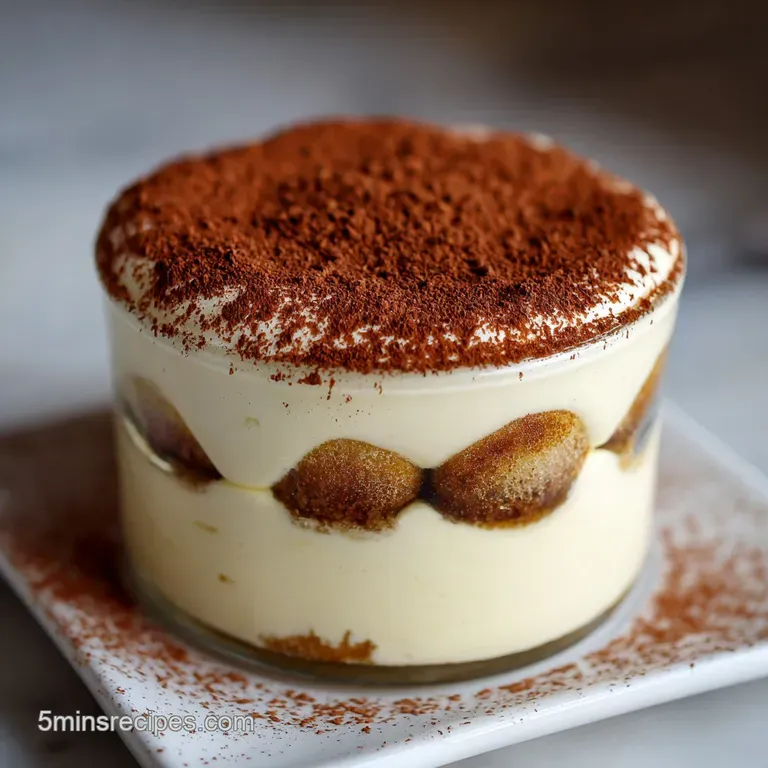
1. Preparing the Infusion
Whisk the 1.5 cups espresso, 2 tbsp Marsala, and 1 tbsp of the sugar in a shallow dish until dissolved. Let it sit while you prep the cream. This gives the alcohol time to mellow and meld with the coffee oils.
2. Crafting the Stable Sabayon
Place the 4 egg yolks and the remaining sugar in a heat proof bowl over a pot of barely simmering water. Whisk constantly for about 8 minutes until the mixture is thick, pale, and reaches 160°F. Remove from heat and let it cool for 5 minutes.
3. Incorporating the Mascarpone
Gently fold the 1 lb mascarpone into the warm egg mixture. Note: Using a spatula instead of a whisk here prevents the cheese from breaking and becoming watery.
4. Whipping the Aerated Cream
In a separate cold bowl, beat the 1.25 cups heavy cream and 1 tsp vanilla until stiff peaks form and the cream doesn't slide. This is your lift!
5. Architecting the Layers
Gently fold the whipped cream into the mascarpone mixture in three batches. Be careful not to deflate all that lovely air you just whipped in.
6. The Final Cure
Quickly dip each of the 7 oz ladyfingers into the espresso mix for 1 second per side. Arrange them in a single layer until the bottom of the dish is covered. Spread half the cream over the biscuits. Repeat for a second layer of biscuits and the remaining cream.
7. The Cocoa Finish
Dust the top generously with the 2 tbsp cocoa powder using a sieve. Cover with plastic wrap, but make sure the wrap doesn't touch the cream surface!
8. The Long Chill
Refrigerate for at least 6 hours (or overnight). This is when the magic happens the biscuits soften and the flavors marry into that classic Italian Dessert with Tiramisu taste.
Solving Common Texture Issues
Preventing a Soupy Consistency
The biggest heartbreak is a runny tiramisu. Usually, this happens if the cream wasn't whipped enough or if you used "leaky" mascarpone. If your cream looks thin before layering, stop and whisk it a bit more! It should hold its shape on the spatula.
| Problem | Root Cause | Solution |
|---|---|---|
| Runny Base | Over soaked ladyfingers | Dip for 1 second only. |
| Grainy Cream | Over mixed mascarpone | Fold gently by hand, don't use a mixer. |
| Flat Texture | Under whipped cream | Whisk to stiff peaks before folding. |
Common Mistakes Checklist
- ✓ Use room temp espresso (hot coffee melts the biscuits instantly).
- ✓ Keep heavy cream ice cold for better volume and stability.
- ✓ Fold mascarpone in batches to avoid stubborn lumps.
- ✓ Sift the cocoa powder to prevent bitter clumps on the tongue.
- ✓ Give it at least 6 hours to set; a 2 hour chill will just be a mess.
Scaling for the Crowd
Small Batch (1/2 size)
If you're just making a "treat yourself" portion, use a small 4x4 glass container. Beat 1 egg yolk with half the sugar. Since it's a smaller volume, reduce the Sabayon whisking time by about 3 minutes.
Party Size (2x size)
For a big dinner party, use a 9x13 inch pan. You'll need about 14 oz of ladyfingers. Keep the salt and vanilla at 1.5x the original amount so they don't overpower the delicate cream. This dessert is the best Hugo Spritz Recipe companion for an afternoon on the patio with friends.
Decision Shortcut
- If you want a boozier kick, add an extra tablespoon of Marsala to the cream itself.
- If you want it kid friendly, swap the espresso for decaf and omit the wine.
- If you want a "clean" slice, freeze the dish for 20 minutes before cutting.
Traditional Sabayon Myths
"You must use raw eggs for authenticity." Actually, most modern Italian chefs prefer the Sabayon method (cooking yolks over a water bath). It’s not just about safety; the heat partially denatures the proteins, which creates a much thicker, more luxurious foam that doesn't collapse as quickly as raw yolks.
"Marsala is the only way." While traditional, many regions in Italy use whatever local fortified wine or spirit they have. Coffee liqueur is a popular modern twist that intensifies the espresso notes without adding the woody tang of Marsala.
Preservation Secrets
Storage: This Italian Dessert with Tiramisu keeps beautifully in the fridge for up to 3 days. In fact, it usually tastes better on day two! Keep it tightly covered to prevent it from absorbing fridge odors (nothing ruins a sweet treat like "onion flavored" cream).
Freezing: You can actually freeze this! Wrap it twice in plastic and then foil. It stays good for 1 month. Thaw it in the fridge for 24 hours before serving.
Zero Waste: If you have leftover espresso mix, don't pour it down the drain. It's a fantastic base for an iced latte. Leftover mascarpone can be stirred into pasta sauce for a quick "pink" sauce or spread on toast with a little honey.
Best Ways to Serve
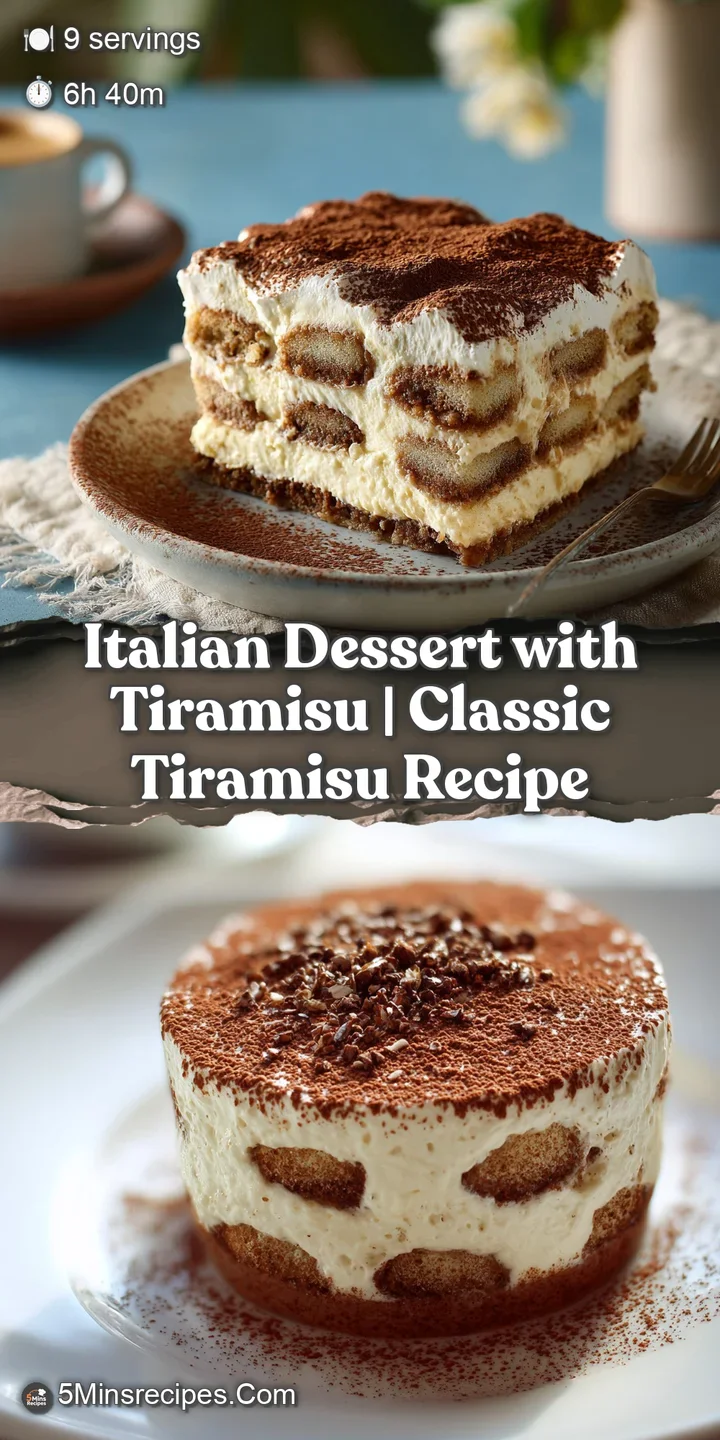
When you're ready to serve this Italian Dessert with Tiramisu, use a sharp knife dipped in hot water for those clean, professional edges. I love serving it with a handful of fresh raspberries on the side; the tartness of the fruit cuts right through the heavy cream.
If you’re looking for a warm contrast, serve it alongside a small cup of hot espresso or even a nutty liqueur. This is the kind of dessert that makes everyone at the table go quiet for a second while they enjoy that first velvety bite. For more cozy ideas, you might enjoy our Panera Bread Tomato recipe as a light starter before this grand finale!
Recipe FAQs
What is a famous Italian dessert tiramisu?
Yes, Tiramisu is arguably the most famous. It translates roughly to "pick me up" because of the espresso and sugar content, featuring layers of coffee soaked ladyfingers and creamy mascarpone.
What are the top 5 Italian desserts?
The top five often include Tiramisu, Panna Cotta, Cannoli, Gelato, and Torta della Nonna. These span creamy, rich, and chilled textures, making them staples in Italian patisseries worldwide.
What is the Italian dessert including ladyfingers and coffee?
That dessert is Tiramisu. It relies on dry Savoiardi biscuits (ladyfingers) quickly dipped in strong espresso for the perfect balance of moisture and structure.
What is the most traditional Italian dessert?
Tiramisu is widely considered the most traditional globally recognized one, though regional desserts vary greatly. The classic preparation involves using high-quality Mascarpone and authentic Marsala wine for depth.
How do I prevent my ladyfingers from turning into mush when soaking?
Dip the ladyfingers for only one second per side in the espresso mixture. They should be quickly submerged and immediately removed, as they continue to absorb liquid as they sit in the dish.
Must I cook the egg yolks for the mascarpone cream?
No, you can technically skip cooking them, but cooking ensures safety and better texture. Gently heating the yolks (creating a Sabayon) stabilizes the structure, similar to how fats stabilize emulsions in a dressing like our Antipasto Salad Recipe.
Can I substitute the Marsala wine in the espresso soak?
Yes, though Marsala provides classic depth, feel free to substitute. Dark rum or brandy works well, but if you prefer something non-alcoholic or less sweet, try strongly brewed black tea instead for an earthy base.
Classic Tiramisu Dessert Recipe
Ingredients:
Instructions:
Nutrition Facts:
| Calories | 491 kcal |
|---|---|
| Protein | 6.4 g |
| Fat | 37.9 g |
| Carbs | 33.1 g |
| Fiber | 1.3 g |
| Sugar | 19.1 g |
| Sodium | 44 mg |
