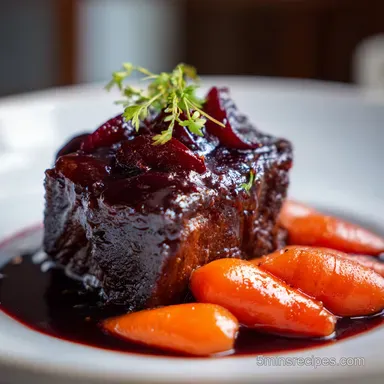
Red Wine Braised Short Ribs: Tender and Rich
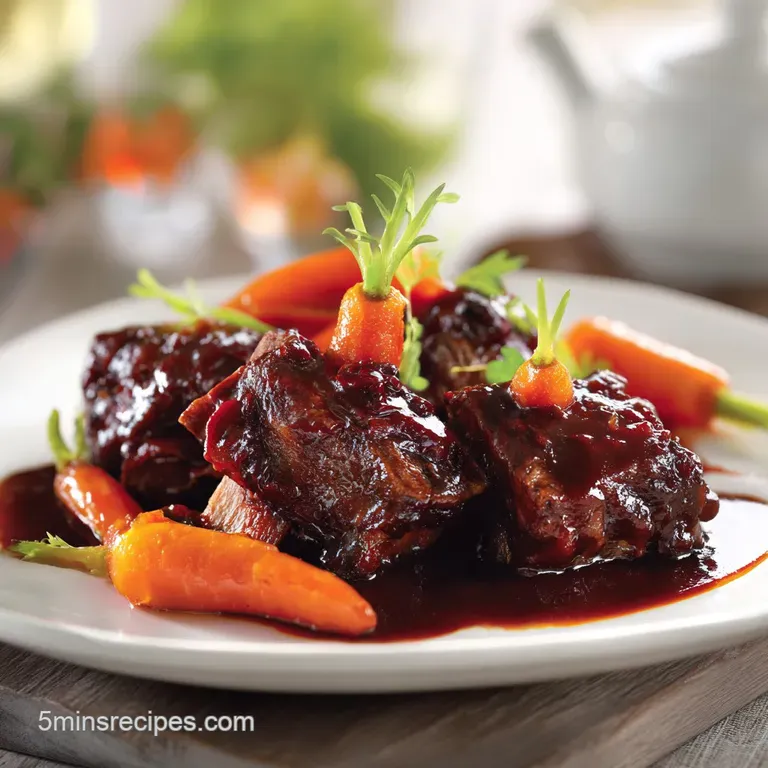
- Time: 30 min active + 3 hours cooking = Total 3 hours 50 mins
- Flavor/Texture Hook: Shatter tender meat with a glossy, mahogany glaze
- Perfect for: Winter dinner parties or a high impact Sunday feast
- The Ultimate Braised Short Ribs Recipe
- Secrets for Better Beef
- The Building Blocks
- The Necessary Gear
- Step-by-Step Cooking Flow
- Fixing Common Beef Problems
- Flavor Swaps and Twists
- Adjusting the Portion Size
- Debunking Kitchen Lore
- Storage and Zero Waste
- Plate Like a Pro
- High in Sodium
- Recipe FAQs
- 📝 Recipe Card
Imagine it's a rainy Sunday afternoon and your whole house smells like red wine, garlic, and searing beef. You've got a pot humming on the stove, and you know that in a few hours, you're going to have a meal that tastes like it took two days of effort.
It's that kind of food that makes guests lean in the second they walk through the door.
I used to rush the searing process, thinking "it's just going to be in liquid anyway," but that was a huge mistake. When I finally took the time to get a real crust on the meat, the depth of the sauce changed completely. It went from a simple beefy soup to something rich and complex.
Whether you're hosting a fancy date or just want to feel like a chef in your own kitchen, this braised short ribs recipe is the gold standard. We're going to focus on a plan based execution: getting the prep done fast, managing the braise, and finishing with a professional glaze.
The Ultimate Braised Short Ribs Recipe
Right then, let's talk about why we're doing this. Most people treat braising as "set it and forget it," but the magic happens in the first 30 minutes. If you skip the hard sear or don't reduce your wine, you're leaving a ton of flavor on the table.
To get this right, we need to focus on the "fond" - those little brown bits stuck to the bottom of the pan. That is concentrated flavor gold. When we deglaze with red wine, we're basically lifting that gold and folding it back into the meat.
This isn't a quick weeknight meal, but it's a record time way to produce a five star result. By following a strict cooking flow, you can manage the process without spending the whole day hovering over the stove.
What Actually Makes It Tender
Collagen Breakdown: Long, moist heat converts tough collagen into gelatin, which gives the meat that "melt in-your mouth" feel.
Acidic Balance: The red wine provides acidity that helps break down muscle fibers while balancing the heavy fats of the short ribs.
Low and Slow: Keeping the temperature steady prevents the muscle fibers from seizing up and becoming rubbery.
The Reduction: Simmering the liquid at the end concentrates the proteins and sugars, creating a glossy, velvety texture.
Since you might not have a Dutch oven or might be in a rush, I've put together a quick comparison to help you decide which path to take.
| Method | Time | Texture | Best For |
|---|---|---|---|
| Oven Braise (Classic) | 3.5 hours | Silky & Uniform | Dinner Parties |
| Slow Cooker | 8 hours | Very Soft/Falling Apart | Set and Forget |
| Instant Pot | 90 mins | Tender but tighter | Tight Schedules |
The classic oven method is my go to because it provides more consistent heat distribution than a stovetop, which prevents the bottom from scorching during those long hours.
Secrets for Better Beef
Before we dive into the ingredients, we need to talk about the meat. Not all short ribs are created equal. You want the "English cut," which are the thick, blocky chunks. If you buy the thin, sliced "Flanken" style, this recipe won't work because they'll overcook and dry out long before the collagen breaks down.
Also, don't be afraid of the fat. The fat cap on top of the rib is what keeps the meat moist during the three hour stretch. I usually leave it intact during the sear and then skim it off the sauce at the end if it's too rich.
Component Analysis
| Ingredient | Science Role | Pro Secret |
|---|---|---|
| Beef Short Ribs | Collagen source | Pat them bone dry before searing for a better crust |
| Red Wine | Acid & Color | Use a wine you'd actually drink; avoid "cooking wine" |
| Tomato Paste | Umami boost | Cook it until it turns rust colored to remove the raw taste |
| Unsalted Butter | Emulsifier | Stir in at the very end to create a professional sheen |
The Building Blocks
Let's get your mise en place ready. Having everything chopped and measured is the only way to maintain professional speed. If you're hunting for the thyme while the garlic is burning, you've already lost the battle.
For the Beef
- 3 lbs bone in beef short ribs, English cutWhy this? Bone in provides more depth and prevents overcooking
- 2 tsp kosher salt
- 1 tsp freshly cracked black pepper
- 2 tbsp neutral oilWhy this? High smoke point prevents burning during the sear
For the Aromatics
- 1 large yellow onion, dicedWhy this? Provides a sweet, savory base
- 2 medium carrots, diced
- 2 stalks celery, diced
- 4 cloves garlic, smashedWhy this? Smashed cloves release flavor more slowly than minced
- 2 tbsp tomato pasteWhy this? Adds thickness and a deep savory note
For the Braising Liquid
- 2 cups dry red wineWhy this? Cabernet or Merlot cuts through the beef fat
- 2 cups low sodium beef stockWhy this? Controls salt levels as the sauce reduces
- 3 sprigs fresh thyme
- 2 bay leaves
- 1 tbsp unsalted butterWhy this? Adds a velvety finish to the glaze
If you find yourself short on time and can't commit to a 3 hour braise, you might prefer a Recipe in 30 Minutes for a faster beefy fix.
The Necessary Gear
You don't need a kitchen full of gadgets, but one specific tool is non negotiable. A heavy bottomed Dutch oven is the heart of this braised short ribs recipe. The cast iron distributes heat evenly and the tight lid keeps the moisture from escaping.
If you don't have one, a deep oven safe pot with a heavy lid will work. Avoid thin stainless steel pots; they create hot spots that will burn your tomato paste and garlic, leaving the whole sauce tasting bitter.
I also recommend a fine mesh sieve. Straining the vegetables out at the end is the difference between a "home stew" and a "restaurant glaze." It gives you that clear, glossy sauce that looks incredible on the plate.
Step-by-step Cooking Flow
Now, let's execute. Follow these steps exactly. The order of operations is designed to build layers of flavor, and skipping a step is like skipping a chapter in a book - you'll miss the point.
- Pat the short ribs completely dry with paper towels. Season generously with kosher salt and freshly cracked black pepper. Note: Dry meat sears; wet meat steams
- Heat neutral oil in a 6 quart Dutch oven over medium high heat until shimmering. Sear the ribs on all sides until a dark mahogany crust forms, approximately 3 minutes per side. Remove ribs and set aside on a plate.
- Lower the heat to medium. Add diced onion, carrots, and celery to the remaining beef fat. Sauté until the vegetables soften and turn golden.
- Stir in the smashed garlic and tomato paste. Cook for 2 minutes until the paste turns a deep rust color and smells nutty.
- Pour in the dry red wine, scraping the bottom of the pot with a wooden spoon to release the browned bits (fond). Simmer until the wine is reduced by half.
- Return the seared ribs and any accumulated juices to the pot. Pour in the low sodium beef stock until the ribs are 3/4 submerged. Add fresh thyme and bay leaves.
- Cover with a tight fitting lid and braise in the oven at 325°F (160°C) or on the stovetop until the meat is tender and yields to a fork. This should take about 3 hours.
- Remove the ribs and strain the braising liquid through a fine mesh sieve. Return the liquid to the pot and reduce by a third until it becomes a glossy glaze.
- Stir in the unsalted butter to mount the sauce before serving. Note: Do this off the heat for the best emulsion
Fixing Common Beef Problems
Even for seasoned cooks, braising can be tricky. The most common issue is the "tough meat" syndrome, where the ribs are cooked for hours but still feel like rubber. This usually happens when the heat is too high, causing the muscle fibers to tighten.
Another common mistake is a sauce that tastes "thin" or "watery." This is almost always because the wine wasn't reduced enough in step 5, or the final sauce wasn't reduced enough in step 8.
Why Your Beef Stayed Tough
If the meat isn't shredding, it's likely a temperature issue. Braising is about breaking down collagen, and that requires a steady, low temperature. If you boil the meat instead of simmering it, the fibers tighten and stay tough.
Why Your Sauce is Too Thin
A watery sauce lacks the concentrated gelatin from the bones and the reduction of the wine. You need to simmer the liquid without the lid at the end until it coats the back of a spoon.
| Problem | Root Cause | Solution |
|---|---|---|
| Meat is rubbery | Heat too high/boiling | Lower oven temp; check internal tenderness |
| Sauce tastes raw | Tomato paste not cooked | Sauté paste until deep rust color |
| Sauce is too salty | Stock reduced too far | Stir in a splash of water or a pinch of sugar |
Common Mistakes Checklist:
- ✓ Did you pat the meat dry before searing?
- ✓ Did you reduce the wine by half before adding stock?
- ✓ Did you strain the vegetables for a smooth glaze?
- ✓ Did you check that the ribs are 3/4 submerged?
- ✓ Did you mount the butter off the heat?
Flavor Swaps and Twists
Once you've mastered the basic braised short ribs recipe, you can start playing with the flavor profiles. The red wine base is a classic, but you can easily pivot this to other styles.
For an Asian inspired version, swap the red wine for a mix of soy sauce, mirin, and a splash of rice vinegar. Use ginger and star anise instead of thyme and bay leaves. The result is a savory, aromatic dish that pairs beautifully with steamed bok choy.
If you want to avoid alcohol, you can use a braised short ribs without wine approach by substituting the wine with an equal part of beef stock mixed with 1 tablespoon of balsamic vinegar and a teaspoon of Worcestershire sauce. This mimics the acidity and depth of the wine without the alcohol.
For those who love a slower pace, you might find my Recipe for 6 Servings useful as a companion to this method.
Quick Decision Shortcut
- If you want a rich, French vibe: Stick to the Cabernet and thyme.
- If you want a modern twist: Add a tablespoon of cocoa powder to the tomato paste.
- If you want a lighter finish: Finish the sauce with a squeeze of fresh lemon juice.
Adjusting the Portion Size
Scaling a braised short ribs recipe isn't as simple as doubling the numbers. Because braising relies on the ratio of liquid to meat, you have to be careful not to drown your ribs in stock.
Scaling Down (Half Batch) Use a smaller pot (about 3-4 quarts). You can keep the vegetable quantities the same for extra flavor, but reduce the liquid by 40% rather than 50%. The cooking time will likely drop by about 20-30 minutes since there's less thermal mass in the pot.
Scaling Up (Double Batch) When doubling, do NOT double the salt and spices. Start with 1.5x the salt and adjust at the end. You'll need to sear the meat in batches; if you crowd the pan, the ribs will steam and you'll lose that mahogany crust.
Reduce the total liquid by about 10% because less evaporation occurs in a fuller pot.
If you're doubling the recipe for a party, I recommend using two separate Dutch ovens. It's much easier to manage the heat and ensure every rib is properly submerged.
Debunking Kitchen Lore
There are a few myths about braising that I've seen floating around. Let's set the record straight so you don't waste time on techniques that don't work.
Myth: Searing "seals in" the juices. This is a total lie. Searing doesn't create a waterproof barrier. In fact, meat loses more moisture during a over high heat sear.
The reason we do it is for the Maillard reaction - the chemical reaction between amino acids and sugars that creates those complex, savory flavors.
Myth: You must use expensive wine. You don't need a $50 bottle of Bordeaux. You just need a "dry" red wine. Avoid anything sweet or "cooking wine" sold in grocery stores, which is often loaded with salt. A decent $10 Cabernet or Merlot is plenty.
Myth: The meat is done when it reaches a certain temperature. Unlike a steak, short ribs aren't about internal temperature; they're about collagen breakdown. A rib might be "done" at 190°F, but it won't be "shatter tender" until it hits around 205-210°F and the connective tissue has fully melted.
Storage and Zero Waste
One of the best things about this braised short ribs recipe is that it actually tastes better the next day. The flavors have time to meld, and the fat is much easier to remove once the sauce has chilled.
Fridge & Freezer Store the ribs and sauce in an airtight container in the fridge for up to 4 days. For the freezer, I recommend freezing them in individual portions with plenty of sauce. They'll stay great for 3 months.
When reheating, do it slowly on the stovetop over low heat to avoid toughening the meat.
Zero Waste Tips Don't throw away those strained vegetables! While they've given their flavor to the sauce, they're still full of beefy goodness. I often blend them into a thick puree to serve as a base for the ribs, or I toss them into a beef barley soup as a flavor starter.
If you have leftover braising liquid but no more meat, use it as a base for a rich risotto or a pan sauce for a steak. It's essentially a high end demi glace that you've already paid for in time and effort.
Plate Like a Pro
You've spent nearly four hours on this, so don't just plop it on a plate. The contrast in textures is what makes the final presentation work.
I love serving these over a bed of creamy polenta or buttery mashed potatoes. The starch absorbs the glossy sauce, and the creamy texture balances the richness of the beef. To cut through the heaviness, add something bright on top - a sprinkle of fresh parsley or a few pickled red onions.
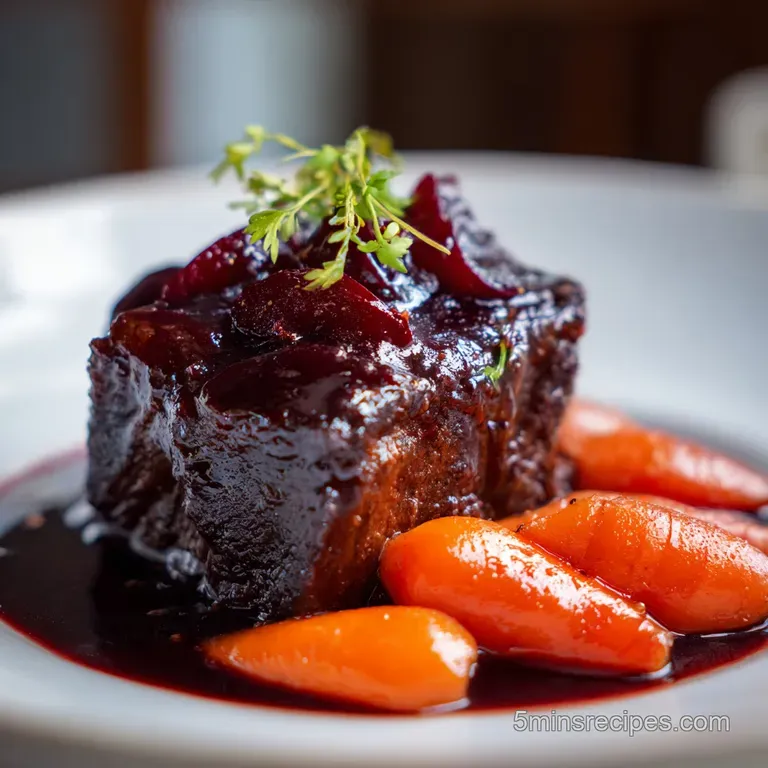
Place the rib centrally, spoon a generous amount of the reduced glaze over the top, and garnish with a sprig of fresh thyme. The mahogany color of the meat against a white plate and green herbs looks like something out of a high end bistro.
Trust me on this: the way you present the sauce is everything. Make sure the glaze is thick enough to cling to the meat rather than pooling at the bottom of the plate. That "cling" is what gives you the professional, velvety look.
High in Sodium
850 mg 850 mg of sodium per serving (37% 37% of daily value)
The American Heart Association recommends a daily limit of 2,300mg of sodium to help manage blood pressure and reduce the risk of heart disease.
Tips to Reduce Sodium
-
Swap the Stock-30%
Replace the low-sodium beef stock with homemade unsalted beef stock or water combined with extra aromatics to drastically cut the base sodium.
-
Scale Back Salt-25%
Reduce the kosher salt by half or substitute it with a salt free garlic and onion powder blend for the initial sear.
-
No-Salt Tomato Paste-20%
Use a no-salt added tomato paste to remove the hidden sodium often found in canned concentrates.
-
Boost Fresh Herbs
Increase the fresh thyme and add a splash of lemon juice or balsamic vinegar at the end to brighten the flavors without adding salt.
Recipe FAQs
What is the best method for braising short ribs?
Sear the meat first, then slow cook in liquid. This process creates a mahogany crust for deep flavor before the oven or stovetop tenderizes the beef.
What is the best technique for cooking short ribs?
Pat the ribs completely dry before searing. Dry meat ensures a proper sear, whereas wet meat will steam and fail to brown.
What is the best liquid for braising ribs?
A combination of dry red wine and low-sodium beef stock. This blend provides the necessary acidity and depth to balance the richness of the beef.
What are common mistakes when cooking short ribs?
Overcrowding the pot during searing or skipping the sauce reduction. Too many ribs cause the meat to steam rather than brown, and failing to reduce the liquid leaves the sauce thin and flavorless.
Is it true that I can skip searing the meat to save time?
No, this is a common misconception. Searing is essential for developing the Maillard reaction, which provides the complex, savory base for the entire dish.
How to store and reheat braised short ribs?
Store in an airtight container in the fridge for 4 days or freeze for 3 months. Reheat slowly on the stovetop over low heat to keep the meat tender.
Can I serve these ribs with a pasta side?
Yes, they pair perfectly with starches. For a simple side that complements the rich sauce, try serving them with an easy one pan pasta.
Braised Short Ribs Recipe