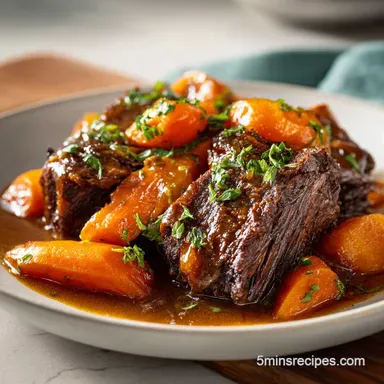
Braised Beef Short Ribs: Failure-Proof
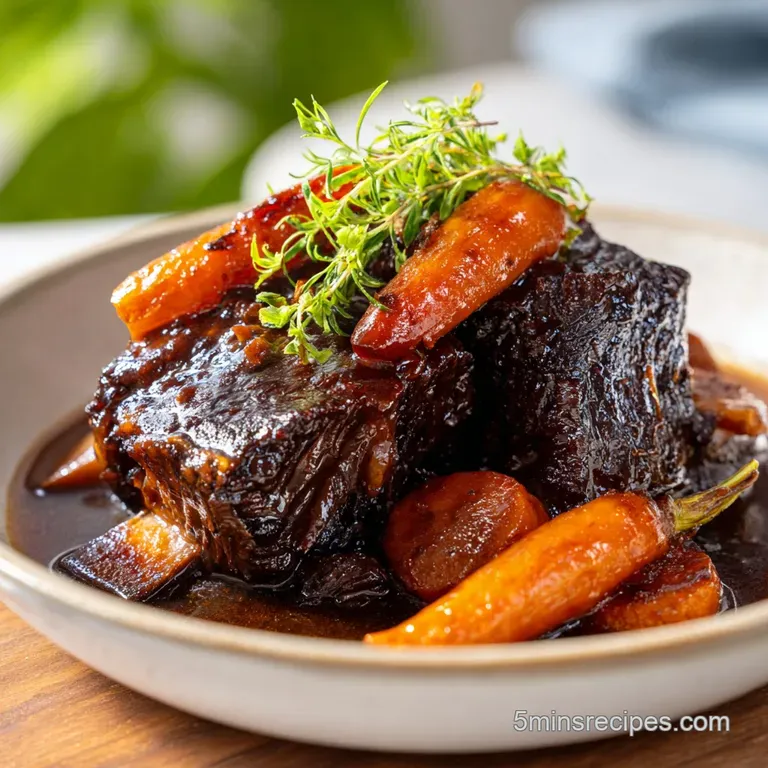
- Time: 20 min active + 195 min cooking = 215 min total
- Flavor/Texture Hook: Deeply savory, mahogany crust, and fork tender meat
- Perfect for: Slow Sunday dinners or impressing guests without staying in the kitchen
That specific sound of beef hitting a shimmering hot pot is what I live for. It's a loud, aggressive sizzle that tells you immediately if your pan is hot enough. If it doesn't sound like a rainstorm on a tin roof, you're just steaming the meat, and you'll miss out on that dark, concentrated flavor that makes this dish legendary.
I remember a dinner party years ago where I tried to cut corners by skipping the searing process. I thought, "it's going to cook for three hours, who cares about a crust?" I was wrong. The meat was tender, but the sauce looked pale and tasted thin. It lacked that soulful, earthy depth.
Since then, I've treated the sear as a non negotiable rule.
The goal with these Braised Beef Short Ribs is to get that rich, glossy sauce that clings to the meat. It's not about fancy techniques, just about giving the ingredients time to do their thing. You'll end up with something that feels high end but only requires one pot and a bit of patience.
Braised Beef Short Ribs
The beauty of this dish is the transformation. You start with a piece of meat that is practically inedible if you just grilled it, and you end up with something that requires nothing more than a fork to pull apart. It's a lesson in thermodynamics and patience.
Most people overcomplicate this by adding too many herbs or trying to thicken the sauce with flour. Trust me, the natural gelatin in the ribs does the thickening for you. When you reduce that braising liquid at the end, it turns into a velvety glaze that doesn't need any artificial help.
If you're looking for other comforting meat dishes, you might enjoy my oven cooked riblets recipe, which uses a different approach to ribs but delivers that same satisfying richness. This one, however, is all about the slow soak in wine and broth.
What's Happening In The Pot
Collagen Conversion: Long, slow heat turns tough collagen into gelatin, which gives the meat its melt in-your mouth feel.
Fond Development: Searing the beef creates browned bits on the bottom of the pot that provide a massive flavor boost once deglazed.
Acidic Tenderizing: The wine breaks down muscle fibers and cuts through the heavy fat of the short ribs.
Reduction Concentration: Simmering the liquid at the end evaporates water, leaving behind a concentrated, syrupy glaze.
| Method | Time | Texture | Best For |
|---|---|---|---|
| Dutch Oven | 3.5 hours | Velvety/Rich | Traditional flavor |
| Slow Cooker | 8 hours | Extremely Soft | Set and forget |
| Instant Pot | 90 mins | Tender/Consistent | Tight schedules |
This table shows how the equipment changes the outcome. While the Dutch oven is my go to for the best crust, a slow cooker is a lifesaver on workdays.
Component Analysis
| Ingredient | Science Role | Pro Secret |
|---|---|---|
| Beef Short Ribs | Collagen Source | Always buy English cut for better sear |
| Dry Red Wine | Acid/Tannins | Avoid "cooking wine"; use a decent Cabernet |
| Tomato Paste | Umami Booster | Fry it until it turns brick red |
| Mirepoix (Veg) | Aromatic Base | Dice them uniformly for even softening |
Understanding why these ingredients are here helps you make better decisions. For instance, if you skip the tomato paste, you lose that deep, savory "bass note" in the sauce.
Ingredients
- 5 lbs beef short ribs, English cut Why this? Consistent thickness for even searing
- 2 tbsp vegetable oil Why this? High smoke point prevents burning
- 1 tbsp kosher salt Why this? Coarse grains penetrate meat better
- 1 tsp freshly cracked black pepper Why this? Fresh is punchier than pre ground
- 1 large yellow onion, diced Why this? Balanced sweetness and sulfur
- 2 large carrots, diced Why this? Adds natural sugar to the sauce
- 2 stalks celery, diced Why this? Essential earthy undertone
- 4 cloves garlic, minced Why this? Sharpness that mellows during braising
- 2 tbsp tomato paste Why this? Thickens and adds glutamates
- 2 cups dry red wine Why this? Tannins cut through beef fat
- 3 cups low sodium beef broth Why this? Controls salt levels in the reduction
- 2 sprigs fresh rosemary Why this? Piney aroma that stands up to beef
- 3 sprigs fresh thyme Why this? Subtle floral notes
- 2 dried bay leaves Why this? Adds a subtle tea like bitterness
Ingredient Swaps
| Original Ingredient | Substitute | Why It Works |
|---|---|---|
| Dry Red Wine | Beef Broth + 1 tbsp Balsamic | Similar acidity. Note: Lacks the tannin depth of wine |
| Vegetable Oil | Ghee or Avocado Oil | Similar high smoke point. Note: Ghee adds nuttiness |
| Fresh Rosemary | Dried Rosemary (1 tsp) | Same flavor profile. Note: Less aromatic, more pungent |
| English Cut Ribs | Boneless Short Ribs | Same meat quality. Note: Lacks the bone in flavor boost |
When swapping, remember that the wine is a key part of the Braised Beef Short Ribs profile. If you're going wine free, the balsamic vinegar is a must to provide that necessary acid.
Equipment Needed
You don't need a kitchen full of gadgets for this. A 6 quart Dutch oven is the star here because it distributes heat evenly and has a tight lid. If you don't have one, a heavy bottomed pot with a lid that actually fits will work, though you might need to add a layer of foil under the lid to keep the steam in.
I also recommend a pair of sturdy tongs. Trying to flip these heavy ribs with a fork is a recipe for splashing hot oil all over your wrists. A fine mesh strainer is also essential for the final step to get that silky sauce.
How to Make It
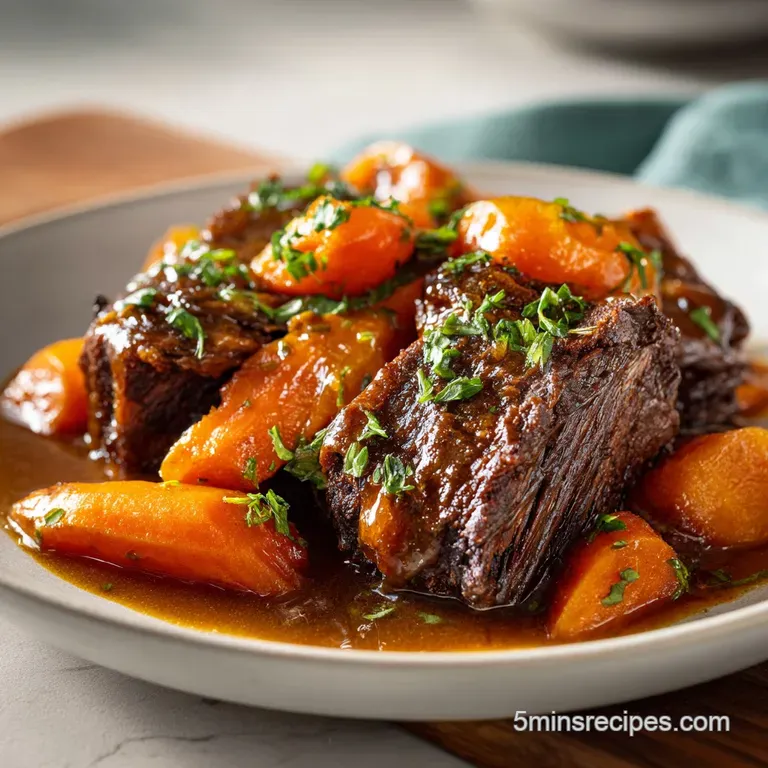
Searing the Meat
- Pat the beef short ribs completely dry with paper towels and season generously with kosher salt and black pepper. Note: Wet meat won't sear; it will steam.
- Heat vegetable oil in a 6 quart Dutch oven over medium high heat until shimmering. Sear the ribs in batches for 3-4 minutes per side until a deep mahogany colored crust forms; remove and set aside.
Building the Flavor Base
- Reduce heat to medium. In the remaining beef fat, sauté diced onion, carrots, and celery for 6-8 minutes until softened and translucent.
- Stir in minced garlic and tomato paste, cooking for another 2 minutes until the paste turns a deep brick red. Note: This removes the raw tinny taste of the paste.
- Pour in the dry red wine to deglaze the pan, scraping the browned bits (fond) from the bottom. Simmer until the liquid is reduced by half.
Executing the Slow Braise
- Return the seared ribs to the pot. Add beef broth, rosemary, thyme, and bay leaves, ensuring the liquid covers about 3/4 of the meat.
- Cover with a tight lid and braise at a low temperature (roughly 325°F/160°C in the oven or low simmer on stove) until the meat is tender and slides off the bone. This usually takes about 3 hours 15 mins.
Finishing the Sauce
- Strain the cooking liquid into a saucepan and simmer independently until it reduces into a thick, glossy glaze. Pour this over the meat just before serving.
Pro Tips & Pitfalls
Chef's Note: If you see a thick layer of oil floating on top of your sauce after braising, don't just stir it in. Use a wide spoon or a piece of rolled up foil to skim the fat off. Too much fat will mask the wine and herb flavors.
To get the most out of these Braised Beef Short Ribs, keep a few unconventional tricks in mind. First, try freezing your butter for 10 minutes before whisking a cold knob into the final sauce; this creates a "mounting" effect that makes the glaze look like it came from a restaurant.
Second, if your wine feels too acidic, a tiny pinch of sugar can balance the tannins without making the dish sweet.
Avoiding Common Cooking Fails
Troubleshooting Common Issues
| Issue | Solution |
|---|---|
| Why Your Meat Is Tough | If the ribs aren't shredding, they simply haven't cooked long enough. The collagen hasn't fully converted to gelatin yet. Put them back in for another 30-45 minutes. Braising is about internal tempera |
| Why Your Sauce Is Greasy | Short ribs are fatty. If you don't skim the surface or strain the sauce, the fat separates and creates a slick feeling on the palate. Always strain and reduce the liquid separately. |
| Why The Bottom Burnt | This happens if your heat is too high during the braise or if you didn't deglaze the fond properly. Keep the heat low and ensure there's enough liquid (3/4 coverage) to protect the bottom. |
Common Mistakes Checklist
- ✓ Didn't pat meat dry before seasoning
- ✓ Crowded the pan during searing (leads to steaming)
- ✓ Used a lid that doesn't seal tightly
- ✓ Rushed the reduction of the wine
- ✓ Added too much salt early (liquid reduces, salt concentrates)
Adjusting the Batch Size
Scaling a braised dish is easier than scaling a cake, but there are rules. If you're cutting the recipe in half, use a smaller pot (like a 3 quart) so the liquid doesn't evaporate too quickly. You can usually reduce the cooking time by about 20%, but still rely on the "fork tender" test.
When doubling the Braised Beef Short Ribs for a crowd, do not double the salt or the herbs. Start with 1.5x the seasoning and adjust at the end. You must sear the meat in smaller batches; if you throw 10 lbs of beef in one pot, the temperature will drop, and you'll end up with grey, boiled meat.
Decision Shortcut:
- If you want deeper flavor → Use the oven at 325°F instead of the stovetop.
- If you want a thicker sauce → Reduce the final liquid by an extra 10 minutes.
- If you're short on time → Use a Pressure Cooker/Instant Pot for 90 minutes.
Debunking Kitchen Myths
Myth: Searing seals in the juices. This is a total lie. Searing doesn't create a waterproof barrier; the meat actually loses more moisture during the sear. We sear for the flavor (the Maillard reaction), not to "lock" anything inside.
Myth: You need the most expensive wine. You don't. In fact, a very complex, expensive wine can sometimes overpower the meat. A decent, dry Cabernet or Merlot is all you need. If you wouldn't drink it in a glass, don't put it in the pot.
Storage Guidelines
Store the ribs in the sauce in an airtight container in the fridge for up to 4 days. The sauce will thicken into a jelly like consistency when cold, which is totally normal.
For freezing, let the dish cool completely, then freeze for up to 3 months. I recommend freezing them in individual portions with plenty of sauce to prevent the meat from drying out during the reheating process.
To reheat, place the ribs in a covered baking dish with a splash of extra beef broth. Heat at 300°F until warmed through. Avoid the microwave if possible, as it can make the beef rubbery.
Zero Waste Tip: Don't toss the bones if you decide to remove them before serving. Toss those bones into a pot with water, a scrap of onion, and a carrot to make a rich bone broth for future soups.
Best Sides to Serve
Since these Braised Beef Short Ribs are so rich, you need something to cut through the fat. A creamy polenta or garlic mashed potatoes are the classic choices because they soak up that glossy glaze.
For something lighter, try a crisp green salad with a lemon vinaigrette. If you're feeling like a full comfort feast, my smothered chicken and rice provides a similar level of coziness, though the ribs are definitely the star of the show here.
Another great option is roasted root vegetables. Carrots and parsnips roasted with a bit of honey and thyme complement the deep, winey notes of the beef. Just be sure to keep the sides simple so they don't compete with the intensity of the short ribs.
Recipe FAQs
What is the best liquid for braising short ribs?
Dry red wine and beef broth. This combination provides a rich, acidic base that breaks down connective tissue while adding deep, savory flavor.
Are beef ribs high in potassium?
Yes, they contain moderate amounts. Like most beef cuts, short ribs provide potassium, though the exact amount depends on the size of the portion.
What is the best technique for cooking short ribs?
Sear the meat deeply before slow braising. Creating a mahogany colored crust in a Dutch oven locks in flavor before simmering at a low temperature until the meat slides off the bone.
What are common mistakes when cooking short ribs?
Skipping the searing process or rushing the cook time. Without a proper sear, the dish lacks depth, and pulling the meat too early leaves it tough because the collagen hasn't converted to gelatin.
Why are my short ribs still tough after cooking?
Continue cooking for another 30-45 minutes. Toughness is a sign that the meat simply hasn't cooked long enough for the connective tissues to fully break down.
Is it true that braised ribs are always greasy?
No, this is a common misconception. While short ribs are naturally fatty, you can eliminate the slick feeling by straining and reducing the cooking liquid independently before serving.
Can I use a slow cooker for this recipe?
Yes, you can adapt these for a slow cooker. For a similar low-and-slow result, see how the same principle works in our pot roast recipe.
Braised Beef Short Ribs